
To grow lettuce in England, sow a short row outdoors every two weeks from late March to late July, in soil you can keep moist. Loose-leaf (cut-and-come-again) lettuce is ready in about four to six weeks; hearting lettuce takes about 10–14 weeks, and both tolerate a little shade.
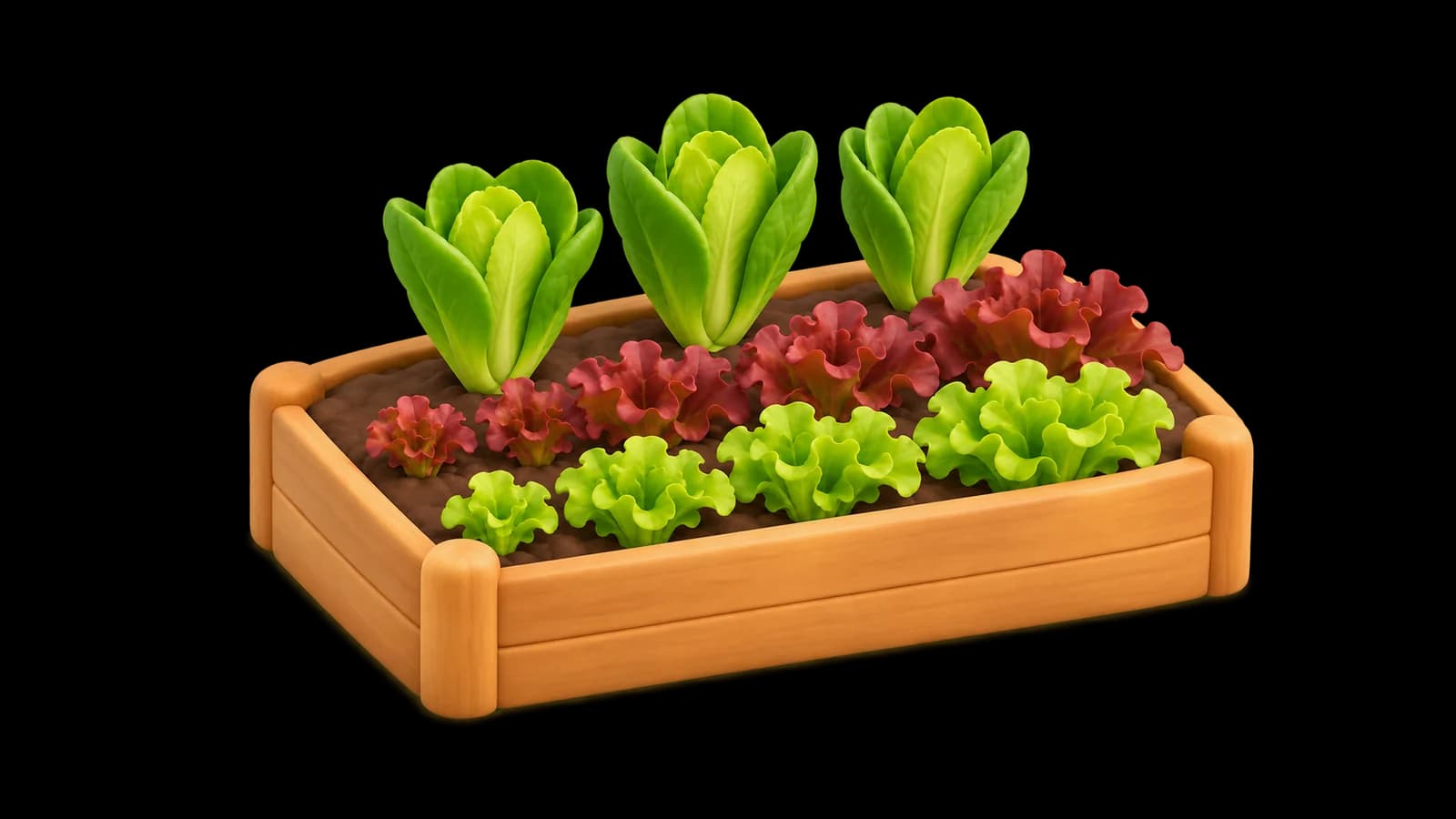
This guide covers when to sow lettuce, how far apart to grow loose-leaf and hearting types in a raised bed, how to harvest so the plants keep going, and how to deal with bolting and slugs.
Lettuce at a glance
| Loose-leaf (cut-and-come-again) | Hearting (such as cos and crisphead) | |
|---|---|---|
| Sow outdoors | Late March to late July (RHS) | Late March to late July (RHS) |
| Sowstory start months | March to August | March to August |
| Spacing | Rows 25 cm apart, plants 15 cm apart | 30 × 30 cm per plant |
| In a 1.2 × 2.4 m bed | Up to 3 rows (about 48 plants) | Up to 6 plants (Sowstory cap) |
| Ready to pick | About 4–6 weeks | About 10–14 weeks |
| Bed space reserved | About 10 weeks | About 12 weeks |
| Sun | Tolerates 4–6 hours of direct sun | Tolerates 4–6 hours |
| Bed depth | No minimum set | No minimum set |
Loose-leaf or hearting lettuce?
Sowstory plans lettuce in two ways, because they use space differently.
Loose-leaf lettuce does not form a heart. You pick leaves as you need them, or cut the plant and let it regrow, which is why it is often sold as cut-and-come-again lettuce. It grows in rows and is quick, which makes it ideal for filling gaps.
Hearting lettuce includes cos and crisphead types. Each plant forms a head that you cut whole. They take longer and need more room per plant, so Sowstory places them as individual plants rather than rows.
Many gardeners grow both: a row of loose-leaf for regular picking and a few hearting lettuces for whole heads.
Choosing varieties
If you are new to growing lettuce, pick varieties that cope with an English summer. The RHS says crisphead and cos types resist bolting better than others, and Gardeners' World names the loose-leaf varieties 'Salad Bowl' and 'Mascara' as slow to bolt. Gardeners' World also observes that red or purple lettuces seem to suffer less from slugs, so a mix of green and red leaves is a sensible hedge.
When to sow lettuce
The RHS suggests sowing outdoors from late March to late July, sowing a short row every fortnight so you always have plants coming on. Sowstory plans lettuce into the bed from March to August.
England's spring arrives at different times. The south and coasts warm up earlier; the north, inland areas and high ground are later, so treat late March as the start in milder areas. See what to sow in April for spring sowings and what to sow in July for the last summer batches.
How to sow
- Sow thinly in a shallow drill. Gardeners' World notes that lettuce seed germinates better with some light, so cover it only lightly.
- Thin the seedlings to their final spacing (below). The thinnings can go in a salad.
- In hot spells, the RHS warns that germination drops and some varieties may not germinate at all. Sow in the evening, water the drill with cold water and shade it until the seedlings appear.
A US university propagation resource puts the problem temperature at about 25°C: lettuce seed exposed to more than that during germination can become dormant and fail to come up even after it cools. The RHS gives no figure, so treat this as a rough guide.
Lettuce spacing in a raised bed
Sowstory uses these planning spacings:
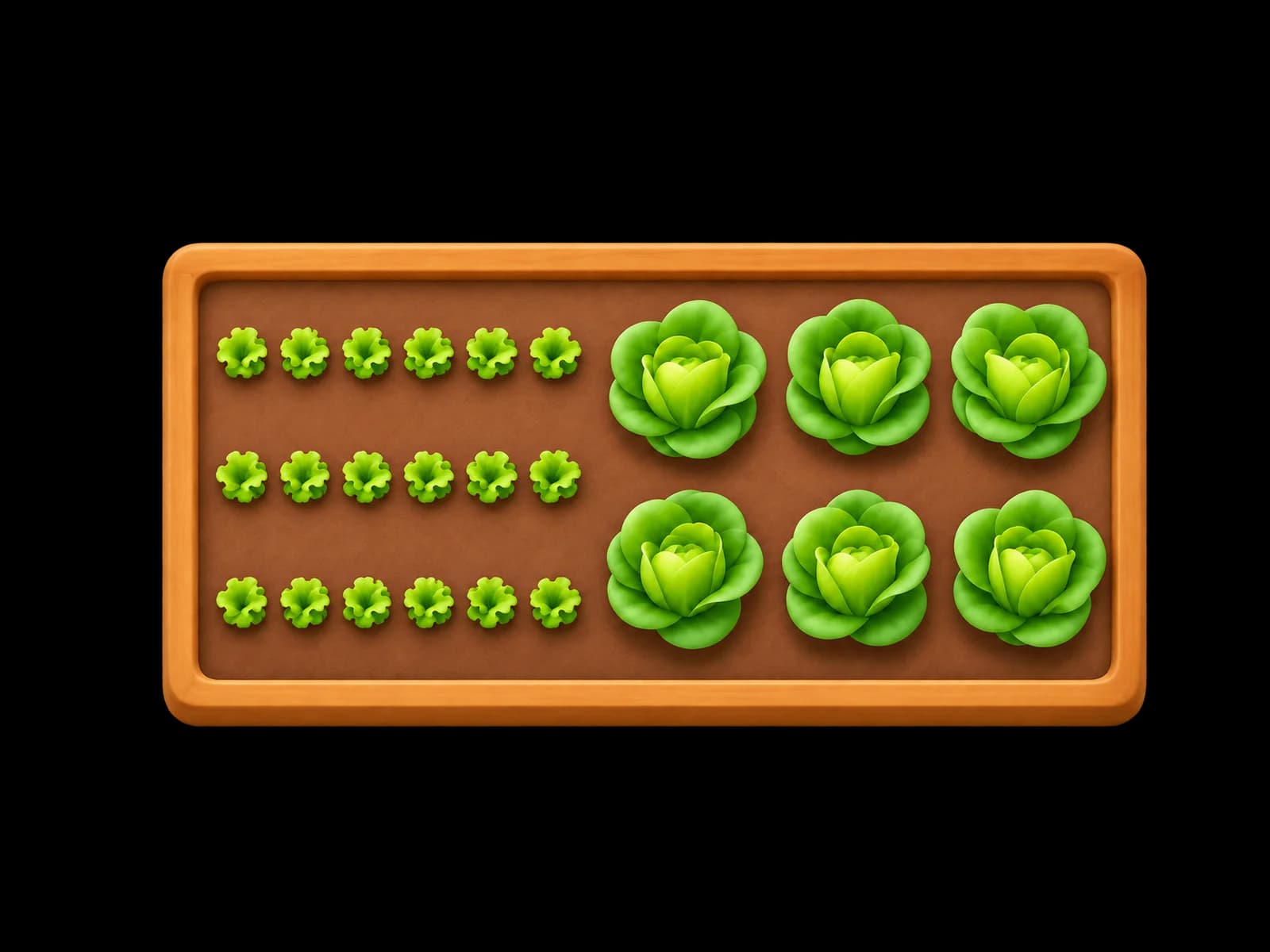
- Loose-leaf: rows 25 cm apart, with plants about 15 cm apart in the row. That gives about six plants per metre of row, and up to three rows across a 1.2 m wide bed.
- Hearting: a 30 × 30 cm square for each plant, up to six per bed so lettuce does not take over.
In a 1.2 × 2.4 m bed, three full-length rows of loose-leaf lettuce would hold about 48 plants. In practice, you will want only a short row or two at a time, sown in batches.
For the full list of crops, see the vegetable spacing chart.
Growing lettuce in raised beds
Where to put it
Lettuce copes with less sun than fruiting crops such as tomatoes. Sowstory lets it go in spots with four to six hours of direct sun, and the RHS recommends light shade in summer to reduce bolting. That makes it a good fit for the south side of tall crops, for gaps between slower crops and for beds that do not get sun all day.
Filling gaps
Lettuce is a classic space filler. The RHS describes growing fast crops such as lettuce and radish between slower crops and clearing them before they are shaded. Sowing lettuce where early potatoes or peas have finished is another way to keep a bed productive. Our raised bed layout ideas show how quick crops fit around longer ones, and what to grow in a raised bed covers good first crops.
Companions
The RHS says alyssum grown with lettuce has been shown to reduce aphids, one of the few companion pairings it describes as proven. See the companion planting chart for the evidence on other pairings.
If you want lettuce batches planned around the rest of your bed, Sowstory lays out rows to scale, tells you how many plants fit, and gives a month-by-month sowing plan with succession where supported. It is coming soon to the App Store, and your first bed plan is free.
Watering lettuce
Lettuce needs steady moisture. Dry soil is one of the main causes of bolting and bitter leaves.
- Water early in the morning. The RHS says evening watering attracts slugs and encourages fungal disease.
- Water regularly in dry spells, especially in summer.
- Keep weeds down. Dense weeds shelter slugs.
Harvesting cut-and-come-again lettuce
Loose-leaf lettuce is ready when the leaves are about 10 cm long, usually four to six weeks after sowing. You can:
- Pick a few outer leaves from each plant and leave the centre to keep growing.
- Cut the whole plant a little above the base and leave the stump to regrow.
Hearting lettuce is ready in about 10–14 weeks, when the heart feels firm. Cut the whole head. The RHS notes that leaving a stump about 2.5 cm tall may give you one or two more small harvests.
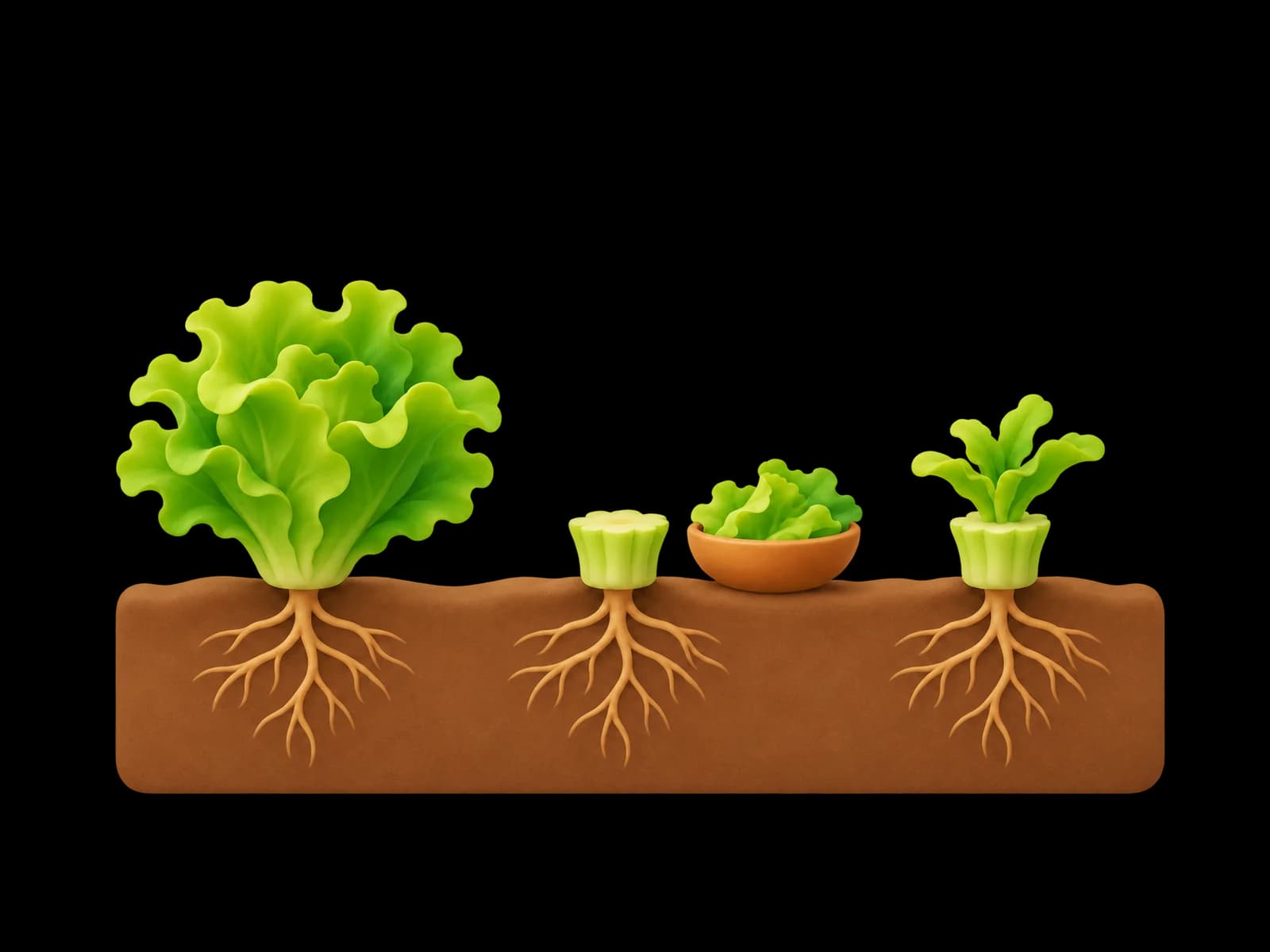
Sowstory reserves bed space for about 10 weeks for a row of loose-leaf lettuce and 12 weeks for hearting lettuce, so the space can be resown or given to another crop afterwards.
A lettuce year in England
| Month | Job |
|---|---|
| March (late) to April | First outdoor sowings in milder areas; a short row every two weeks |
| May to June | Keep sowing little and often; pick the first loose-leaf leaves |
| July | Last RHS-recommended outdoor sowings; sow in the evening and shade in hot spells |
| August | Sowstory's last start month for lettuce; keep watering steadily |
| Autumn | Final pickings; clear spent plants and free the space |
Common lettuce problems
Bolting
Bolting is when lettuce sends up a flower stem and the leaves turn bitter. The RHS lists the causes as hot, dry weather, lack of water, changes in day length and sometimes a cold spell. To reduce it:
- Water regularly and do not let the soil dry out.
- Give summer sowings light shade.
- Choose slow-bolting types. The RHS says crisphead and cos lettuces are more resistant; Gardeners' World names 'Mascara' and 'Salad Bowl' as slow to bolt.
- Sow little and often, so a new batch is ready as the old one fades.
Slugs
Slugs are the other main problem. Water in the morning rather than the evening and keep the bed weeded. Gardeners' World observes that red and purple lettuces seem less prone to slug damage, and suggests ferric phosphate pellets only as a last resort.
Lettuce in the rotation
The RHS says lettuce and other salads can go wherever is convenient in a crop rotation, as long as they are not in the same spot too often. That flexibility is what makes lettuce such a useful gap filler.