
The easiest things to grow in a raised bed in England are quick crops sown straight into the soil, such as radishes, loose-leaf lettuce, spinach, carrots, beetroot and spring onions, plus a few reliable larger crops such as dwarf French beans, first early potatoes and a bush courgette. Hardy crops can start in the bed from March or April; tender ones wait until frost risk has passed, which the RHS puts between May on the south coast and early June in north-east England.
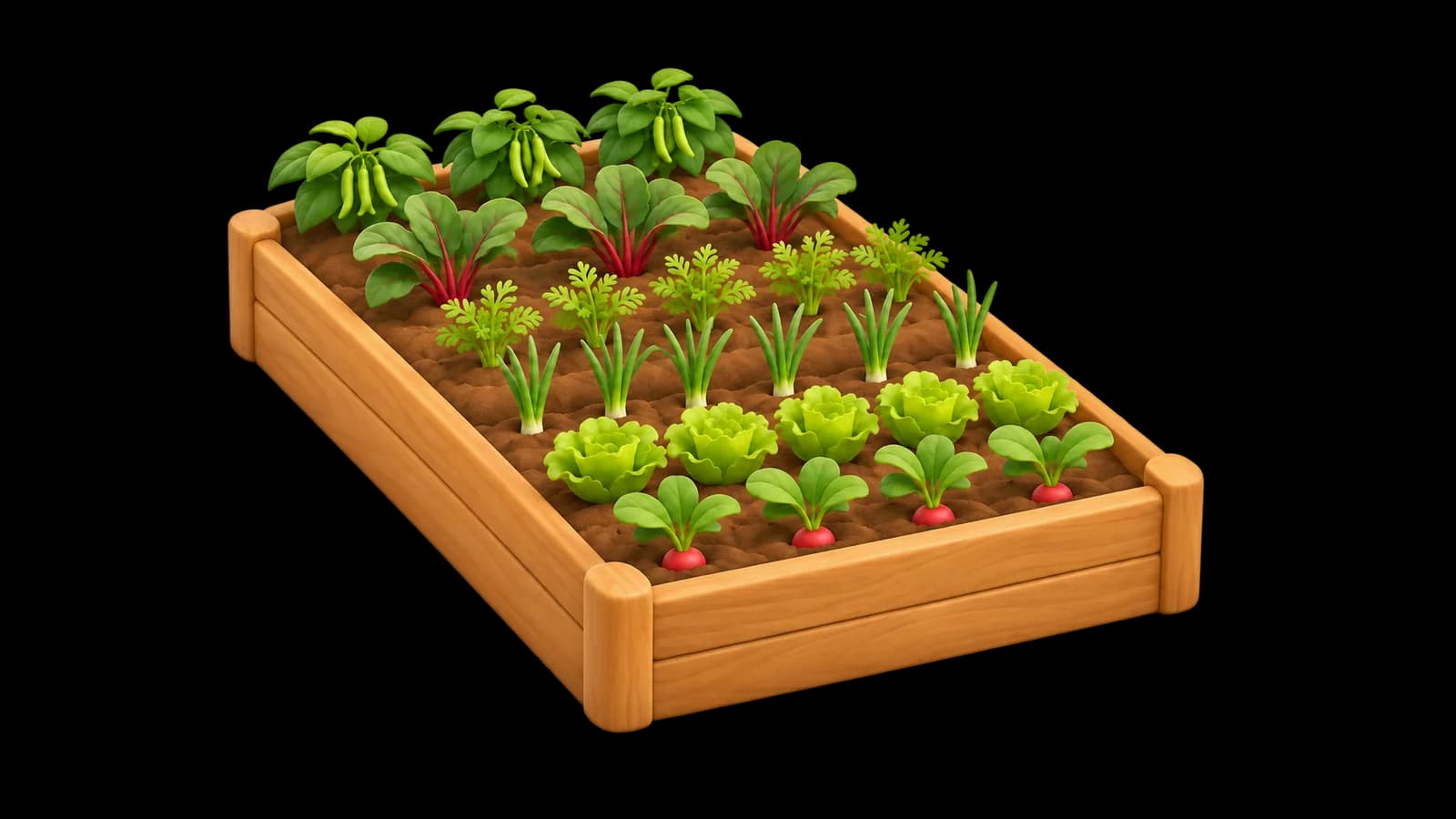
Below are 20 crops chosen from the 35 that Sowstory plans, grouped by type. For each you get Sowstory's spacing, the months it can start in the bed, its sun needs and the facts that make it easy.
What makes a crop easy for a raised bed
"Easy" here is not a matter of taste. Every crop on this list meets at least two of these tests, all taken from Sowstory's knowledge base:
- Sown or planted straight into the bed, so there is no indoor sowing or hardening off.
- A short stay. Sowstory reserves the space for about 12 weeks or less, so you see results quickly and can sow again. This is the time the bed is planned as busy, not a promised harvest date.
- Tolerates 4–6 hours of sun, so it suits a bed that is not in full sun all day.
- No support needed, so no canes, netting or ties.
Spacings are Sowstory's planning allowances, usually the more generous published figure. Varieties differ, so check the packet. The vegetable spacing chart lists every crop.
Salad leaves
| Crop | Sowstory spacing | Starts in the bed | Sun | Why it is easy |
|---|---|---|---|---|
| Loose-leaf lettuce | rows 25 cm, plants 15 cm | March–August | 4–6 hours | sown direct; space reserved about 10 weeks; picked as cut-and-come-again leaves |
| Annual spinach | rows 30 cm, plants 15 cm | March–May, August–September | 4–6 hours | sown direct; about 10 weeks including repeat picking |
| Salad rocket | rows 20 cm, plants 15 cm | March–May, August | 4–6 hours | sown direct; picking starts roughly 4–6 weeks after sowing |
| Pak choi | rows 40 cm, plants 25 cm | May–August | 6+ hours | sown direct; space reserved about 11 weeks |
Spinach and rocket are cool-season crops, so Sowstory leaves out the hottest midsummer months. Pak choi can bolt in heat, drought or a cold snap. Our guide on how to grow lettuce covers sowing little and often.
Root vegetables for raised beds
| Crop | Sowstory spacing | Starts in the bed | Sun | Why it is easy |
|---|---|---|---|---|
| Radish | rows 15 cm, plants 2.5 cm | March–August | 4–6 hours | sown direct; the shortest stay Sowstory plans, about 8 weeks |
| Carrots | rows 20 cm, plants 5 cm | March–July (short-rooted types April–July) | 6+ hours | sown direct; space reserved about 12 weeks |
| Beetroot | rows 30 cm, plants 10 cm | April–July | 6+ hours | sown direct; no support; lifted in summer and autumn |
| Baby turnip | rows 30 cm, plants 10 cm | April–August | 6+ hours | sown direct; small roots in about 6–10 weeks |
| First early potatoes | rows 90 cm, tubers 30 cm | March–April | 6+ hours | seed tubers planted straight in; about 12 weeks in the bed |
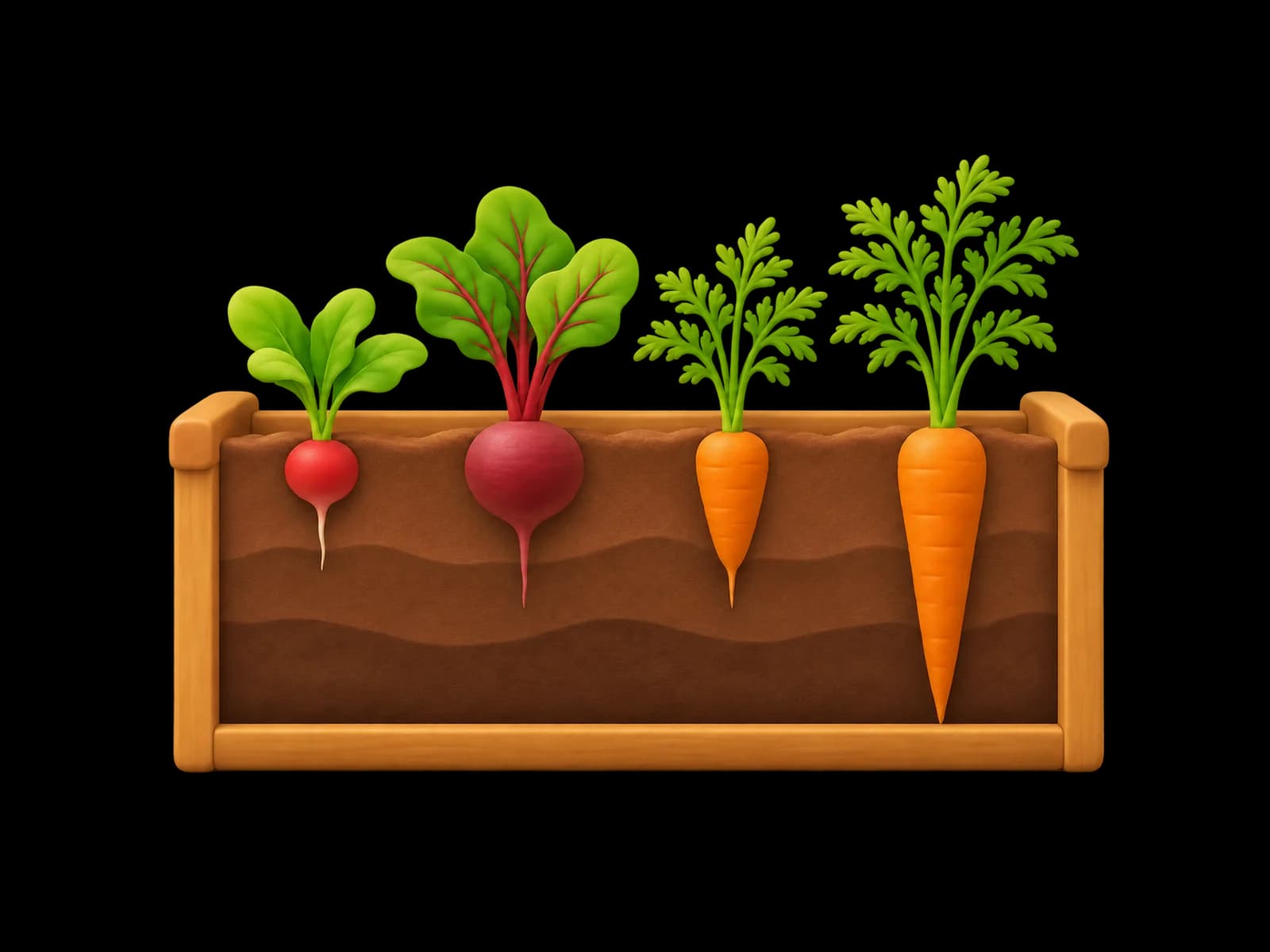
Depth matters most here. Sowstory checks for at least 30 cm of soil before it plans early carrots or first early potatoes, and 20 cm for radishes. Short-rooted carrots suit shallower beds, and BBC Gardeners' World also recommends round or dwarf carrots where soil is shallow. Potatoes need a 90 cm strip in Sowstory's plans so the soil can be drawn up into a ridge. See how deep a raised bed should be, and our guides on how to grow carrots, beetroot and potatoes.
Onions and garlic
| Crop | Sowstory spacing | Starts in the bed | Sun | Why it is easy |
|---|---|---|---|---|
| Spring onions | rows 10 cm, plants 8 cm | March–August | 4–6 hours | sown direct; space reserved about 10 weeks |
| Onion sets | rows 25 cm, plants 10 cm | March–April | 6+ hours | small bulbs planted straight in; no support |
| Garlic | rows 25 cm, plants 15 cm | October–December | 6+ hours | cloves planted straight in; no support |
Onion sets hold their space for about 24 weeks and garlic for about 36, into the following summer, so they are easy but slow. See how to grow onions and how to grow garlic.
Peas and beans
| Crop | Sowstory spacing | Starts in the bed | Sun | Why it is easy |
|---|---|---|---|---|
| Dwarf French beans | rows 50 cm, plants 20 cm | June | 6+ hours | sown direct; no trellis (short sticks optional); first pods roughly 7–10 weeks |
| Dwarf peas | rows 60 cm apart, seed 7.5 cm apart in a broad drill | March–June | 6+ hours | sown direct; planned without support; first picking about 12 weeks |
| Dwarf broad beans | rows 45 cm, plants 23 cm | March–April | 6+ hours | sown direct in spring; planned without support; picked June–August |
Dwarf French beans are tender, so Sowstory sows them in June, after frost risk has passed. Peas and broad beans are hardier and start in spring. See how to grow peas.
Leafy greens and stems
| Crop | Sowstory spacing | Starts in the bed | Sun | Why it is easy |
|---|---|---|---|---|
| Chard | 30 × 45 cm per plant | March–July | 4–6 hours | sown direct; picked repeatedly; no support |
| Kohlrabi | rows 30 cm, plants 15 cm | March–July | 6+ hours | sown direct; about 12 weeks to full size, baby stems sooner |
Courgette
| Crop | Sowstory spacing | Starts in the bed | Sun | Why it is easy |
|---|---|---|---|---|
| Bush courgette | 90 × 90 cm per plant | June | 6+ hours | sown direct after frost; bush type, no support; picked from summer to October |
A courgette is easy but large. Sowstory plans no more than two in a bed, and one plant takes most of a 1.2 × 1.2 m bed.
Herbs
| Crop | Sowstory spacing | Starts in the bed | Sun | Why it is easy |
|---|---|---|---|---|
| Parsley | rows 30 cm, plants 20 cm | April–June | 4–6 hours | sown direct (slow to germinate); picked May–November |
| Chives | 20 × 20 cm per clump | April–May | 4–6 hours | perennial clump; no support; picked May–November |
Chives can stay for years, but Sowstory reserves their space for one season only.
How many fit in a 1.2 × 2.4 m bed
If one crop filled a whole 1.2 × 2.4 m (about 4 × 8 ft) bed, with rows along the length, these are simple counts at Sowstory's spacing:
| Crop | Rows × plants per row | Total |
|---|---|---|
| Radish | 4 × 96 | 384 |
| Carrots | 4 × 48 | 192 |
| Beetroot | 4 × 24 | 96 |
| Loose-leaf lettuce | 3 × 16 | 48 |
| Garlic | 3 × 16 | 48 |
| Dwarf French beans | 2 × 12 | 24 |
| First early potatoes | 1 × 8 | 8 |
| Bush courgette | — | 2 (Sowstory's limit per bed) |
Most people mix crops instead. Our raised bed layout ideas show six mixed plans with every row checked, and the vegetable sowing calendar shows what to sow each month.
If you would rather not work out which crops fit and when, Sowstory takes the crops you like or want to avoid, your bed size and how much sun it gets, then lays out the bed, explains why each crop was chosen or left out and gives a month-by-month plan. It is coming soon to the App Store, and your first bed plan is free.
Worth growing, but not on the easy list
These crops are in Sowstory's plans but fail most of the tests above:
- Tomatoes go out as ready plants in June, after frost risk has passed. A cordon tomato needs a 60 × 60 cm square, a tall stake and its side-shoots removed. See how to grow tomatoes.
- Runner and climbing French beans need a cane row on the bed's north edge and cannot go out until after frost.
- Outdoor cucumbers are trained up canes or netting and planted in early June once nights stay above about 12°C. See how to grow cucumbers.
- Peppers, chillies and basil succeed outdoors only in a warm, sheltered spot, so Sowstory treats them as low confidence. See how to grow basil.
- Coriander tends to bolt in hot weather. See how to grow coriander.
- Cauliflower, Brussels sprouts and sprouting broccoli each need a 60 × 60 cm square and hold it for a long time: about 7 months for sprouts and over 9 for sprouting broccoli. Cauliflower needs steady moisture. See how to grow broccoli.
- Self-blanching celery needs constant moisture, and cold spells before it establishes make it bolt.
- Parsnips are slow to germinate and hold their space for about 8 months.
What Sowstory does not plan
Sowstory plans 35 crops as 45 growing profiles for outdoor raised beds in England. It does not yet plan sweetcorn, squash or pumpkins, strawberries or trailing (unsupported) cucumbers. You can still grow them in a raised bed (the RHS says about 30 cm of soil is deep enough for strawberries), but you will need to plan them by hand. Sowstory's sowing months are England-wide and are not adjusted for your postcode, so keep an eye on the weather too.
Sources
- RHS: How to make a raised bed
- RHS: When to plant out tender plants
- RHS: How to grow basil
- BBC Gardeners' World: How to grow carrots
- Sowstory knowledge base, release v1.4