
To grow peas in England, sow the seed outdoors from March to June in a flat drill about 5 cm deep, with seeds about 7.5 cm apart, once the soil has warmed to around 10°C. Give them twiggy sticks or netting to climb, and the RHS says first early peas are ready to pick about 12 weeks after sowing.
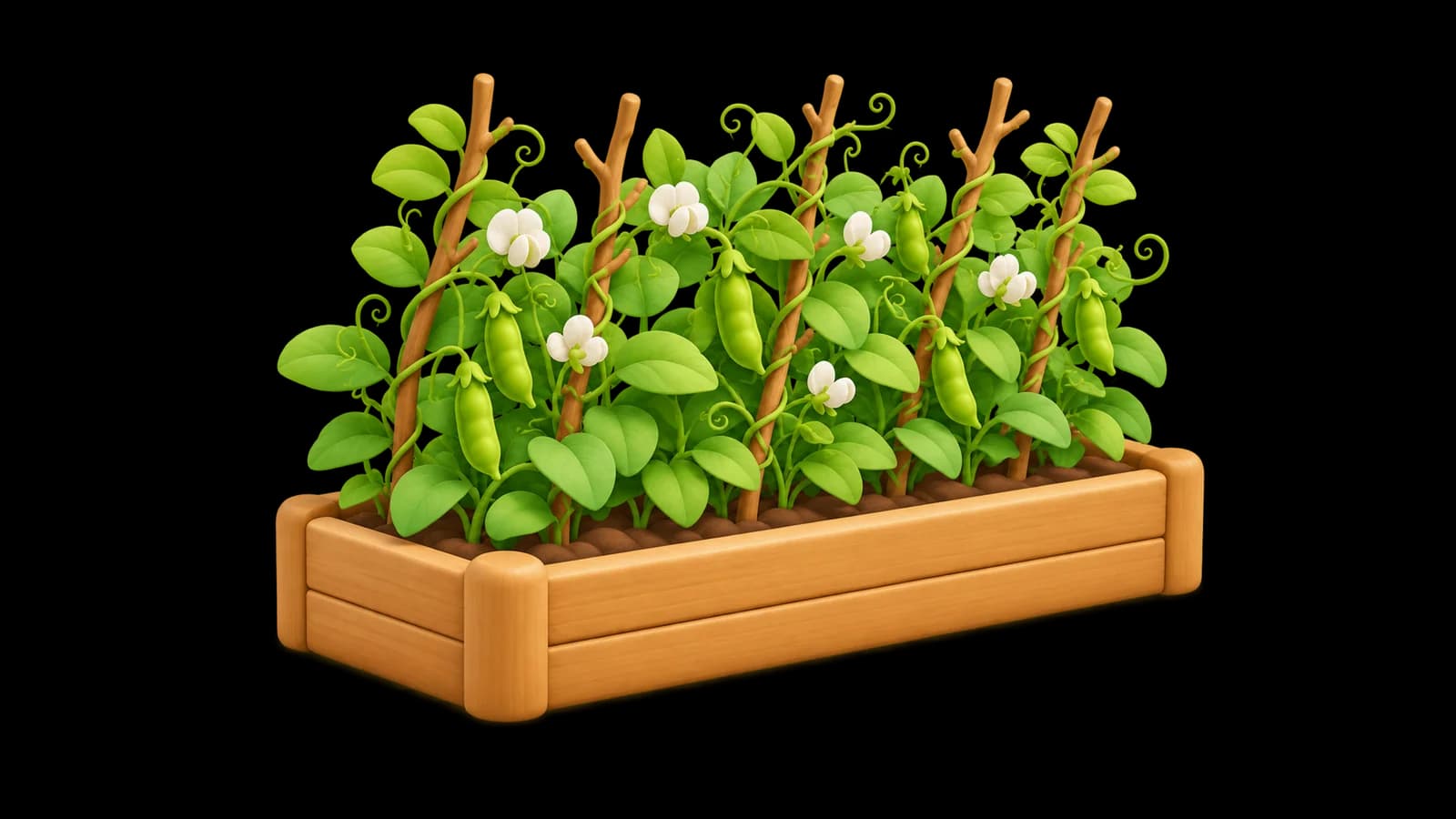
This page is about edible garden peas, not sweet peas, which are grown for their flowers. It covers dwarf shelling peas and climbing mangetout, when to sow, spacing, supports, how many fit a raised bed, and the pests worth knowing about.
Pea quick facts
| Fact | Dwarf shelling pea | Mangetout |
|---|---|---|
| Example variety | 'Kelvedon Wonder' | 'Oregon Sugar Pod' |
| Sow outdoors (Sowstory) | March to June | March to June |
| Depth | About 5 cm (RHS); 3 cm (Gardeners' World) | About 5 cm |
| Seed spacing | About 7.5 cm in a drill 15 cm wide | About 7.5 cm, zig-zag, in a drill 15 cm wide |
| Space between rows (Sowstory) | 60 cm | 90 cm |
| Height | About 45 cm (Kings Seeds) | About 1 m (Mr Fothergill's) |
| Support | Optional twiggy sticks | Netting or twigs; north edge of the bed |
| Sun | At least six hours | At least six hours |
| Time in the bed (Sowstory) | About 17 weeks | About 17 weeks |
| In a 1.2 × 2.4 m bed | About 64 seeds in two drills | About 32 seeds in one row |
When to sow peas in the UK
The RHS says peas can go outdoors from March to June once the soil has warmed to about 10°C. Sowstory's window for England is the same, March to June, for both dwarf peas and mangetout. In the north, inland and on high ground the soil warms later, so a sowing at the end of March or in April is often more successful than an early-March one. See what to sow in March, April, May and June for what else goes in alongside.
Two other routes are possible:
- Indoors first. The RHS notes that mice often eat freshly sown pea seed, so sowing in modules under cover in February or March and planting out at about 20 cm tall can be safer.
- Autumn sowing. The RHS says peas can be sown in autumn and overwintered in a greenhouse or cold frame for planting in spring. Smooth-seeded varieties are hardier and suit early sowings; wrinkled-seeded types are better for late spring and summer. Sowstory does not plan autumn or indoor sowings.
Dwarf peas or mangetout?
Sowstory plans two kinds of edible pea:
- Dwarf shelling peas, modelled on 'Kelvedon Wonder', a first early variety about 45 cm tall. You shell the peas from the pod. Sowstory treats them as medium-height and needing no support, although the RHS suggests twiggy sticks for dwarf varieties in general.
- Mangetout, modelled on 'Oregon Sugar Pod', about 1 m tall and climbing. You eat the whole flat pod. Sowstory treats it as a tall, supported crop and places a single row on the north edge of the bed, so it does not shade shorter plants.
The RHS grows shelling peas, mangetout and sugar snaps in much the same way. Taller varieties, up to about 1.8 m, need sturdier support.
How to grow peas: sowing
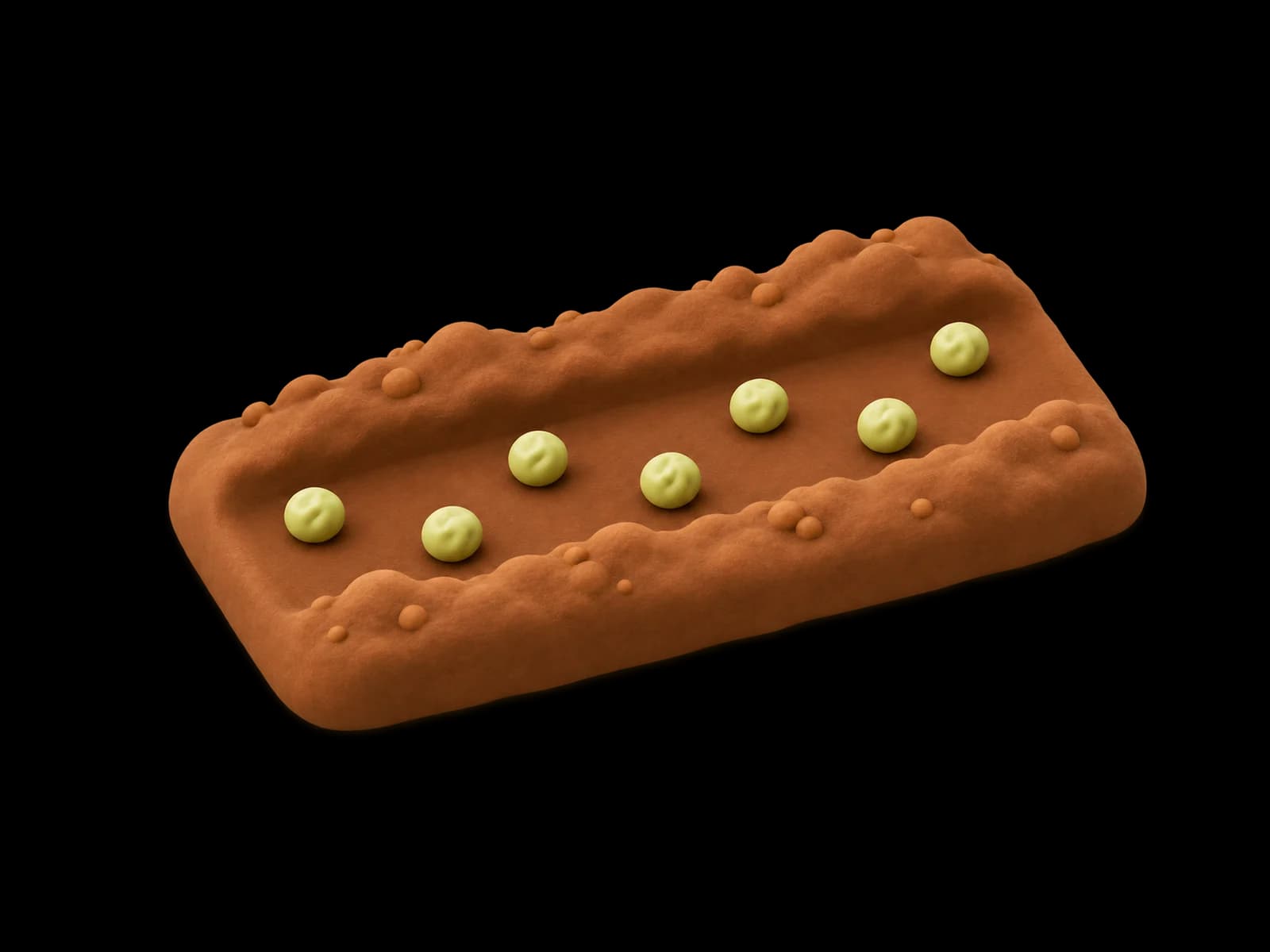
Make a flat-bottomed drill about 15 cm wide. Sources differ on depth: the RHS sows about 5 cm deep and 7.5 cm apart, while Gardeners' World uses 3 cm and about 10 cm. The RHS suggests sowing short varieties in three lines within the 15 cm drill; Mr Fothergill's sows mangetout in a zig-zag. Cover the seed, firm gently and water if the soil is dry.
Supporting peas
Put supports in at sowing time, before the plants need them, as the RHS advises. Twiggy pea sticks are the traditional choice for shorter peas; netting or chicken wire on posts or canes suits tall ones. Gardeners' World points out that whatever you use must be thin enough for the tendrils to grip. Mangetout on netting along the north edge of a raised bed makes a neat screen.
Growing peas in raised beds: spacing and how many fit
Sowstory counts each wide drill as one row. In a 1.2 × 2.4 m bed (about 4 × 8 ft) with drills along the length:
- Dwarf peas: 60 cm between drills gives two drills of about 32 seeds, about 64 seeds in all. The 60 cm corridor is wider than the plants are tall, which leaves room to reach in and pick. Sowstory allows up to four drills in a wider bed.
- Mangetout: one row of about 32 seeds along the north edge, inside a 90 cm corridor, the gap Mr Fothergill's gives between rows. Sowstory plans only one mangetout row per bed.
These counts are seeds at 7.5 cm, not a promise of plants: some seed will fail. The vegetable spacing chart lists both profiles, and our raised bed layout guide explains why tall crops go on the north edge.
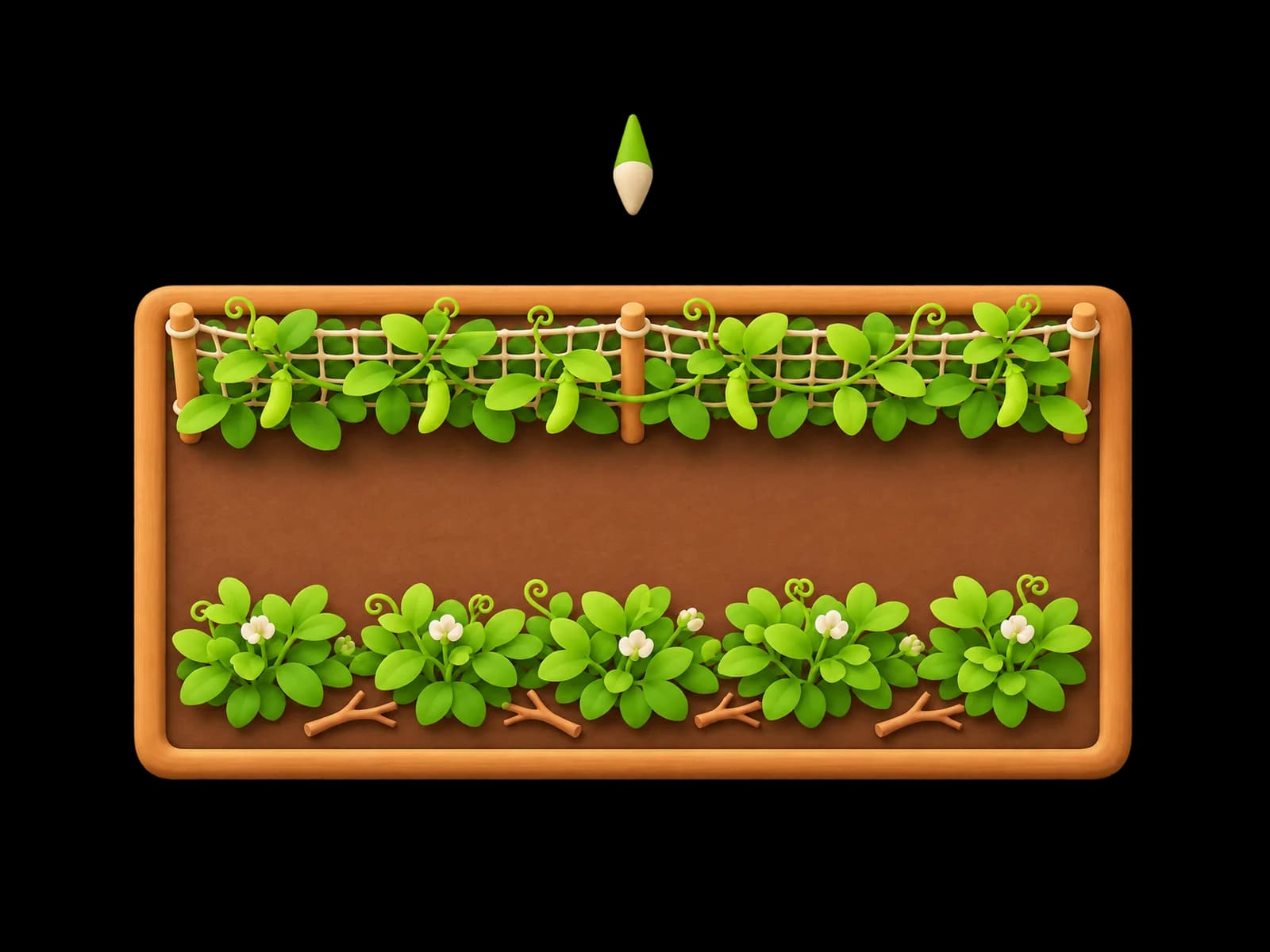
Sowstory reserves about 17 weeks of space for each sowing, which covers the roughly 12 weeks to first picking and several weeks of harvest after that.
If you would like the supports, rows and timings worked out for you, Sowstory lays out your bed to scale, puts mangetout on the north edge and gives a month-by-month plan for England. It is coming soon to the App Store, and your first bed plan is free.
Caring for peas
- Watering. Once established, peas need little water except in dry spells. The RHS says they benefit from a good soak when they start to flower and again two weeks later, which helps the pods fill. Water the soil, not the leaves, to avoid encouraging fungal disease.
- Mulching. A layer of garden compost at least 5 cm thick around the plants helps stop the soil drying out in summer and keeps weeds down.
- Feeding. The RHS says peas grown in the ground usually need no fertiliser.
Harvesting peas
The RHS says a first early pea is ready about 12 weeks after sowing and keeps cropping for several weeks. Kings Seeds gives a June to September harvest for 'Kelvedon Wonder'. Pick shelling peas once the pods have filled out. Pick mangetout while the pods are still flat; the RHS suggests at about 7.5 cm long, and Mr Fothergill's gives a June to October season for 'Oregon Sugar Pod'.
After the last picking, the RHS suggests cutting the plants down at the base and composting the tops, but leaving the roots in the soil: peas, like other legumes, fix nitrogen in their roots.
Pea pests and problems
- Mice dig up and eat newly sown seed. Start peas indoors if this happens regularly.
- Pigeons can strip young plants; the RHS says a netting cage may be the only answer.
- Pea moth. The RHS says the moth lays eggs on flowering plants in June and July, and its caterpillars turn up inside pods from late June to August. Quick varieties sown early or late, so they flower outside June and July, should escape it. Mesh or fleece keeps the moth out without harming the crop, because peas pollinate themselves. The RHS says mangetout is largely unaffected. Gardeners' World suggests sowing early (October to mid-February) or late (June to July) to reduce the risk.
Growing peas on an allotment or in a raised bed
The method is the same in open ground. The main difference is spacing between rows: on an allotment you walk between them, and the RHS suggests leaving a gap between sets of rows roughly equal to the height of the variety. In a raised bed you reach in from the sides, so Sowstory works with fixed corridors instead: 60 cm for dwarf peas and 90 cm for mangetout.
What Sowstory plans for peas, and what it does not
- Two outdoor profiles: a dwarf first early shelling pea and a climbing mangetout, both sown direct from March to June.
- No indoor or autumn sowings. Peas started under cover in February, or sown in autumn and overwintered, are not part of Sowstory's plan; it does not plan tall maincrop peas or sweet peas either.
- England-wide months. The window is not adjusted for your postcode, so wait for the soil to warm in a cold spring.
Peas, crop rotation and companions
The RHS puts peas in the legume group with broad, French and runner beans, and suggests brassicas such as cabbages and broccoli follow legumes in a rotation. Sowstory plans one season at a time and does not plan rotation across years; for the next crop in that sequence see how to grow broccoli.
Gardeners' World lists garlic or onions next to peas as a pairing to avoid, but labels the whole list anecdotal. Our companion planting guide explains which claims have evidence behind them.