
In May you can sow most summer vegetables in England: beetroot, carrots, lettuce, radish, peas, pak choi and herbs go straight into the bed, runner and French beans follow once the soil is warm, and leeks, kale and other brassicas go out as young plants. Tender crops such as tomatoes, courgettes and cucumbers go out only once frost risk has passed, which the RHS puts at the second half of May in southern England and the end of May or early June further north.
May is the busiest sowing month of the year, and the one where timing matters most. The question is less "what can I sow?" and more "is it safe to plant this out yet where I live?" This guide answers both.
At a glance: what to plant in May
| Task | Crops | Source |
|---|---|---|
| Sow indoors or under cover | Ridge cucumbers to plant out in early June; courgettes early in the month; basil; runner beans | RHS; Sowstory |
| Sow outdoors | French and runner beans (protected from late frost), beetroot, carrots, lettuce, radish, peas, mangetout, pak choi, turnips, kohlrabi, herbs; cauliflower and purple sprouting broccoli for next winter | RHS |
| Plant out | Leeks, kale, summer cabbage, calabrese, cauliflower, Brussels sprouts; self-blanching celery late in the month; tender crops only after frost risk has passed | RHS; Sowstory |
| Harvest | Overwintered sprouting broccoli (to May), cut-and-come-again lettuce from early sowings, first herbs | Sowstory harvest windows; RHS |
The RHS also sows squash, pumpkins and sweetcorn outdoors in May. Sowstory does not plan these yet.
Sow indoors
- Cucumbers. The RHS suggests sowing ridge cucumbers indoors in May to plant out in early June.
- Courgettes. The RHS starts courgettes indoors in April or early May. Sowstory plans them as a June outdoor sowing instead.
- Basil. Sowstory sows basil indoors until May; it goes outside only once nights stay above 10°C.
- Runner beans. May is the last month for an indoor sowing in Sowstory's window.
- Brassicas. May is the end of Sowstory's sowing window for kale, summer cabbage and calabrese. Sow calabrese direct after April, because it dislikes root disturbance.
Sow or plant outdoors
Beans
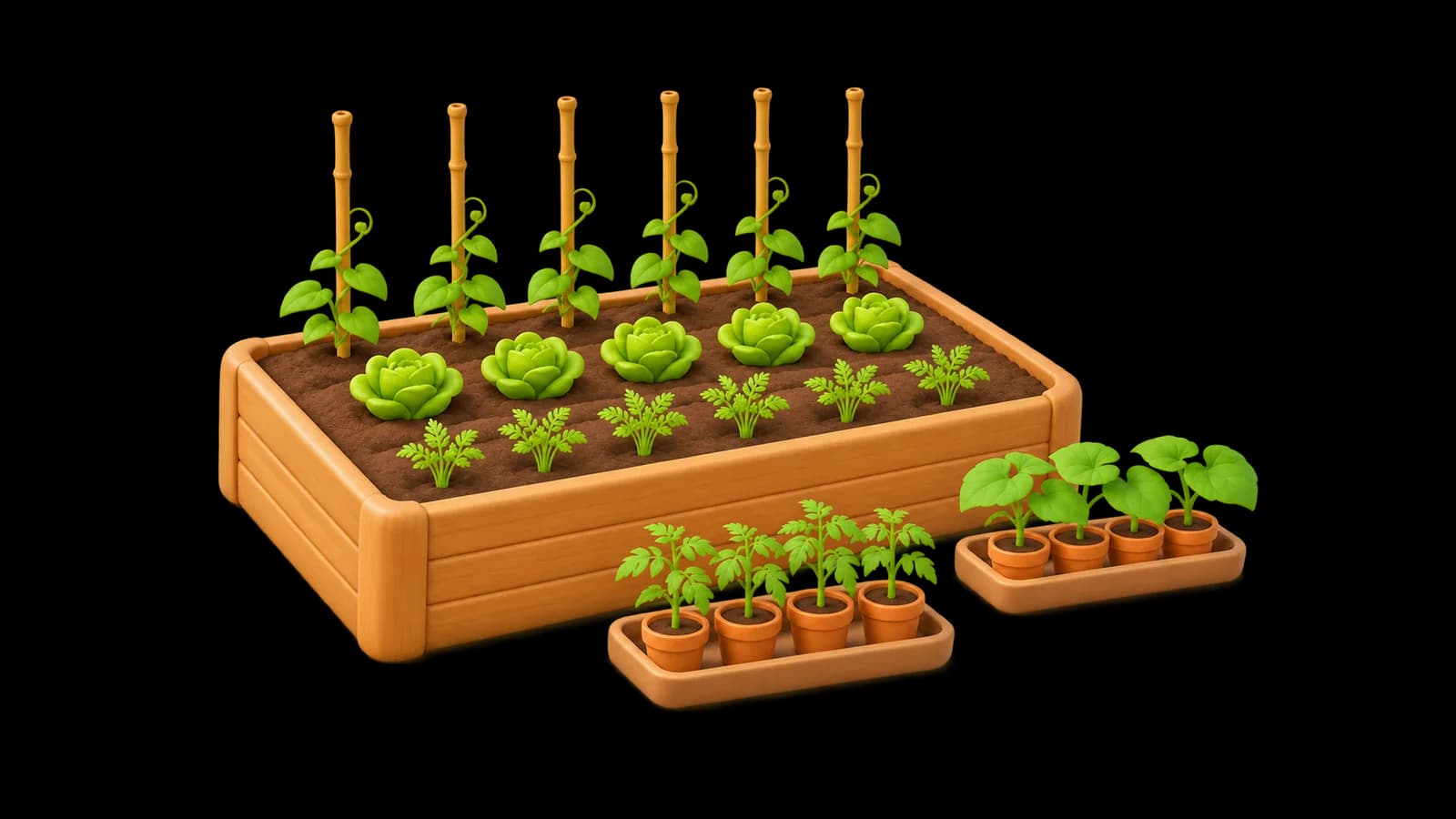
The RHS sows French and runner beans outdoors in May, protected from late frost. Sowstory sows runner beans outdoors from mid May and climbing French beans from late May, once the soil is warm and frost has passed. Both go in as a single cane row on the north edge of the bed, where they will not shade shorter crops.
Roots, salads and peas
Carry on sowing beetroot, carrots, lettuce, radish, spring onions, turnips, kohlrabi, peas and mangetout. Carrots sown after mid May avoid the first generation of carrot fly, according to the RHS. Pak choi joins the list now: Sowstory sows it direct from May, after frost. May is the last month for spring sowings of spinach, rocket and parsnips in Sowstory's windows. Maincrop potatoes can still go in during early May.
Young plants
Leeks go out when they are about pencil-thick, summer cabbage at about 10 cm tall and cauliflowers about six weeks after sowing. Plant Brussels sprouts firmly in May; they are tall, so Sowstory puts them on the north edge. The RHS plants self-blanching celery late in the month, after hardening off.
Planting out tender crops: wait for your area
There is no single last frost date for England, and the Met Office does not publish one. The RHS gives these typical first safe times for planting tender crops out:
| Where you garden | First safe planting-out time (RHS) |
|---|---|
| South-west tip and south coast | First to second half of May |
| Southern England | Second half of May |
| Midlands, north-west England and Yorkshire | End of May |
| North-east England | Early June |
Adjust for your site. Sheltered, urban or coastal gardens can go one to two weeks earlier; exposed, rural or high ones should wait one to three weeks longer. Frost pockets, where cold air drains downhill and settles, need later planting still.
Temperature is a better guide than the calendar. The RHS plants out when nights stay above 7°C, and says tomatoes, peppers, basil and cucurbits do better above 10°C. The Met Office warns that ground frost is more common than air frost in May, and is possible on clear, calm nights when the forecast is 0–4°C. If a cold night is forecast after planting, heavier fleece gives about 2°C of protection. Our guide to the last frost date explains how to judge the risk where you live.
Hardening off
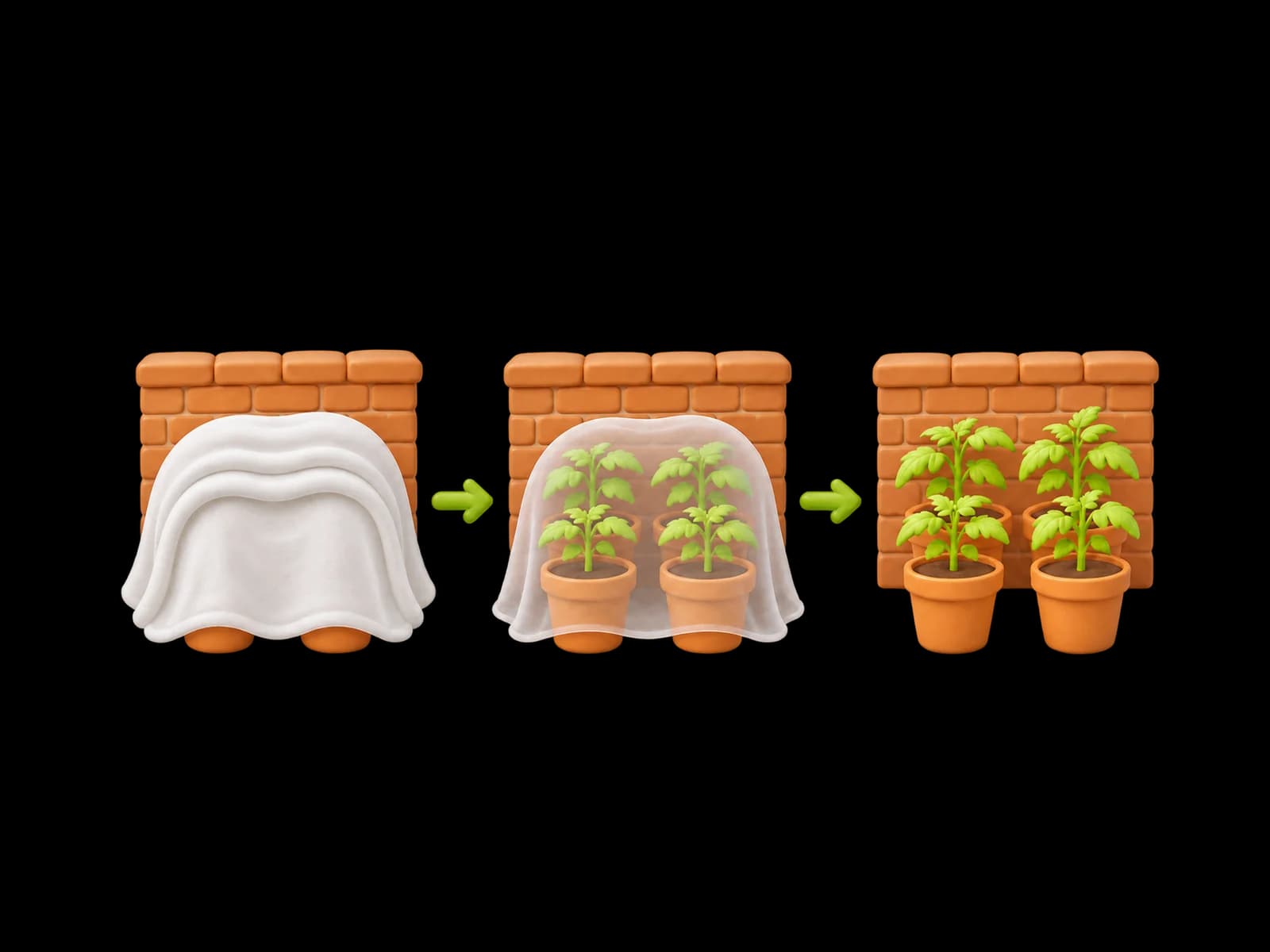
Plants raised indoors need to get used to wind, sun and cooler nights before going into the bed. The RHS allows two to three weeks, longer for plants raised in warmth; its May jobs list gives a shorter 10 to 14 days. Hardening off does not make tender plants frost-hardy.
- Cold frame: in week one, open the lid a little by day and close it at night. Over the next two weeks, open it a little more each day until it comes off.
- Fleece: in week one, stand plants outside by day in a sheltered spot under two layers of fleece and bring them in at night. In week two, use one layer and uncover by day at the end of the week. By the end of week three they stay uncovered and are ready to plant.
In a Sowstory plan this month
May is the fullest month in Sowstory. These crop profiles can start in the bed:
- Sown direct: carrots, short-rooted carrots, radish, loose-leaf and head lettuce, spring onions, chard, beetroot, baby turnip, kohlrabi, dwarf pea and mangetout; last spring sowings of annual spinach, salad rocket and parsnip (all to May)
- New this month: pak choi (May to August, in succession)
- Beans: runner bean (outdoors from mid May) and climbing French bean (outdoors from late May), planted May to June after frost
- Transplants: leek, curly and standard kale, compact summer cabbage, calabrese, cauliflower and self-blanching celery (all May to June), Brussels sprouts (May)
- Potatoes: maincrop, to early May
- Herbs: parsley, chives, coriander and dill
Sowstory starts tomatoes, cucumbers, courgettes, dwarf French beans, peppers, chillies and basil in June. Its windows are England-wide months, not adjusted to your postcode, so you still judge the weather.
If you would like the north-edge cane row and everything else placed for you, Sowstory will lay out your bed to scale and give you a month-by-month timing plan. It is coming soon to the App Store, and your first bed plan is free.
Jobs this month
- Earth up potatoes when the shoots reach about 23 cm, leaving 5–10 cm showing. Our potato growing guide explains the ridge.
- Cover carrots with mesh against carrot fly, which lays its first eggs from late May to June.
- Stake peas and support broad beans with stakes about every 1.2 m.
- Harden off tomatoes, cucumbers and other tender plants ready for planting out.
What not to plant out yet
Until the safe time for your area in the table above, keep tomatoes, cucumbers, courgettes, peppers, chillies and basil under cover, hardening them off as the date approaches. Sowstory plans outdoor cordon tomatoes for June, once nights stay around 16°C, and outdoor cucumbers from early June, once nights stay above about 12°C. See our guides to growing tomatoes and growing cucumbers for spacing and support.
For the earliest sowings, see what to sow in April; for planting the tender crops out, see what to sow in June. The vegetable sowing calendar shows the whole year.
Sources
- RHS: Grow your own, jobs for May
- RHS: When to plant out tender plants
- RHS: Hardening off
- RHS: Frost damage
- RHS: How to grow courgettes
- RHS: How to grow cucumbers
- RHS: How to grow tomatoes
- RHS: Carrot fly
- Met Office: What is frost and ice?
- Met Office: Why frost can still occur in late spring
- Sowstory knowledge base, release v1.4