
June is the main planting-out month in England: tomatoes, cucumbers, courgettes, peppers, chillies and basil go into the bed once frost risk has passed and nights stay warm, and you can still sow beans, beetroot, carrots, lettuce, radish, peas and herbs outdoors. The RHS puts the first safe time for tender crops at early June in north-east England, and later again on exposed or high sites, so judge your own garden rather than a single date.
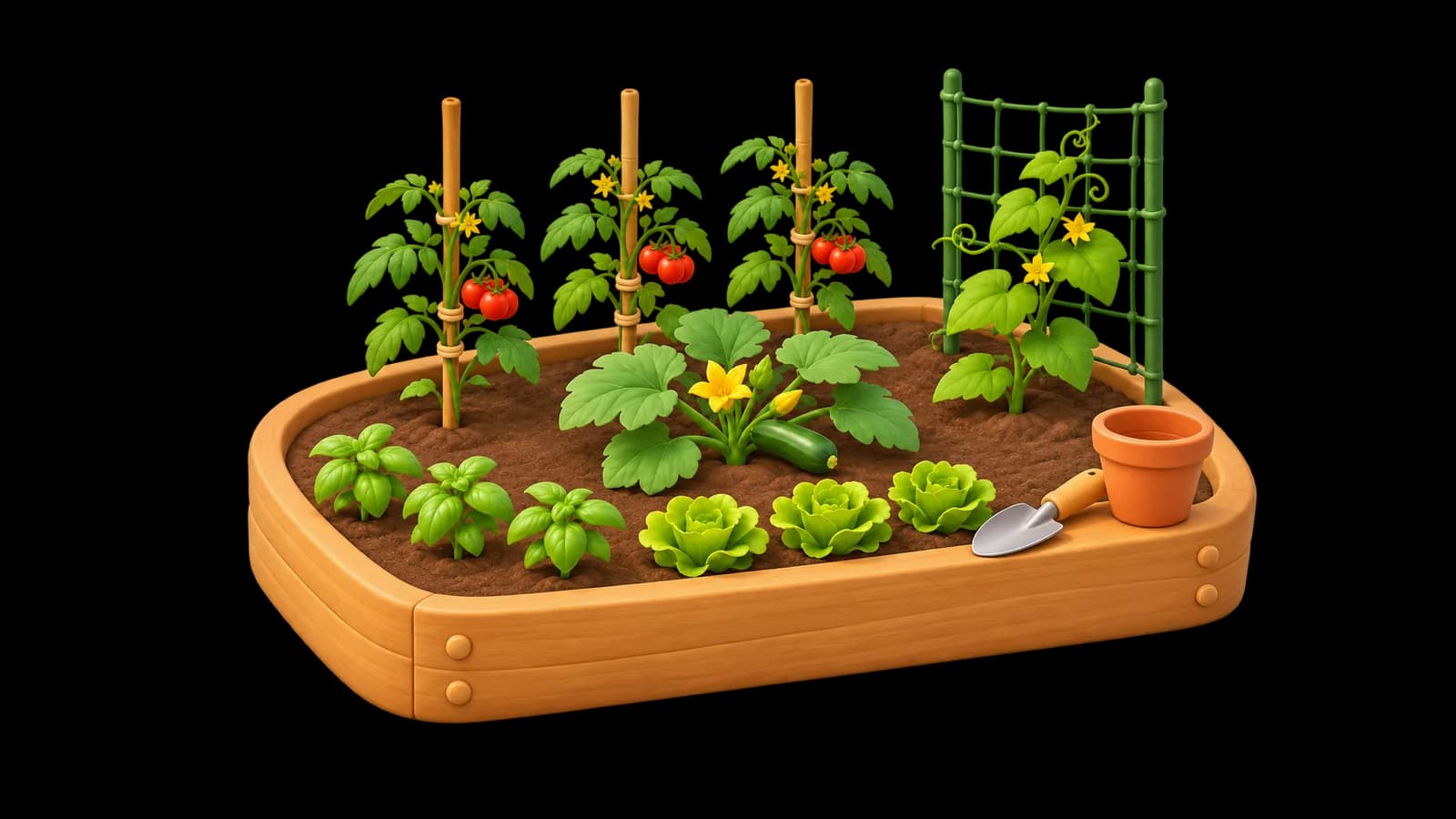
By the end of June the summer bed should be full. This guide covers what to sow and plant, what Sowstory starts this month, the jobs that keep crops healthy and the sowings to make before the windows close.
At a glance: what to plant in June
| Task | Crops | Source |
|---|---|---|
| Sow indoors or under cover | Very little; the RHS June list is all outdoor sowing | RHS |
| Sow outdoors | Beetroot, lettuce, pak choi, radish, French and runner beans, peas, outdoor cucumbers, courgettes, carrots, kohlrabi, turnips, calabrese, herbs | RHS; Sowstory |
| Plant out | Tomatoes, cucumbers, courgettes, peppers, chillies, basil, celery, leeks, winter brassicas | RHS; Sowstory |
| Harvest | Broad beans, mangetout, first early potatoes, lettuce, radish, pak choi, kohlrabi, summer cabbage, short-rooted carrots, herbs; autumn-planted garlic from late spring to early summer | Sowstory harvest windows; RHS |
The RHS also sows squash, pumpkins and sweetcorn in June. Sowstory does not plan these yet.
Sow indoors
The RHS June list contains no indoor sowings. In Sowstory's windows, cauliflowers can still be sown until June and planted out about six weeks later, kohlrabi raised in modules can be planted in May or June, and parsley and coriander raised indoors can go out until June. Otherwise, the indoor work now is hardening off the tender plants you started in spring.
Sow or plant outdoors
Plant out tender crops
Wait for the safe time in your area. The RHS gives these typical first safe planting-out times:
- South-west tip and south coast: first to second half of May
- Southern England: second half of May
- Midlands, north-west England and Yorkshire: end of May
- North-east England: early June
Sheltered, urban or coastal gardens can go one to two weeks earlier; exposed, rural or high gardens should wait one to three weeks longer, and frost pockets later still. The RHS plants out once nights stay above 7°C, preferably above 10°C for tomatoes, peppers, basil and cucurbits. Our guide to the last frost date explains how to read the signs.
Harden plants off first. The RHS allows two to three weeks, moving them outside by day under fleece or in an opening cold frame, with less cover each week. It does not make them frost-hardy.
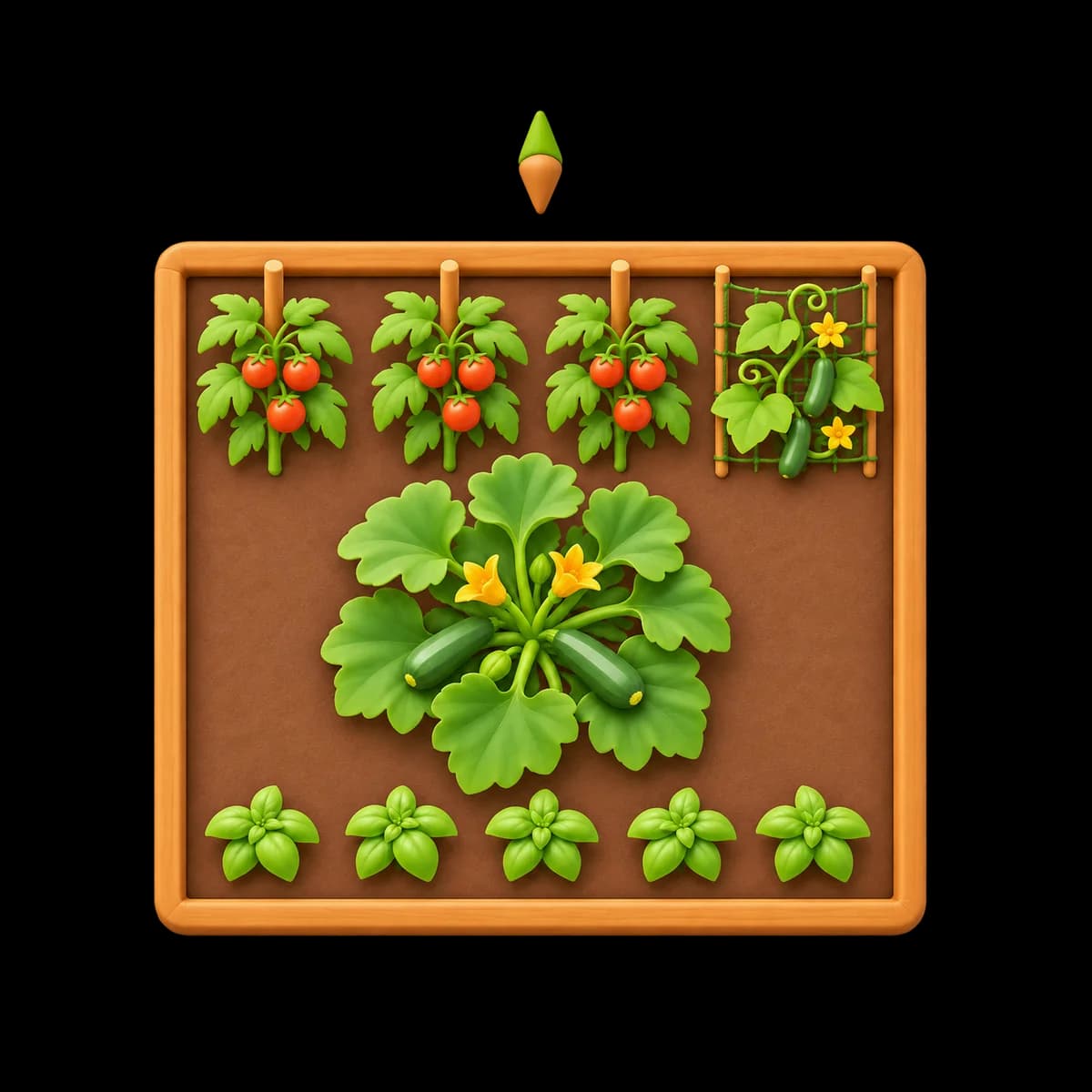
- Tomatoes. Sowstory plants outdoor tomatoes in June, once nights stay around 16°C. It allows about 60 × 60 cm for each cordon and plans no more than three in one bed, on the north edge with a stake. Our tomato spacing guide compares the figures.
- Cucumbers. Outdoor ridge cucumbers go out from early June once nights stay above about 12°C. Sowstory trains them up canes or netting on the north edge; it does not plan trailing cucumbers yet. See how to grow cucumbers.
- Courgettes. Sowstory sows courgettes direct in June, or plants a ready plant at the same time, allowing about 90 × 90 cm each. The RHS limits early June direct sowing to southern England and south Wales.
- Peppers and chillies. Only after all frost risk has passed, in a warm, sheltered spot. Sowstory waits for nights above 12°C for peppers.
- Basil. Plant out once nights stay above 10°C, in a warm, sheltered spot. Our basil growing guide has the details.
Sow outdoors
- Beans. The RHS sows French beans in rows 45 cm apart, 15–23 cm apart in the row. Sowstory sows dwarf French beans direct in June only, once the soil has warmed.
- Salads. Beetroot, lettuce, pak choi and radish can go in now; the RHS suggests part shade in hot weather. Lettuce and coriander bolt in hot, dry conditions, so keep them watered, and give summer coriander a spot shaded from midday sun.
- Carrots. Gardeners' World says sowings from June are less prone to carrot fly.
- Peas. Peas sown so they flower outside June and July should escape pea moth; mangetout is largely unaffected.
- Autumn crops. The RHS sows calabrese, turnips and kohlrabi now for autumn.
Plant out brassicas, leeks and celery
The RHS plants out winter brassicas and celery in June. June is the last month in Sowstory's windows for planting leeks, kale, summer cabbage, calabrese, cauliflower and self-blanching celery.
In a Sowstory plan this month
June is the only month Sowstory starts tomatoes, cucumbers, courgettes, dwarf French beans, peppers, chillies and basil. These are all the crop profiles that can start in the bed:
- Tender crops (June only): outdoor cordon and bush tomatoes, outdoor cucumber, courgette, dwarf French bean, sweet pepper, chilli, basil
- Beans and peas: runner bean and climbing French bean (planted May to June), dwarf pea and mangetout (to June)
- Sown direct: carrots, short-rooted carrots, radish, loose-leaf and head lettuce, spring onions, chard, beetroot, baby turnip, pak choi, kohlrabi
- Transplants: leek, curly and standard kale, compact summer cabbage, calabrese, cauliflower, self-blanching celery (all to June)
- Herbs: parsley, coriander and dill (to June)
These windows are England-wide months, not adjusted to your postcode, so in a late spring you may plant in the second half of June.
If you are fitting tall tomatoes, cucumbers and beans into one bed, Sowstory will lay it out to scale, put the tall crops on the north edge and tell you how many plants fit. It is coming soon to the App Store, and your first bed plan is free.
Jobs this month
- Water evenly. Irregular watering makes tomatoes split or get blossom end rot. Water cucumbers at the base, ideally in the morning, and mulch at least 5 cm deep.
- Side-shoot cordon tomatoes at least weekly; bush types need no side-shooting.
- Watch for blight. UK outbreaks can start from June, earliest in the South West, and are most common in warm, wet weather.
- Net brassicas against cabbage caterpillars, likely from June to July, keeping the netting off the leaves.
- Keep carrots covered while carrot fly is laying its first eggs.
- Earth up potatoes as they grow.
Last chance
June closes several windows in Sowstory: the last sowings of dwarf peas, mangetout, parsley, coriander and dill, and the last planting of leeks, kale, cabbage, calabrese, cauliflower, celery and the bean rows. Tomatoes, cucumbers, courgettes, dwarf French beans, peppers, chillies and basil have only this month. The RHS sows sweetcorn before mid June, though Sowstory does not plan it.
Missed a window? The May sowing guide covers what should already be in, and what to sow in July shows what you can still start. The vegetable sowing calendar has the full year.
Sources
- RHS: Grow your own, jobs for June
- RHS: When to plant out tender plants
- RHS: Hardening off
- RHS: How to grow tomatoes
- RHS: How to grow cucumbers
- RHS: How to grow courgettes
- RHS: How to grow basil
- RHS: How to grow lettuce
- RHS: How to grow coriander
- RHS: How to grow carrots
- RHS: Pea moth
- RHS: Potato and tomato blight
- RHS: Cabbage caterpillars
- RHS: How to grow garlic
- BBC Gardeners' World: How to grow tomatoes
- BBC Gardeners' World: 10 ways to avoid carrot root fly
- Sowstory knowledge base, release v1.4