
Tomato spacing outdoors is 45–60 cm between plants: the RHS range, with the wider end for bigger varieties. In a raised bed, Sowstory allows a 60 × 60 cm square for each staked cordon tomato and up to 1 × 1 m for a sprawling bush variety, and puts both on the north edge so they do not shade the rest of the bed.
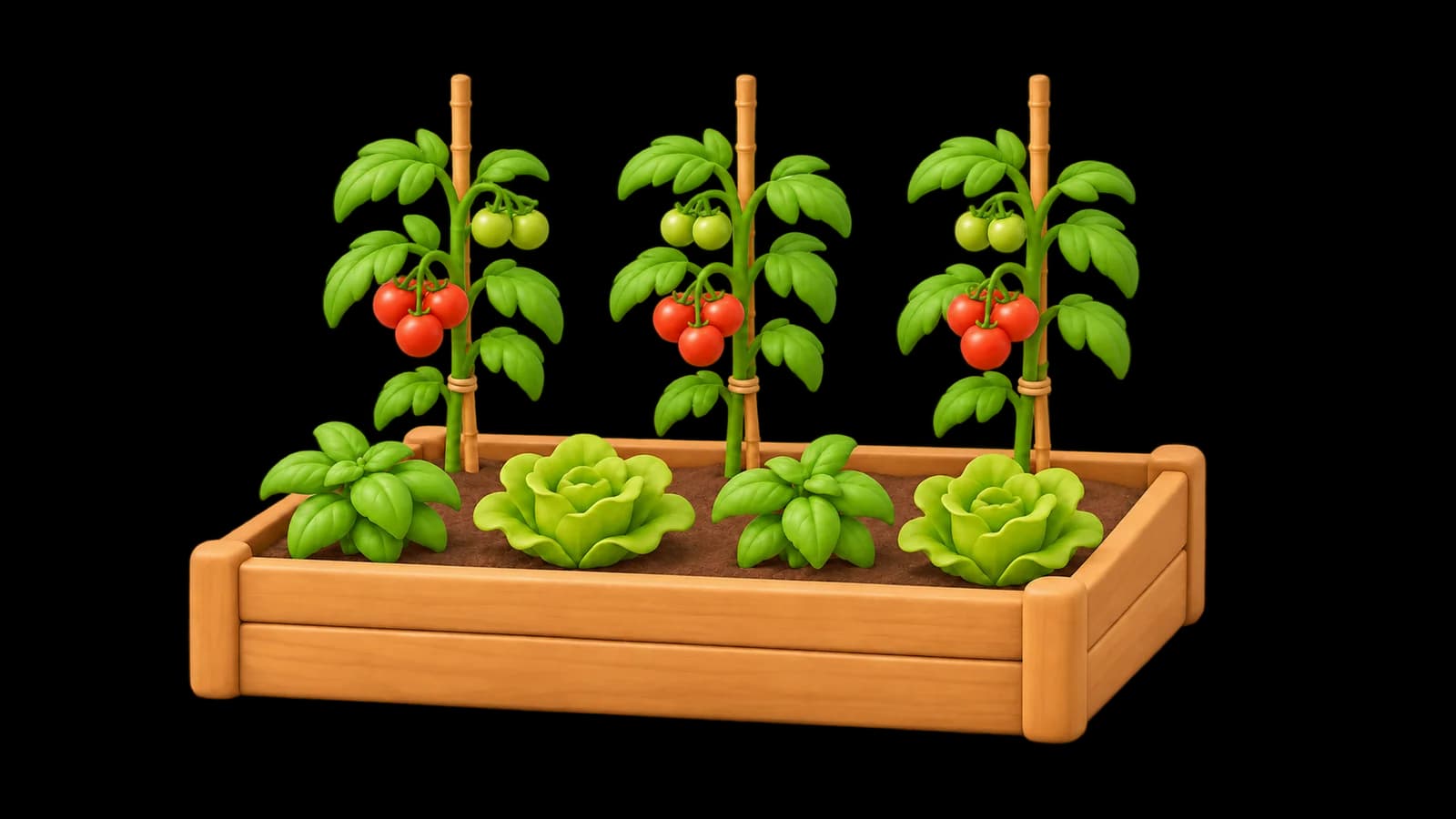
The right gap depends on the type of tomato you grow, so start by checking whether yours is a cordon or a bush variety. The seed packet or plant label will say.
Tomato spacing at a glance
| Type | Spacing between plants | Sowstory planning allowance | Support | Plants per 1.2 × 2.4 m bed |
|---|---|---|---|---|
| Outdoor cordon (single stem, staked) | 45–60 cm (RHS) | 60 × 60 cm square | Tall cane or stake each | up to 3 |
| Outdoor bush (sprawling, not pinched out) | 45–60 cm generally; some varieties spread up to 1 m | 100 × 100 cm square | None needed | up to 2 |
| Pot | one plant per 30–45 cm pot (RHS) | not planned | Cane for cordons | — |
| Growbag | two plants per bag (RHS) | not planned | Cane for cordons | — |
The bed counts are Sowstory's planning caps for one raised bed, so there is still room for other crops.
Cordon tomato spacing
Cordon (indeterminate) tomatoes are trained up a single stem tied to a tall cane. Because you pinch out the side-shoots, each plant stays narrow, which is why the RHS's 45–60 cm range works. Outdoors, the RHS advises stopping cordons once they have about four trusses (flower clusters), so the fruit has time to ripen before autumn.
In a raised bed, Sowstory uses the upper figure, 60 cm each way. That gives you room to reach in to tie the stem, remove side-shoots and pick, and lets air move between plants. Plant cordons in a single line along the north edge of the bed.
Bush tomato spacing
Bush (determinate) tomatoes are not pinched out. They branch freely and can sprawl. General advice puts them 45–60 cm apart, but the spread depends on the variety. The RHS plant record for the compact cherry tomato 'Red Alert', for example, gives a height and spread of between 50 cm and 1 m.
Because the eventual spread varies so much, Sowstory plans a 1 × 1 m square for an outdoor bush tomato, the upper end for a variety of that type. If your packet gives a smaller spread for a genuinely compact variety, you can follow the packet; just leave room to reach the fruit underneath.
How many tomato plants fit your bed
Count positions along the north edge, then subtract any space you want for other tall crops:
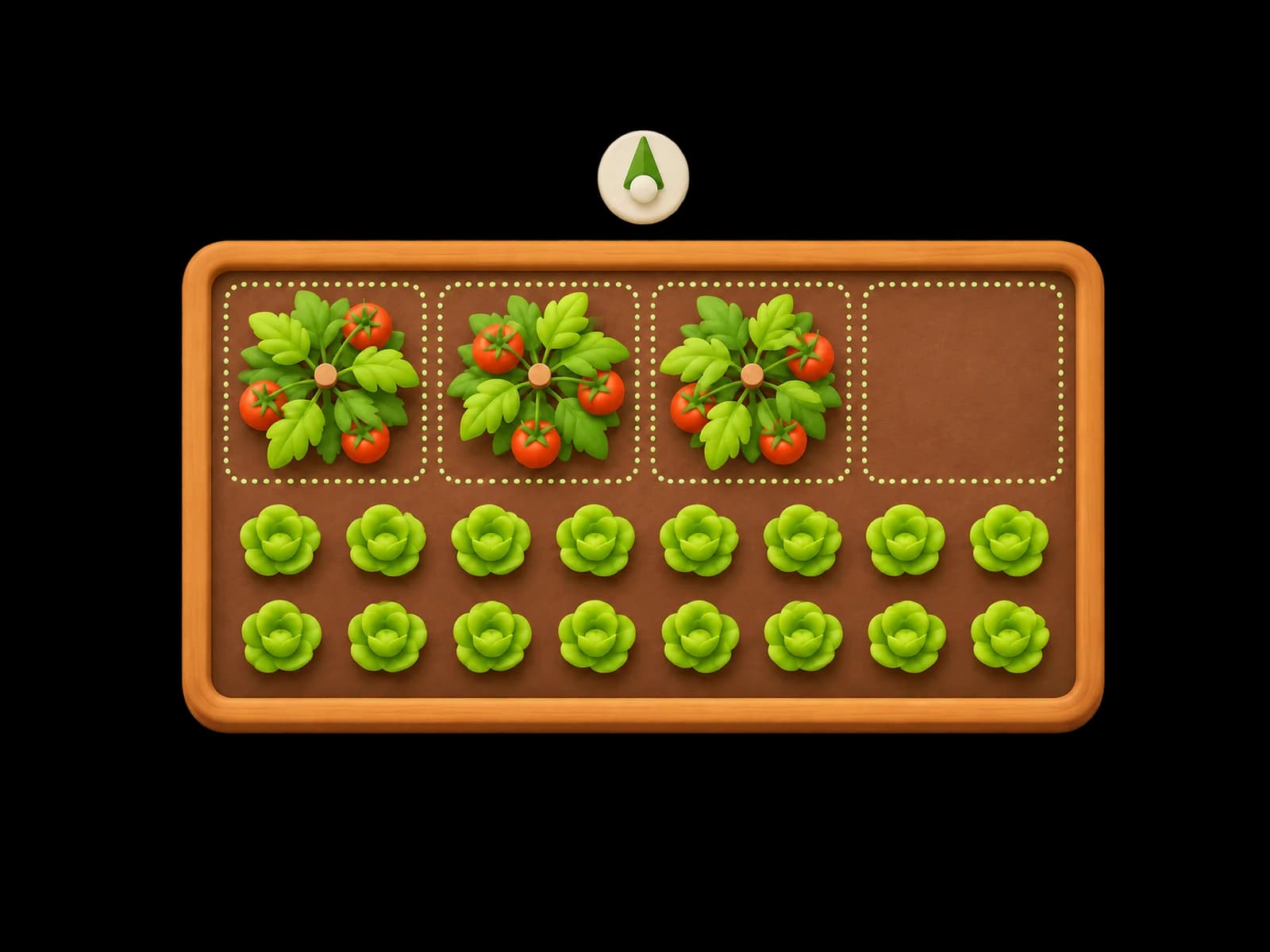
- 1.2 × 2.4 m bed (about 4 × 8 ft): 2.4 m ÷ 60 cm = 4 cordon positions. Sowstory caps outdoor cordons at 3 per bed, leaving a gap for, say, a row of climbing beans or a trained cucumber. Bush types: two plants at 1 m each way.
- 1.2 × 1.2 m bed (about 4 × 4 ft): two cordons along the north edge, or one bush tomato.
For other crops and bed sizes, use the plant spacing calculator or the full vegetable spacing chart.
If you would rather not count squares, Sowstory places tomatoes on the north edge of your bed and works out how many fit alongside the other crops you want. It is coming soon to the App Store, and your first bed plan is free.
Where to put tomatoes in a raised bed
- North edge. Cordons on canes grow tall and bush types can reach about a metre. On the north side they cast their shadow off the bed rather than across it.
- Sun and shelter. The RHS recommends a warm, sunny, sheltered spot for outdoor tomatoes. Sowstory requires at least six hours of direct sun for tomatoes.
- Neighbours. Basil is a popular low companion in front of tomatoes. Keep tomatoes and potatoes apart where you can, as both suffer from the same blight. See companion plants for tomatoes.
- Square foot beds. If you garden in a square-foot grid, a staked cordon takes a whole square; see square foot gardening for how grid spacing compares with these figures.
Spacing in pots and growbags
If your raised bed is full, tomatoes also grow well in containers. The RHS suggests one plant per pot 30–45 cm across, or two per standard growbag. Containers hold far less water than a bed, so the RHS warns they may need watering every day in hot weather, and in a heatwave twice a day is better than one large drink. Uneven watering is what causes blossom end rot, a sunken dark patch at the flower end of the fruit, which the RHS says is most common in pots and growbags. It is a watering problem, not a disease, and a lack of calcium in the soil is rarely the cause.
Keeping cordons inside their space
A cordon only stays within its 60 cm square if you keep it to one stem. The RHS advises removing the side-shoots that grow from the joints between leaf and stem each time you water, and stopping outdoor cordons after four trusses by cutting two leaves above the top truss. Gardeners' World gives a slightly different figure of four to five trusses outdoors. Bush types are left unpruned, which is why they need more room.
Spacing, rotation and blight
Good spacing will not stop blight, but where you plant matters. Late blight attacks both tomatoes and potatoes, is most common in warm, wet weather and, according to the RHS, can reach the UK from June, earliest in the South West. Home gardeners have no blight fungicides, so:
- keep tomatoes and potatoes apart rather than side by side in one bed;
- avoid growing tomatoes in the same bed two years running, as the RHS advises;
- consider a blight-resistant variety if your area is damp.
When to plant out at this spacing
Tomatoes are tender. Plant them into the bed only once the risk of frost has passed and nights stay warm; the RHS suggests waiting until temperatures stay above about 16°C, which in much of England means June. Sowstory plans outdoor tomatoes into the bed in June. Harden plants off first. Our tomato growing guide covers sowing, feeding and picking.
Sources
- RHS: How to grow tomatoes
- RHS plant record: Solanum lycopersicum 'Red Alert'
- RHS: Blossom end rot
- RHS: Tomato and potato late blight
- BBC Gardeners' World: How to grow tomatoes
- Sowstory knowledge base, release v1.4 (cordon and bush tomato planning allowances, bed caps, June start)