
A vegetable sowing calendar for England starts with indoor sowings in late winter, opens the bed for outdoor sowing in March, peaks from April to July, and ends with garlic planted from October to December. Tender crops such as tomatoes, beans, courgettes and cucumbers go outside only once frost risk has passed, which the RHS puts between the first half of May on the south coast and early June in north-east England.
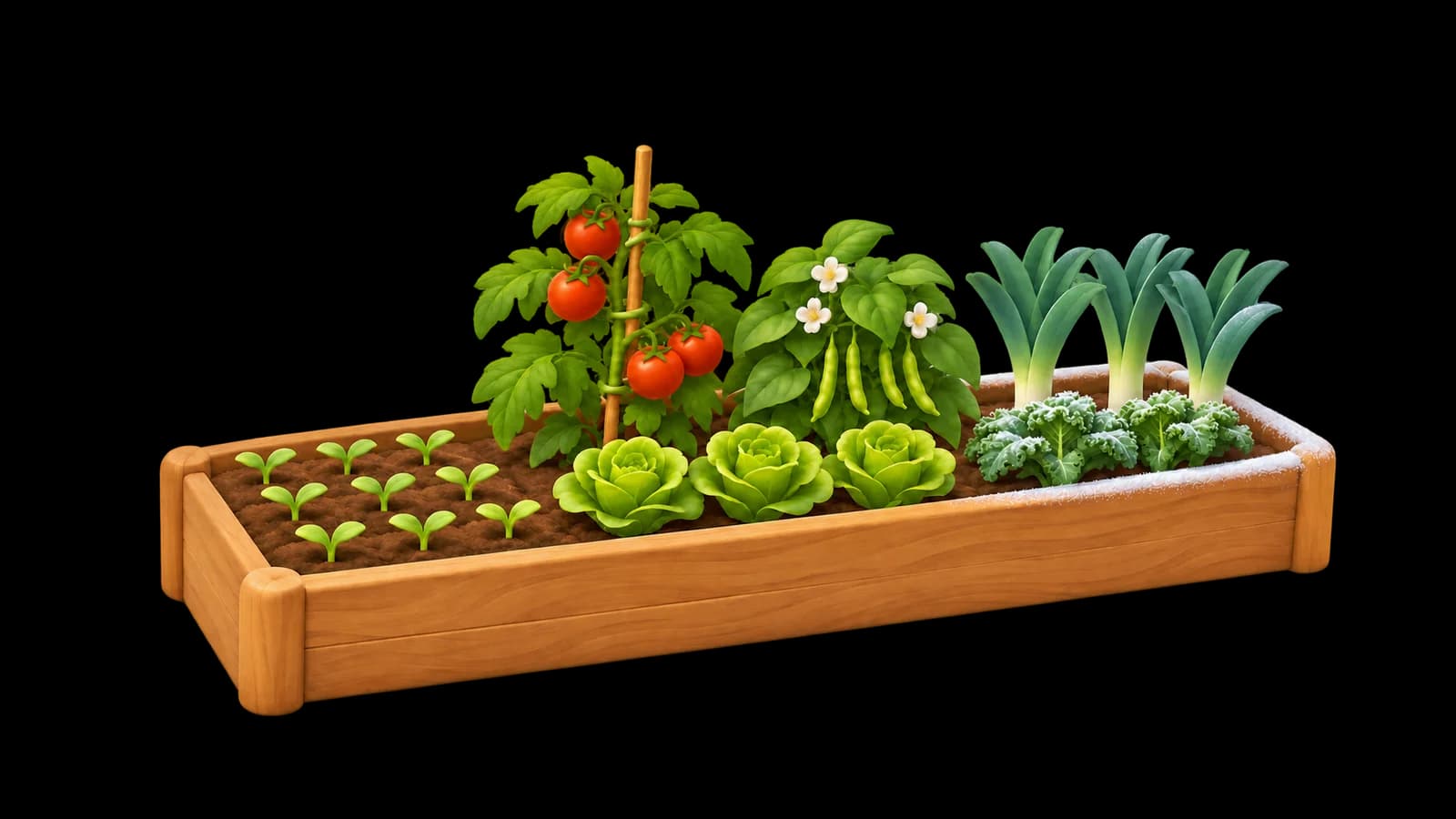
This page gives you the whole year in one place: a month-by-month summary with links to each month's guide, then a crop-by-crop table showing when to sow indoors, when each crop goes into the bed and when to expect a harvest. The bed months are the England-wide windows Sowstory plans with; the indoor and harvest timings come from the same knowledge base and from the RHS.
What to sow each month: the year at a glance
Use this as your vegetable planting guide by month. Each month links to a fuller page with jobs and what not to sow yet.
- January: indoor sowings only for most gardens. The RHS lists onion seed in a heated propagator and early lettuce, spinach, salad onions, turnips, summer cabbage and cauliflower in seed compost. Buy seed potatoes.
- February: greenhouse tomatoes, chillies, cucumbers and aubergines from mid-month, and peas in guttering under cover. Chit early seed potatoes. Outdoor sowing only on light soil in mild areas.
- March: the bed opens. Sowstory plans 15 crop profiles to start this month, including early carrots, radish, lettuce, spinach, chard, peas, broad beans, parsnips, onion sets and first early potatoes.
- April: beetroot, turnips, short-rooted carrots, second early and maincrop potatoes, and herbs such as parsley, coriander and dill join the list.
- May: leeks, kale, cabbage, calabrese, cauliflower, Brussels sprouts and celery go in as transplants; runner and climbing French beans follow once frost risk has passed.
- June: the tender crops: outdoor tomatoes, cucumbers, courgettes, dwarf French beans, basil, peppers and chillies.
- July: keep sowing salads and roots; sprouting broccoli goes in for next spring.
- August: last sowings of radish, lettuce, spinach, rocket, spring onions, turnips and pak choi.
- September: annual spinach is the only crop Sowstory starts in the bed; the RHS adds winter lettuce, rocket and green manures.
- October: plant garlic. The RHS also lists overwintering broad beans in mild areas and spring cabbages.
- November: garlic, and overwintering broad beans in mild areas on well-drained soil (RHS).
- December: garlic and shallots in mild areas with well-drained soil. The RHS lists no vegetable sowing.
What vegetables to plant now
If you are reading this in the middle of a month, open that month's page above. If the month is nearly over, read the next one as well: sowing windows overlap, and in the north, inland or on high ground, sowings often run later than the month suggests.
Vegetable sowing calendar by crop
How to read the tables below:
- Sow indoors means sowing in pots, modules or a separate nursery bed, under cover where the window says so. A dash means Sowstory plans the crop as a direct sowing (or as planted sets, tubers or cloves).
- In the bed is the month or months Sowstory lets the crop start in your raised bed in England, by sowing direct or planting out.
- Harvest is the knowledge base's harvest window or, where it has none, the RHS timing.
Roots
| Crop | Sow indoors | In the bed | Harvest |
|---|---|---|---|
| Carrot (early) | – | March–July | About 12–16 weeks after sowing (RHS) |
| Short-rooted carrot | – | April–July | June–October |
| Beetroot | – | April–July | Summer–autumn; usually 50–60 days (RHS) |
| Parsnip | – | March–May | October–February |
| Radish | – | March–August | About 4–6 weeks after sowing; longer for early sowings (RHS) |
| Baby turnip | – | April–August | Small roots in about 6–10 weeks |
| Kohlrabi | Modules, for May–June planting | March–July | June–November |
Salads and leaves
| Crop | Sow indoors | In the bed | Harvest |
|---|---|---|---|
| Loose-leaf lettuce | – | March–August | About 4–6 weeks (RHS) |
| Head lettuce | – | March–August | About 10–14 weeks (RHS) |
| Salad rocket | – | March–May, August | From about 4–6 weeks |
| Annual spinach | – | March–May, August–September | Baby leaves in about a month, mature in about two (RHS) |
| Chard | – | March–July | Pickings for several months (RHS) |
| Pak choi | – | May–August | June–October |
Onion family
| Crop | Sow indoors | In the bed | Harvest |
|---|---|---|---|
| Spring onion | – | March–August | About two months after sowing (RHS) |
| Onion sets | – | March–April | When the foliage yellows and topples (RHS) |
| Garlic | – | October–December | Late spring to early summer (RHS) |
| Leek | March–May in a nursery | May–June | November–February |
Potatoes
| Crop | Before planting | In the bed | Harvest |
|---|---|---|---|
| First early potato | Chit from late January in milder areas, by early March in colder ones (RHS) | March–April | June–July (RHS) |
| Second early potato | Chit from late winter | April | July–August |
| Maincrop potato | No chitting needed | Mid April–early May | August–October |
Peas and beans
| Crop | Sow indoors | In the bed | Harvest |
|---|---|---|---|
| Dwarf pea | – | March–June | About 12 weeks to first picking |
| Mangetout | – | March–June, once soil reaches about 10°C | June–October |
| Dwarf broad bean | – | March–April | June–August |
| Dwarf French bean | – | June | First pods in about 7–10 weeks |
| Runner bean | April–May | May–June (or sow direct mid-May–July) | July–October |
| Climbing French bean | Late April | May–June (or sow direct late May–July) | July–October |
Tender fruiting crops
| Crop | Sow indoors | In the bed | Harvest |
|---|---|---|---|
| Outdoor cordon tomato | March–April | June, once nights stay warm | July–October |
| Outdoor bush tomato | April | June, after frost | Summer–October |
| Outdoor cucumber | Late April | Early June, nights above about 12°C | July–October |
| Courgette | – | June, direct sown | Summer–October |
| Outdoor sweet pepper | Late March–April | June, nights above 12°C | August–early autumn |
| Outdoor chilli | February–April at about 21°C | Early June | August–October |
Brassicas
| Crop | Sow indoors | In the bed | Harvest |
|---|---|---|---|
| Compact summer cabbage | March–May in modules or a seedbed | May–June | June–September |
| Calabrese | March–May | May–June | July–November |
| Summer/autumn cauliflower | January–June | May–June | July–October |
| Curly kale | March–May in a nursery | May–June | September through winter |
| Standard kale | March–May | May–June | September–March |
| Brussels sprouts | February–May | May | September–February |
| Sprouting broccoli | March–May | July–August | February–May the following year |
Herbs and celery
| Crop | Sow indoors | In the bed | Harvest |
|---|---|---|---|
| Parsley | Optional, April–June | April–June | May–November |
| Chives | March–May | April–May | May–November |
| Coriander (leaf) | Optional, April–June | April–June | May–October |
| Dill (leaf) | – | April–June | May–October |
| Basil | March–May | June, nights above 10°C | June–October |
| Self-blanching celery | March–April at about 15°C | May–June | Midsummer to autumn, before frost |
When to plant vegetables in England: what moves the dates
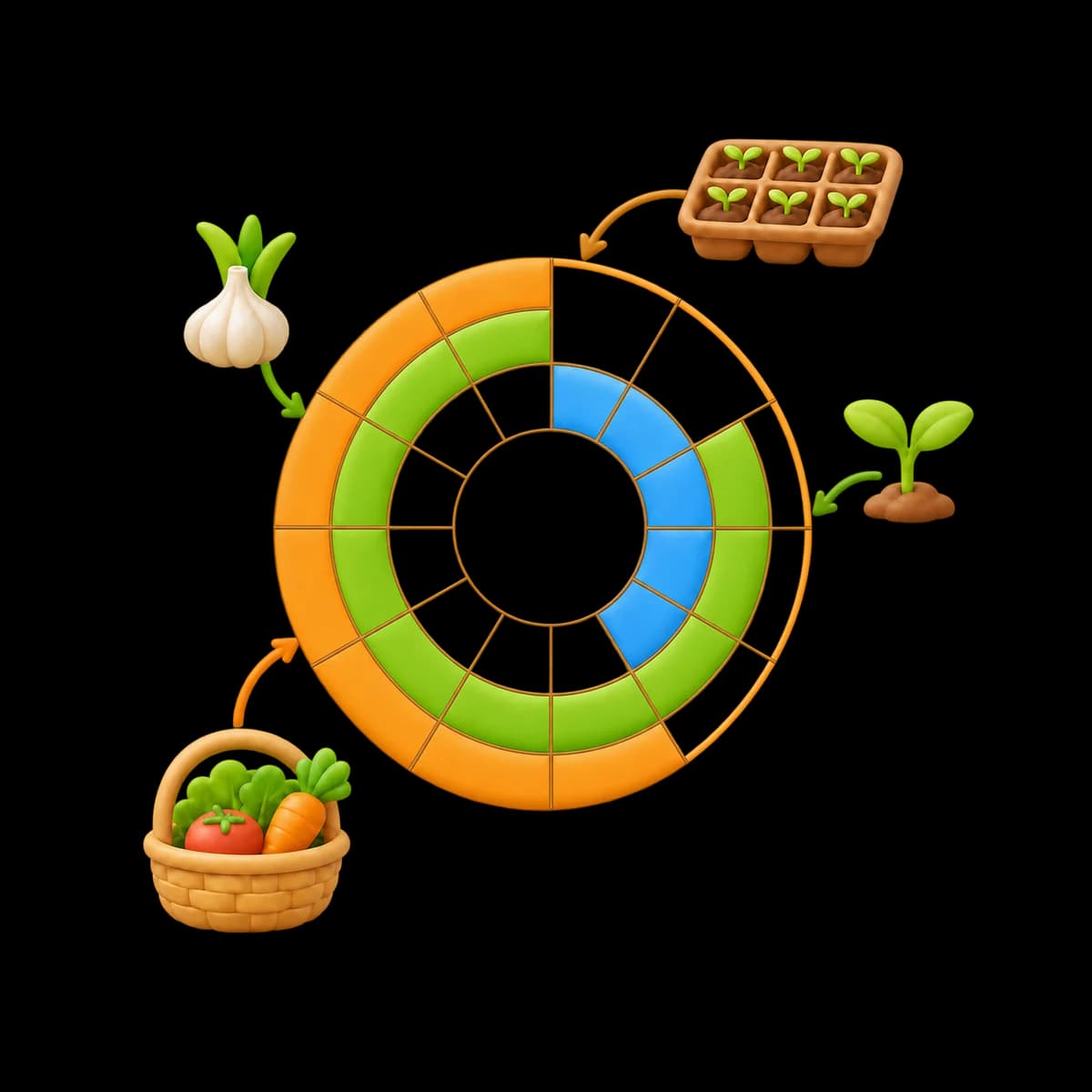
The months above are planning windows for the whole of England, not dates for your street. Four things shift them:
- Where you are. The Met Office says the average last air frost often comes before the end of April in the south and on coasts, but well into May in the north and on higher ground. Southern and coastal gardens can usually start a little earlier.
- Frost and tender crops. The RHS puts the first safe planting-out time for tender crops at the first to second half of May on the south-west tip and south coast, the second half of May in southern England, the end of May in the Midlands, north-west England and Yorkshire, and early June in north-east England. Our guide to the last frost in your area explains how to judge your own site.
- Soil temperature. Some seeds wait for warm soil, whatever the month says. The RHS says to sow beetroot once the soil is at least 7°C, and peas once it is about 10°C.
- Your microclimate. The RHS says sheltered, urban or coastal sites can plant out tender crops 1–2 weeks earlier, and exposed, rural or high sites should wait 1–3 weeks longer. Frost pockets, where cold air pools at the bottom of a slope, are colder still.
Raised bed vegetable planting calendar: making one bed last the year
A raised bed calendar is about space as well as months. Some crops are quick: Sowstory reserves about eight weeks of bed space for a batch of radishes and ten weeks for loose-leaf lettuce. Others stay for most of a year: autumn-planted garlic holds its rows for about 36 weeks, and winter leeks and kale for about 40.
That difference is what lets one bed crop for longer. A few patterns that fit the windows above:
- Quick crops in gaps. Radish, loose-leaf lettuce and spring onions can be sown from March to August, so a short row can fill space that a later crop will need.
- Early crop, then a winter crop. First early potatoes planted in March or April are lifted in June or July (RHS), and sprouting broccoli goes into the bed in July or August for a harvest the following spring.
- Autumn garlic. Garlic planted from October to December uses the bed over winter. Leave room for it when you plan the summer: see when to plant garlic.
Spacing matters as much as timing. The vegetable spacing chart gives the row and plant gaps, and the raised bed layout guide shows how to fit tall crops on the north edge so they do not shade the rest.
Working out which crops fit together, and when each part of the bed is free, is fiddly on paper. Sowstory lays out your bed to scale, tells you how many plants or rows fit, and gives you a month-by-month timing plan with succession where it is supported. It is coming soon to the App Store, and your first bed plan is free.
What this calendar does not cover
- Crops Sowstory does not plan yet. Sweetcorn, squash and pumpkins, strawberries and trailing cucumbers are left out of the tables, even where the RHS month lists mention them.
- Greenhouse growing. The windows are for outdoor raised beds. Greenhouse tomatoes and cucumbers are sown earlier; the RHS lists them from mid-February.
- Your exact dates. Sowstory's timing is England-wide. It is not adjusted for your postcode's local climate and it does not give a frost date for your address, so you still judge the soil and the weather.
Sources
- RHS: Grow your own, January jobs
- RHS: Grow your own, February jobs
- RHS: Grow your own, March jobs
- RHS: Grow your own, September jobs
- RHS: Grow your own, October jobs
- RHS: Grow your own, November jobs
- RHS: Grow your own, December
- RHS: When to plant out tender plants
- Met Office: Why frost can still occur in late spring
- RHS: How to grow carrots
- RHS: How to grow beetroot
- RHS: How to grow radishes
- RHS: How to grow lettuce
- RHS: How to grow spinach
- RHS: How to grow chard
- RHS: How to grow salad onions
- RHS: How to grow onions
- RHS: How to grow garlic
- RHS: How to grow potatoes
- RHS: How to grow peas
- Sowstory knowledge base, release v1.4