
To grow potatoes in England, plant seed potatoes in a 15 cm trench between late March and early May, depending on the type, then draw soil up around the shoots as they grow. First earlies can be ready in as little as 12 weeks, while maincrops are lifted for storage from late August.
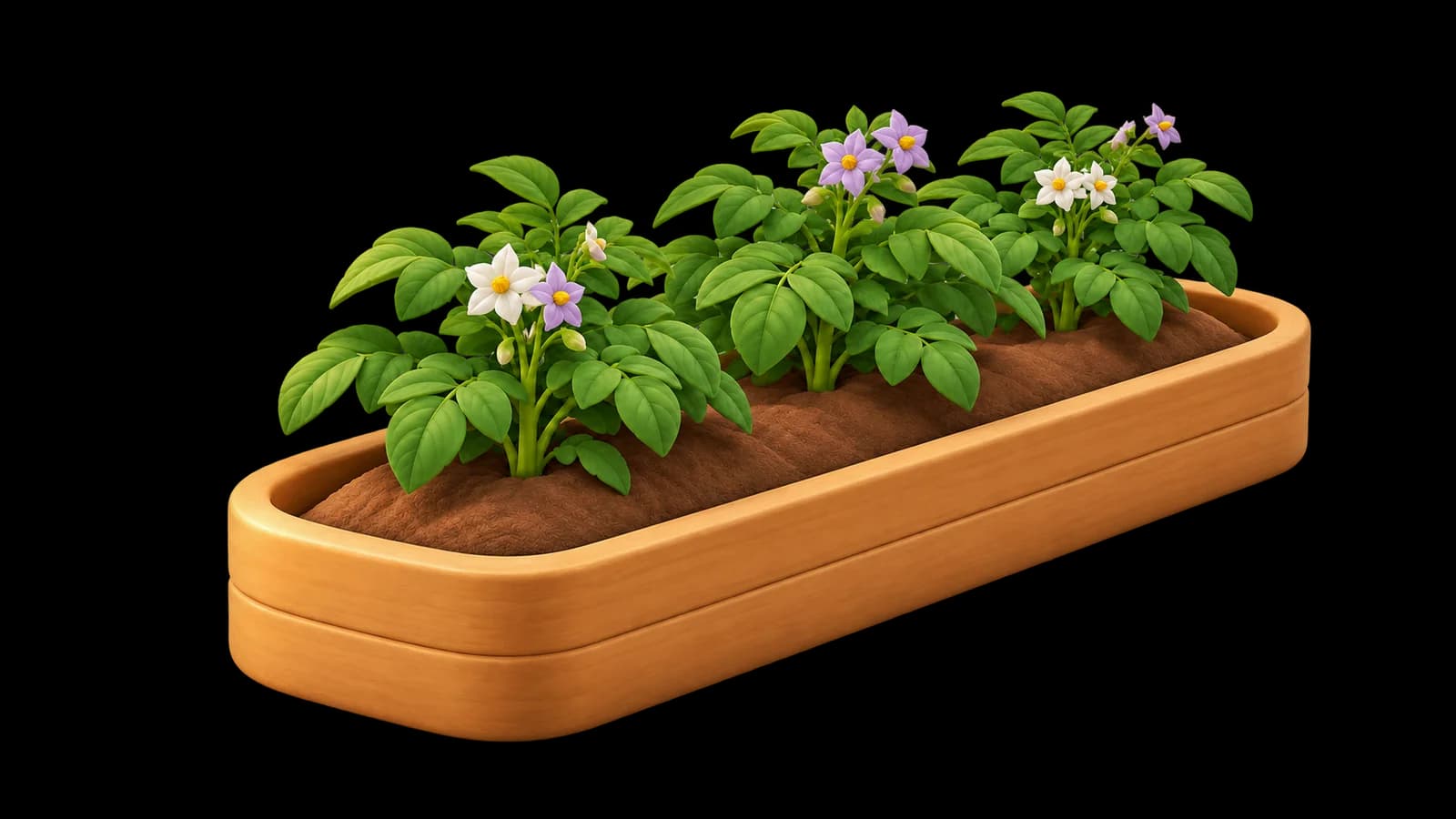
Potatoes are rewarding in a raised bed but take a lot of space for their ridge. This guide covers the three types, when to plant, chitting, spacing, how many fit a bed, earthing up, blight and harvest.
Potato quick facts
| Fact | First earlies | Second earlies | Maincrop |
|---|---|---|---|
| Plant (Sowstory, England) | March to April | April | April to May |
| Plant (RHS) | Late March | Early to mid April | Mid April to early May |
| Harvest (RHS) | June to July | July to August | Late August to October |
| Spacing in the row | 30 cm | 30 cm | 37 cm |
| Row corridor (Sowstory) | 90 cm | 90 cm | 90 cm |
| Time in the bed (Sowstory) | About 12 weeks | About 17 weeks | About 22 weeks |
| Chitting | Helpful | Helpful | Not needed |
| In a 1.2 × 2.4 m bed | About 8 tubers | About 8 tubers | About 6 tubers |
All three need at least six hours of direct sun. The trench is about 15 cm deep in every case.
First early, second early or maincrop?
The names describe how long the crop takes, not the size of the potato.
- First early potatoes are the quickest: the RHS says as little as 12 weeks from planting, lifted in June and July. They are the best fit for a small raised bed, because they free the space by midsummer and are more likely to be lifted before blight takes hold.
- Second early potatoes follow a few weeks behind, lifted in July and August. Sowstory reserves about 120 days of bed space for them.
- Maincrop potatoes take longest, lifted from late August to October, and are the ones grown for storing through winter. Mr Fothergill's gives 20–22 weeks for the maincrop 'Maris Piper'.
Gardeners' World notes that earlies do not store well, so dig them as you need them.
When to plant potatoes in the UK
The RHS gives late March for first earlies, early to mid April for second earlies, and mid April to early May for maincrops. Gardeners' World starts first earlies from mid-March and says northern areas are a couple of weeks later.
Sowstory's windows for England are March to April for first earlies, April for second earlies and April to May for maincrops. They are England-wide months, not adjusted for your postcode, so judge the weather: new shoots are tender, and the RHS notes that earthing up also protects them from frost. See what to sow in March, April and May for what else goes in at the same time.
Chitting potatoes
Chitting means letting seed potatoes sprout before planting. The RHS describes it as optional and mainly useful for earlies. Stand the tubers with the eyes facing up in egg boxes or trays somewhere cool, bright and frost-free, starting from late January in milder areas or by early March in colder ones. After four to six weeks the shoots should be about 5 cm long.
Unchitted earlies still crop, only a few weeks later. Maincrops gain nothing from it. Sources differ a little on shoot length: Mr Fothergill's suggests chitting until shoots are about 1.5–2.5 cm.
How to plant potatoes
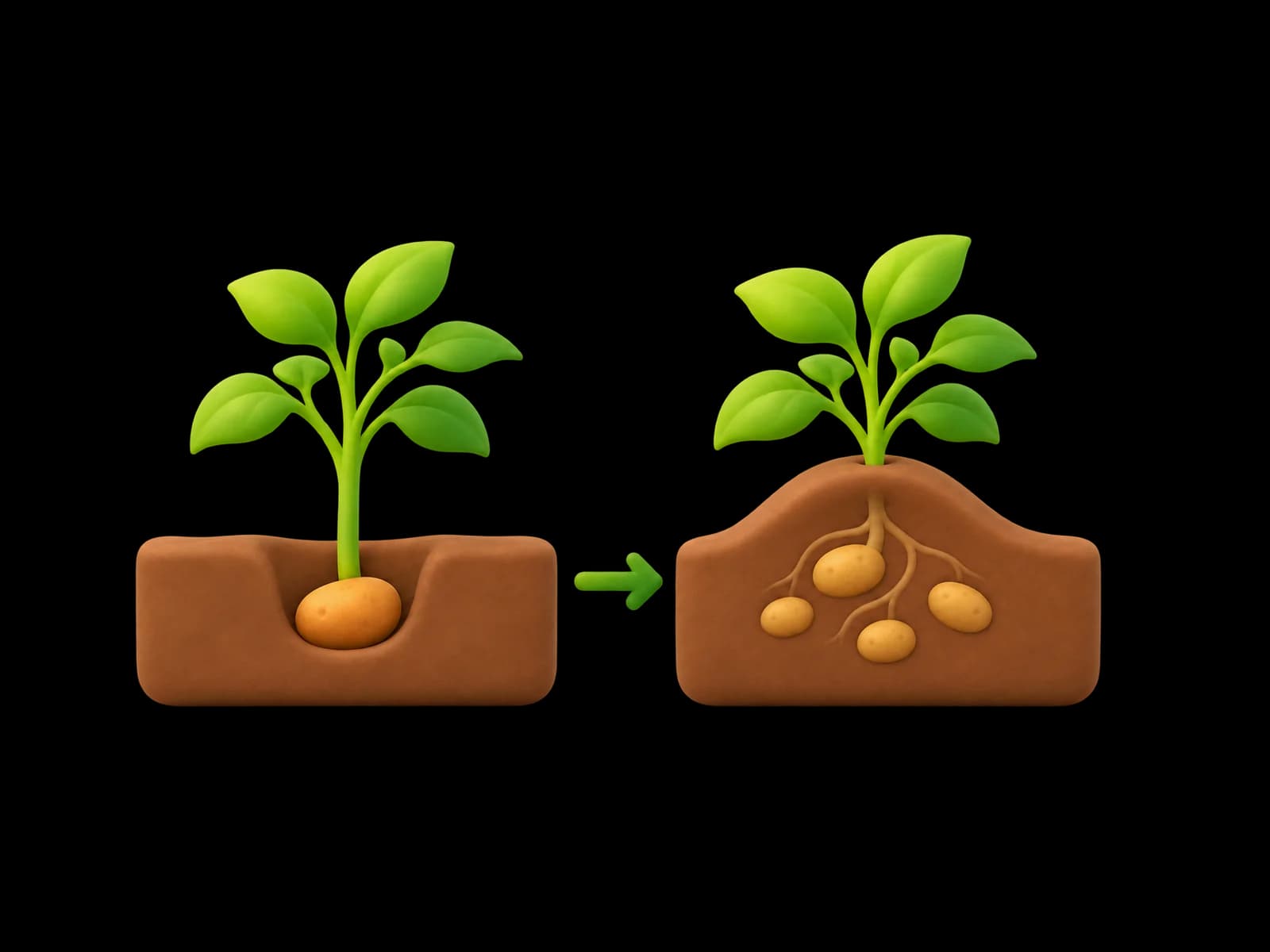
Dig a trench about 15 cm deep. The RHS spaces earlies 30 cm apart in rows 60 cm apart, and maincrops 37 cm apart in rows 75 cm apart. Set the tubers in shoots up, cover them gently, and label the row.
Sowstory uses the same in-row figures but reserves a 90 cm corridor for every potato row, wider than the RHS. That extra width is the soil you need either side of the row to build a full ridge when you earth up in a bed with edges.
Growing potatoes in raised beds: how many fit
In a 1.2 × 2.4 m bed (about 4 × 8 ft), the 90 cm corridor means one row along the length. That gives about eight first or second earlies at 30 cm, or about six maincrops at 37 cm. Sowstory allows up to two potato rows in a wider bed.
Two other raised-bed points:
- Depth. Sowstory checks for at least 30 cm of soil before it plans first earlies. See how deep a raised bed should be.
- Shade. Potato foliage grows to a medium height. Sowstory keeps the tallest crops, such as climbing beans and cordon tomatoes, on the north edge; see raised bed layout. The plant spacing chart lists potatoes alongside other crops.
A row of first earlies holds its space for about 12 weeks, so the strip is often free again by midsummer for a later crop.
If you would rather not juggle ridge widths by hand, Sowstory lays out your bed to scale, tells you how many potatoes fit and gives a month-by-month plan for England. It is coming soon to the App Store, and your first bed plan is free.
Earthing up
Earthing up means drawing soil from either side of the row up around the stems. The RHS says to start when the shoots are about 23 cm tall, leaving the top 10 cm showing, and to repeat until you have a ridge 20–30 cm high. Gardeners' World starts a little earlier, at about 20 cm.
It does three jobs: it protects young shoots from frost, it stops tubers near the surface turning green (green tubers are poisonous), and the RHS says it gives tubers some protection from blight spores washed down from the leaves.
Potato blight
Late blight is the most serious potato problem in the UK. The RHS says outbreaks can start from June, need long spells of wet leaves, and that first earlies lifted early are more likely to escape it. There are no blight fungicides for home gardeners.
- Watch the forecast. AHDB's warning system uses the Hutton Criteria: two days in a row, each with a minimum temperature of at least 10°C and at least six hours at 90% relative humidity or above. The RHS points gardeners to AHDB's BlightSpy service.
- Act early. When about a quarter of the leaves are affected, or marks appear on the stems, the RHS says to cut the foliage off at soil level and lift the tubers about two weeks later.
- Choose resistant varieties. The RHS lists Athlete, Alouette, Carolus and the Sarpo range as having good resistance, and says Cara, Kondor, Orla, Markies and Valor are no longer effective.
- Rotate. Move potatoes for at least four years after blight, and keep them apart from tomatoes, which catch the same disease.
Harvesting potatoes
- Earlies: the RHS says they are ready when the flowers open or the buds drop, and the tubers are about the size of a hen's egg. Scrape back the soil from one plant to check first.
- Maincrops for storage: when the leaves turn yellow, cut off the top growth, wait 10 days, then lift on a dry day. Let the tubers dry for a few hours and store them somewhere dark, cool and frost-free. The RHS says to use them before early spring.
Other common potato problems
- Green tubers. Tubers exposed to light turn green and are poisonous. Earth up fully and keep the ridge covered.
- Frost-damaged shoots. Early shoots are tender. Earthing up protects them; if a hard frost is forecast after the shoots are up, draw a little more soil over them.
- Potato eelworm and other soil pests. Gardeners' World says they build up when potatoes grow in the same soil year after year, so move the crop.
- Tubers that rot in store. Store only sound, dry maincrops, and check them through the winter.
Potatoes, rotation and companion plants
The RHS places potatoes in their own rotation group with tomatoes and suggests potatoes follow brassicas. Gardeners' World adds that growing potatoes in the same soil year after year builds up pests and diseases such as potato eelworm. Sowstory plans one season at a time and does not plan rotation across years.
Neither the RHS nor the Gardeners' World potato guide recommends specific companions. Our page on potato companion plants covers the claims and what to keep away, and companion planting explains the evidence in general.