
A raised bed for vegetables should be at least 30 cm deep for most crops, and 45 cm or more gives you the widest choice. The RHS says about 30 cm is enough for salad leaves, while most plants need 45 cm or more; Sowstory checks for at least 30 cm of soil before planning early carrots or first early potatoes, and 20 cm for radishes.
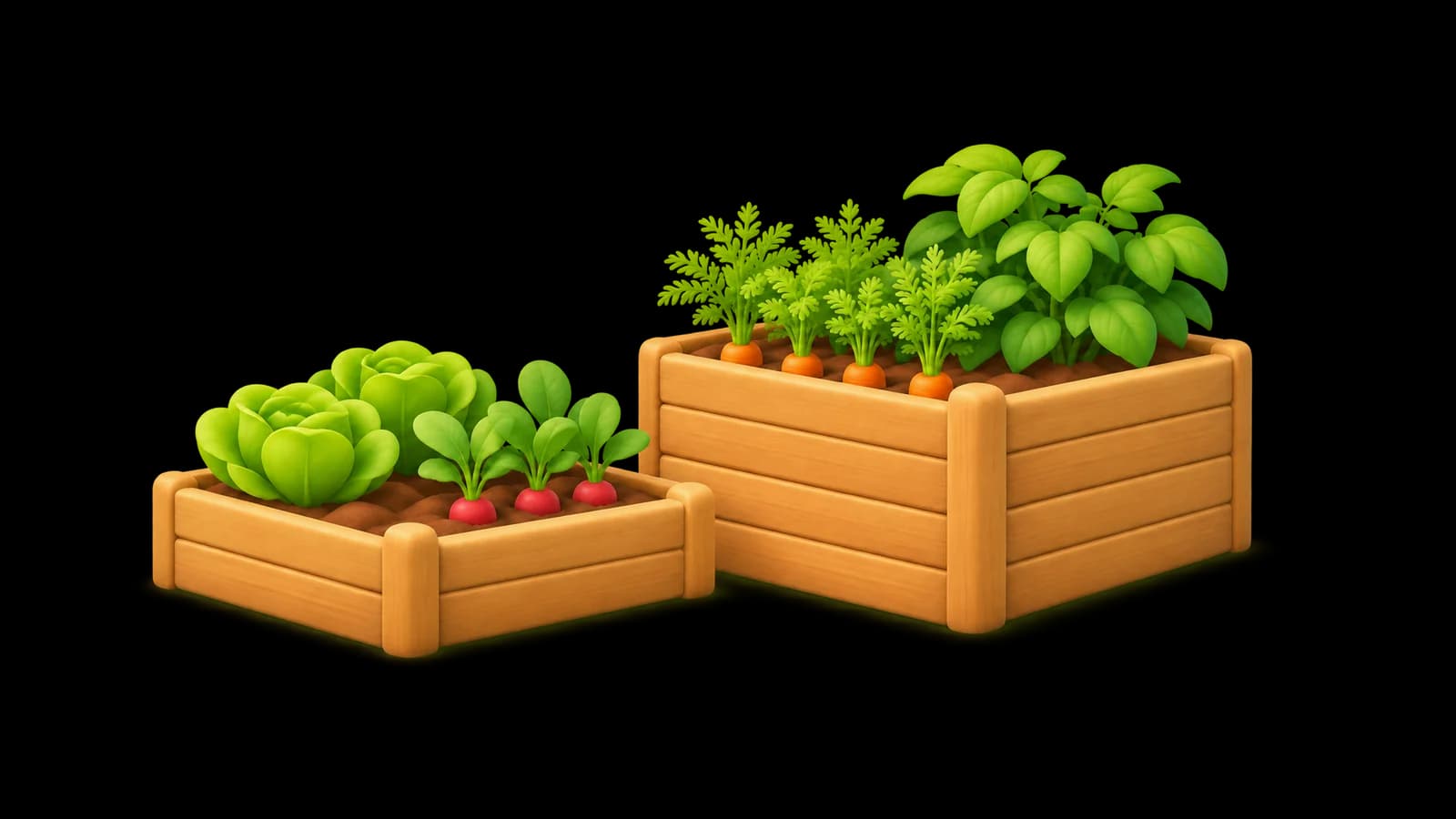
Depth matters less than you might think if the bed sits on open ground, because roots can carry on into the soil below. It matters much more on paving, where the frame is all the root room there is. This guide sets out what the sources say, which crops have a minimum depth in Sowstory, and what grows in shallow beds and containers.
Raised bed depth for vegetables at a glance
| Soil depth | What the sources say | Good for |
|---|---|---|
| 20 cm | The RHS says new beds need about 20 cm or more of topsoil. Sowstory's minimum for radishes. | Radishes (Sowstory's minimum) |
| 30 cm | The RHS says this suits salad leaves, strawberries and dwarf bulbs. Gardeners' World says most carrots need about 30 cm. | Most quick vegetables; early carrots and first early potatoes in Sowstory |
| 45 cm or more | The RHS says most plants need this, especially fruit bushes, shrubs and small trees. | Wider crop choice, beds on hard surfaces, perennial fruit |
| Over 50 cm | The RHS suggests rubble or subsoil in the base to aid drainage and save soil. | Tall beds, using less bought soil |
BBC Gardeners' World also says the depth of a single scaffold board is enough for growing vegetables, and that shrubs, perennials and bulbs need deeper beds.
Rolawn, a UK topsoil supplier, gives its own guide: 30–40 cm of soil for root crops such as carrots and potatoes, and 15–20 cm for shallow-rooted crops such as salads, beans and courgettes. It is a trade source rather than a horticultural body, and its salad figure is shallower than the RHS's 30 cm.
Which crops need the most depth?
Sowstory checks a minimum bed depth for only three of the crops it plans. For everything else, its knowledge base claims no depth rule, because no reliable published figure was found. That does not mean any depth works; it means we will not invent a number.
| Crop | Minimum soil depth Sowstory checks |
|---|---|
| Early carrots | 30 cm |
| First early potatoes | 30 cm |
| Radishes | 20 cm |
| Every other crop Sowstory plans | No depth rule claimed |
A few crops are worth a note:
- Parsnips. The RHS says they need deep, light, free-draining soil but gives no figure, so neither do we. Give them your deepest bed.
- Short-rooted carrots. The RHS says round and short types suit shallow, stony or clay soil and containers, which makes them the answer for a shallow bed.
- Second early and maincrop potatoes. No authoritative UK depth was found. The RHS plants them in a 15 cm trench and earths them up into a ridge 20–30 cm high, so they need soil to draw up as well as depth below.
- Climbing beans. For pots, the RHS suggests at least 75 cm wide and 45 cm deep for climbing French beans. Sowstory claims no depth rule for them in a bed.
Find spacing and timing for each crop in our guides to growing carrots and growing potatoes, and see what to grow in a raised bed for crops that suit a first bed.
Shallow rooted crop meaning
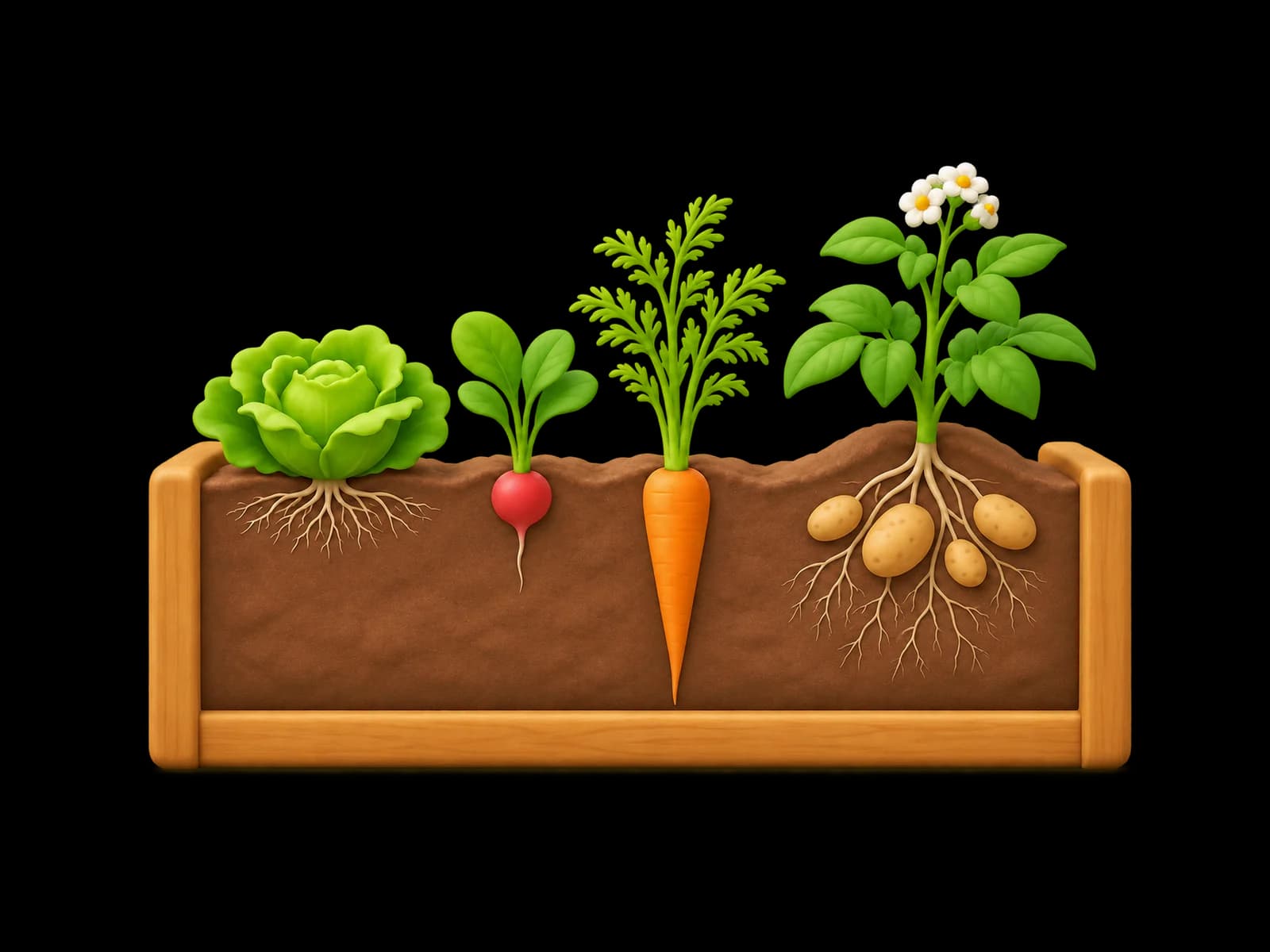
A shallow-rooted crop keeps most of its roots in the top layer of soil instead of sending a long root deep down. Salad leaves, lettuce and radishes are the classic examples, and Rolawn includes beans and courgettes in the group. A deep-rooted or long-rooted crop, such as a maincrop carrot or a parsnip, needs loose soil a long way down.
Shallow-rooted crops are not fussy about bed depth, but their roots sit in the soil that dries out first. The RHS notes that plants in raised beds feel drought sooner than plants in open ground, so check moisture about a finger's depth down and mulch the surface.
Plants that grow in shallow containers
If you only have a shallow bed, trough or container, these are the safest bets:
- Salad leaves and loose-leaf lettuce. The RHS puts salad leaves in the group happy with about 30 cm.
- Radishes. Sowstory plans them in beds with at least 20 cm of soil.
- Round or dwarf carrots. Gardeners' World recommends them for containers shallower than 30 cm.
- Strawberries. The RHS lists them with salad leaves at about 30 cm, although Sowstory does not plan strawberries.
Leave long carrots, parsnips and maincrop potatoes for deeper beds.
Making a shallow bed work
If your bed is shallower than you would like, you have a few options before rebuilding it:
- Choose crops to match. Fill it with salads, radishes and short-rooted carrots, and grow deeper crops elsewhere.
- Loosen what is underneath. If the bed sits on soil, lightly forking the ground below the frame, as the RHS suggests when building, gives roots a way down.
- Keep the level up. The RHS adds about 5 cm of organic matter to no-dig beds every year, which tops up the surface as the soil settles and keeps it fertile.
- Add a board. A second layer of timber turns a shallow bed into a deeper one; fill the extra height with the same soil mix.
- Water more often. Less soil holds less water, and raised beds already dry out faster than open ground.
Does it matter what the bed sits on?
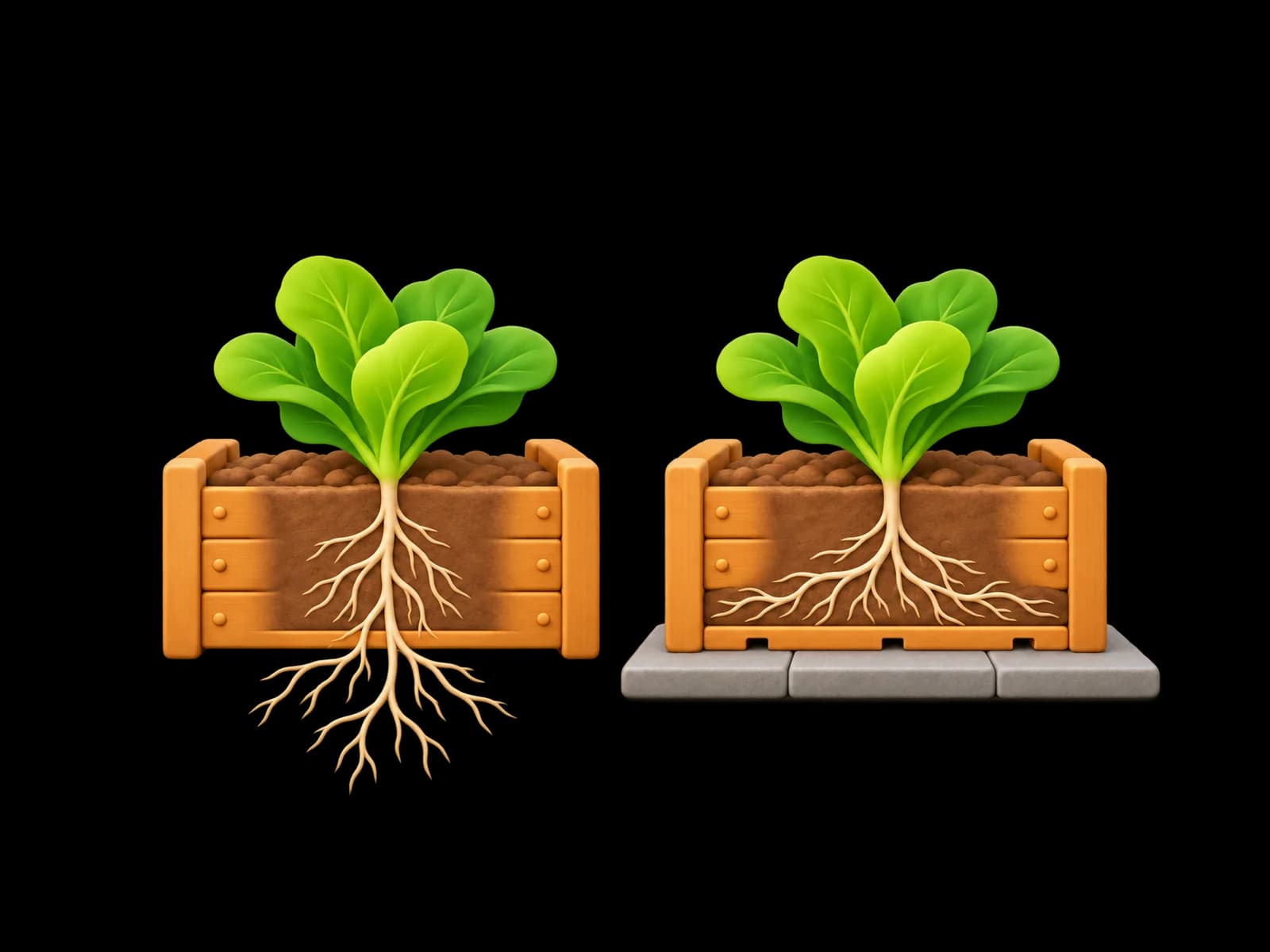
Yes. A bed on soil or lawn, with the turf removed and the ground lightly forked, lets roots grow on below the frame, so they are not limited to the soil inside it. A bed on concrete or paving cannot, and the RHS gives no minimum depth for beds on hard surfaces. Gardeners' World advises keeping the full depth for soil in beds shallower than 50 cm, adding a rubble drainage layer only in deeper ones.
RHS adviser Leigh Hunt adds a useful warning: a frame that holds soil level with the ground around it is not really a raised bed and gives none of the drainage benefit.
Deeper beds cost more to fill
Every extra 15 cm of depth adds a lot of soil. A 1.2 × 2.4 m bed (about 4 × 8 ft) holds 864 litres at 30 cm deep, 1,296 litres at 45 cm and 1,728 litres at 60 cm. That is why the RHS suggests rubble or subsoil in the base of beds deeper than 50 cm. Use the raised bed soil calculator for your own bed, and how to fill a raised bed for the layers.
If you want to sit on the edge while you garden, Gardeners' World suggests a height of about 40–50 cm. Our guide to raised bed sizes covers height, width and paths together.
Choosing your depth
- Bed on open ground, mostly salads and quick crops: about 30 cm of good soil is enough to start; Sowstory needs only 20 cm for radishes.
- Carrots, potatoes and a wider mix: aim for at least 30 cm.
- Bed on paving, or you want the widest choice: the RHS figure of 45 cm or more for most plants is the safer target, as there is no ground below.
- Waist-high or sit-on beds: fill the base with rubble or subsoil and keep the top layer for the best raised bed soil you can get.
Once you know the depth, the next question is what fits where. Sowstory checks the minimum depth for the crops that have one, then lays out the bed to scale with tall crops on the north edge and a month-by-month plan for England. It is coming soon to the App Store, and your first bed is free.
For layout ideas in the meantime, see raised bed layout and the vegetable spacing chart, or start with our beginner's guide to raised bed vegetable gardening.
Sources
- RHS: How to make a raised bed
- RHS: Growing vegetables in raised beds
- RHS: Topsoil buying guide
- RHS: How to grow carrots
- RHS: How to grow parsnips
- RHS: How to grow potatoes
- RHS: How to grow French beans
- BBC Gardeners' World: Gardening tips for raised beds
- BBC Gardeners' World: How to grow carrots
- Rolawn: Calculating topsoil requirements
- Sowstory knowledge base, release v1.4