
The main time to plant garlic in England is autumn: Sowstory's planting window is October to December, matching the RHS's advice of mid-autumn to early winter. Planting then gives each clove the one to two months of cold, between 0°C and 10°C, that it needs to grow into a bulb of separate cloves.
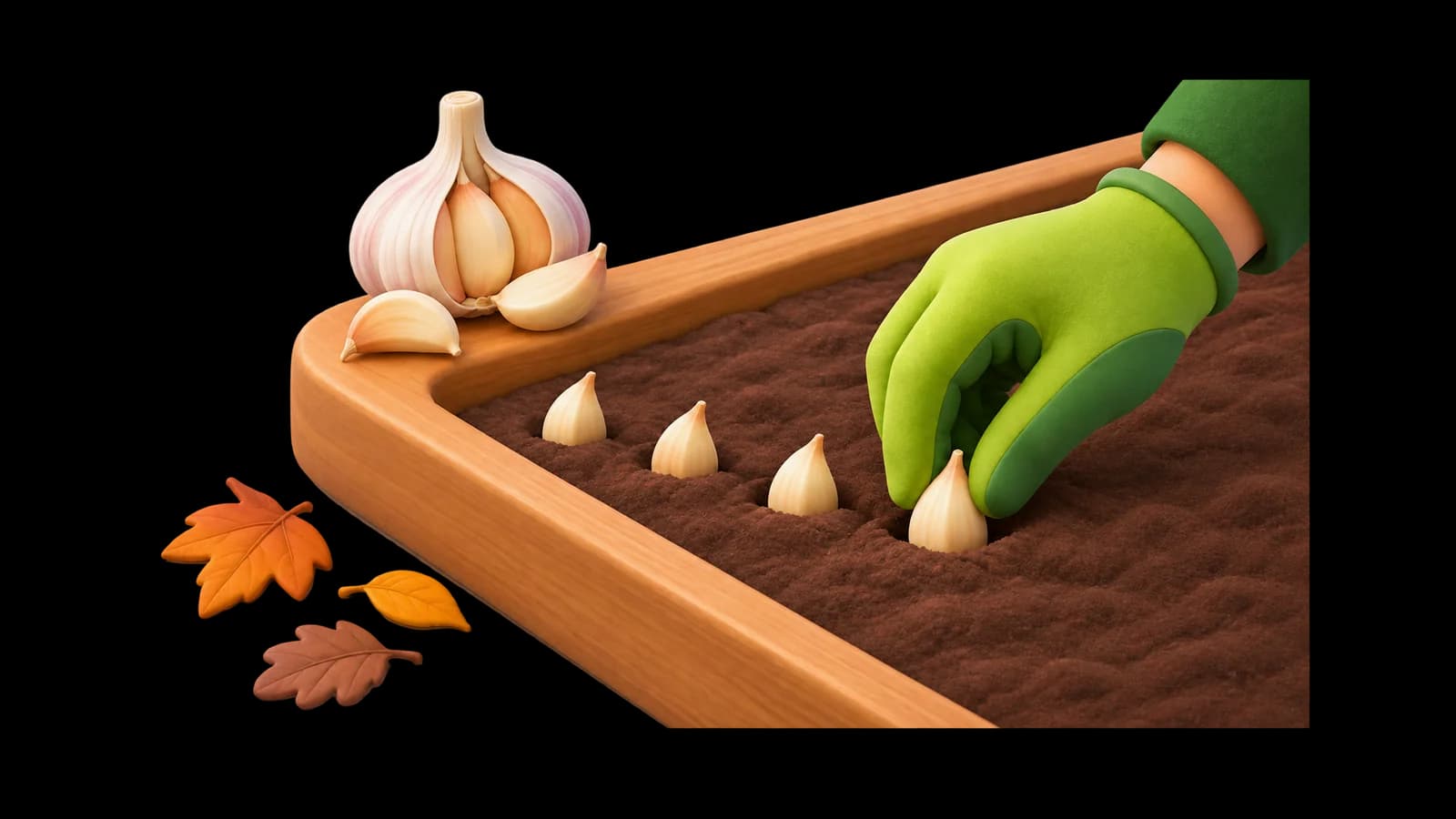
Some garlic can go in during late winter or early spring, but it is the second choice for most varieties. This page explains the timing; for depth, spacing, care and harvest, see our full guide on how to grow garlic.
Garlic planting times at a glance
| Question | Answer |
|---|---|
| Main planting window | October to December (Sowstory, England-wide) |
| RHS wording | Mid-autumn to early winter |
| Cold the cloves need | One to two months at 0–10°C (RHS) |
| Spring planting | Possible for some varieties in late winter or early spring (RHS) |
| Harvest after autumn planting | Late spring to early summer (RHS); from July (Gardeners' World) |
| Harvest after spring planting | Midsummer to early autumn (RHS) |
| Time in the bed | Sowstory reserves about 36 weeks |
Why garlic needs the cold
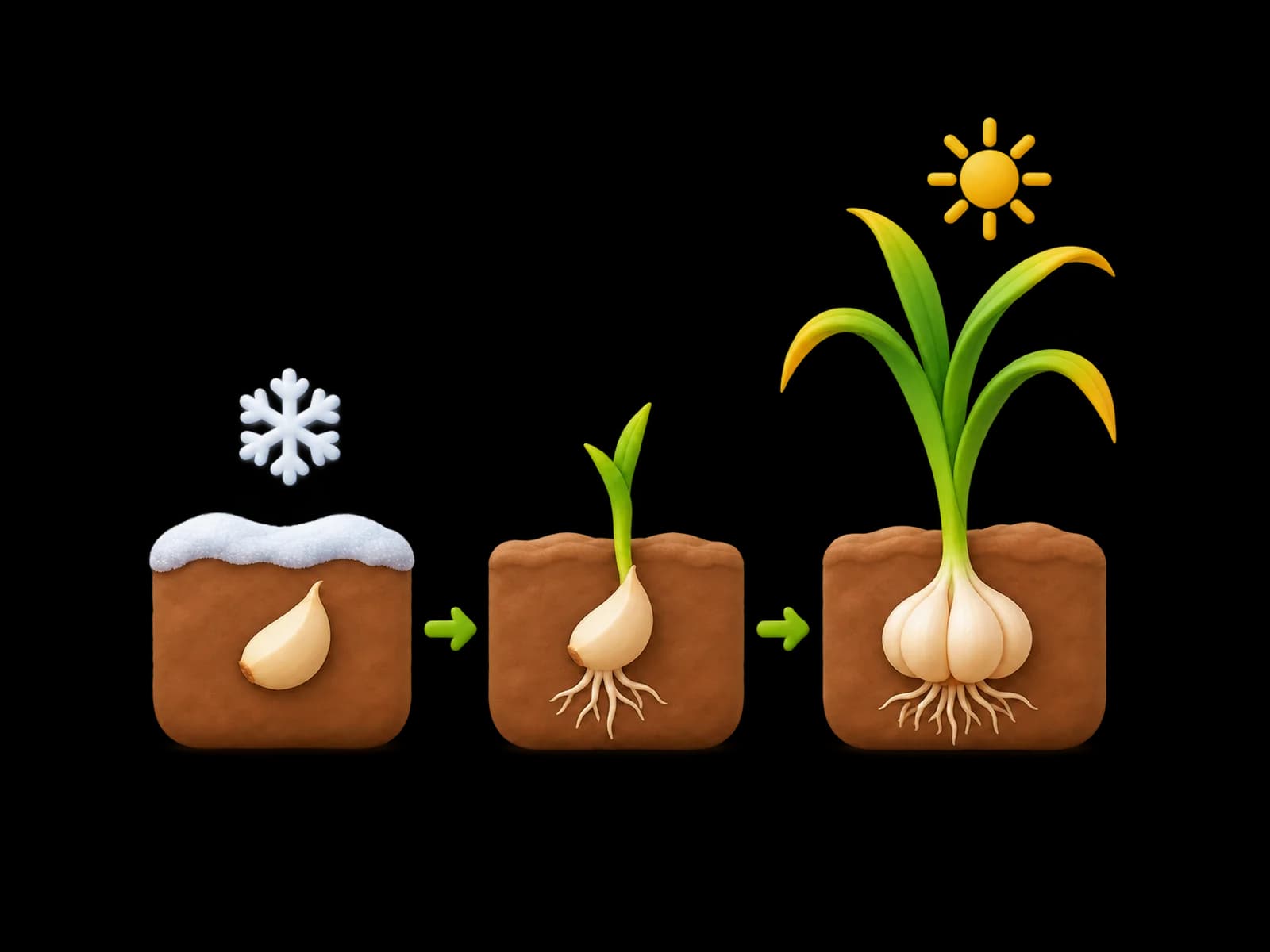
Garlic needs a cold spell before it will form a bulb made up of separate cloves. The RHS says cloves need one to two months at 0–10°C for a good bulb, and that bulbs failing to split are usually the result of too little winter cold.
That is why autumn planting is the standard method. A clove planted in October or November sits in cold soil right through winter, so it gets its chilling without you having to time anything. A clove planted in spring has to get its cold from whatever is left of the season.
When to plant garlic in October, November or December
Any of the three months works. Sowstory treats October to December as one planting window for the whole of England, so it does not suggest a different month for your area. Within that window, the practical choice usually comes down to your soil and weather:
- Planting garlic in October gets the cloves in early and gives them the longest possible spell of cold. It is the first month in Sowstory's window and one of the jobs in our October sowing guide.
- November is the classic month, squarely in the RHS's mid-autumn to early winter season; see what to sow in November.
- December is still fine if the ground is not frozen or waterlogged; it is listed in our December guide.
Where you are in England matters less for garlic than for tender crops, because garlic wants the cold. What does vary is wet: on heavy soil that stays waterlogged in winter, the RHS and Gardeners' World both suggest starting cloves in modules in autumn, keeping them under cold cover, and planting them out in spring. A raised bed generally drains better than heavy ground, which is one reason garlic suits one.
Autumn or spring planting: which is better?
| Autumn planting | Spring planting | |
|---|---|---|
| When | October to December | Late winter to early spring, suitable varieties only |
| Winter cold | A full winter in the ground | Whatever cold is left |
| Risk | Waterlogging on heavy soil | Bulbs that do not split into cloves |
| Harvest | Late spring to early summer (RHS) | Midsummer to early autumn (RHS) |
Autumn is the better default in most gardens. Spring planting is a reasonable fallback if you missed the autumn window, or if your soil is too wet to plant in winter; in that case the RHS's module method lets you start cloves in autumn anyway and plant them out once the ground improves.
The sources do not give a figure for how much smaller spring-planted bulbs are, so we do not either. The one firm point is that too little cold stops bulbs splitting.
Hardneck, softneck and timing
Type matters for where and when garlic does well. Gardeners' World describes hardneck garlic as hardier and suited to the whole of the UK, while softneck tolerates long cold spells less well and does best in milder southern counties unless protected. If you garden in a cold, exposed spot and want to plant in autumn, a hardneck is the safer choice.
Buying seed garlic
"Seed garlic" means bulbs sold for planting, not true seed. The RHS recommends named varieties from garden centres or mail-order suppliers; supermarket bulbs may be poorly suited to the UK climate and carry a biosecurity risk. Gardeners' World advises certified disease-free bulbs for the same reason. Have your bulbs ready before you plan to plant, and split them into cloves only on planting day.
Missed the autumn window?
If December slips by, you have two options. The first is to plant in late winter or early spring, choosing a variety the supplier sells for spring planting, and to accept a later harvest, from midsummer to early autumn. The second, for next year, is the RHS's module method: start the cloves in autumn under cold cover, so they still get their winter chill, then plant them into the bed in spring once the soil is workable. Either way, plant whole, healthy cloves from seed garlic rather than kitchen bulbs.
What the planting date means for your bed
Garlic is a long-stay crop. Sowstory reserves its space for about 36 weeks, so cloves planted in November are still in the bed well into the following summer. Plan the rest of the bed around that strip: in a 1.2 × 2.4 m bed, Sowstory's spacing fits about 48 cloves in three rows, but you might give garlic one row and keep the rest free for spring crops. The vegetable spacing chart shows the spacing for each crop.
If you want to see when each part of the bed is busy, Sowstory gives a month-by-month timing plan for England and lays out the bed to scale, with garlic's autumn-to-summer stay included. It is coming soon to the App Store, and your first bed plan is free.
What Sowstory's timing does and does not do
Sowstory's planting windows are England-wide months. They are not adjusted for your postcode or local climate, and the app does not give a frost date for your address. For garlic that matters little, since it is planted into the cold on purpose, but you still judge whether the soil is workable on the day. For the wider picture of what to sow when, see our vegetable sowing calendar.
Sources
- RHS: How to grow garlic
- Gardeners' World: How to grow garlic
- Sowstory knowledge base, release v1.4