
To grow garlic in England, plant single cloves pointed end up in a sunny, free-draining bed between October and December, about 15 cm apart, and let them sit through the winter cold. Autumn-planted garlic is usually ready to lift from late spring to midsummer, once its leaves start turning yellow.
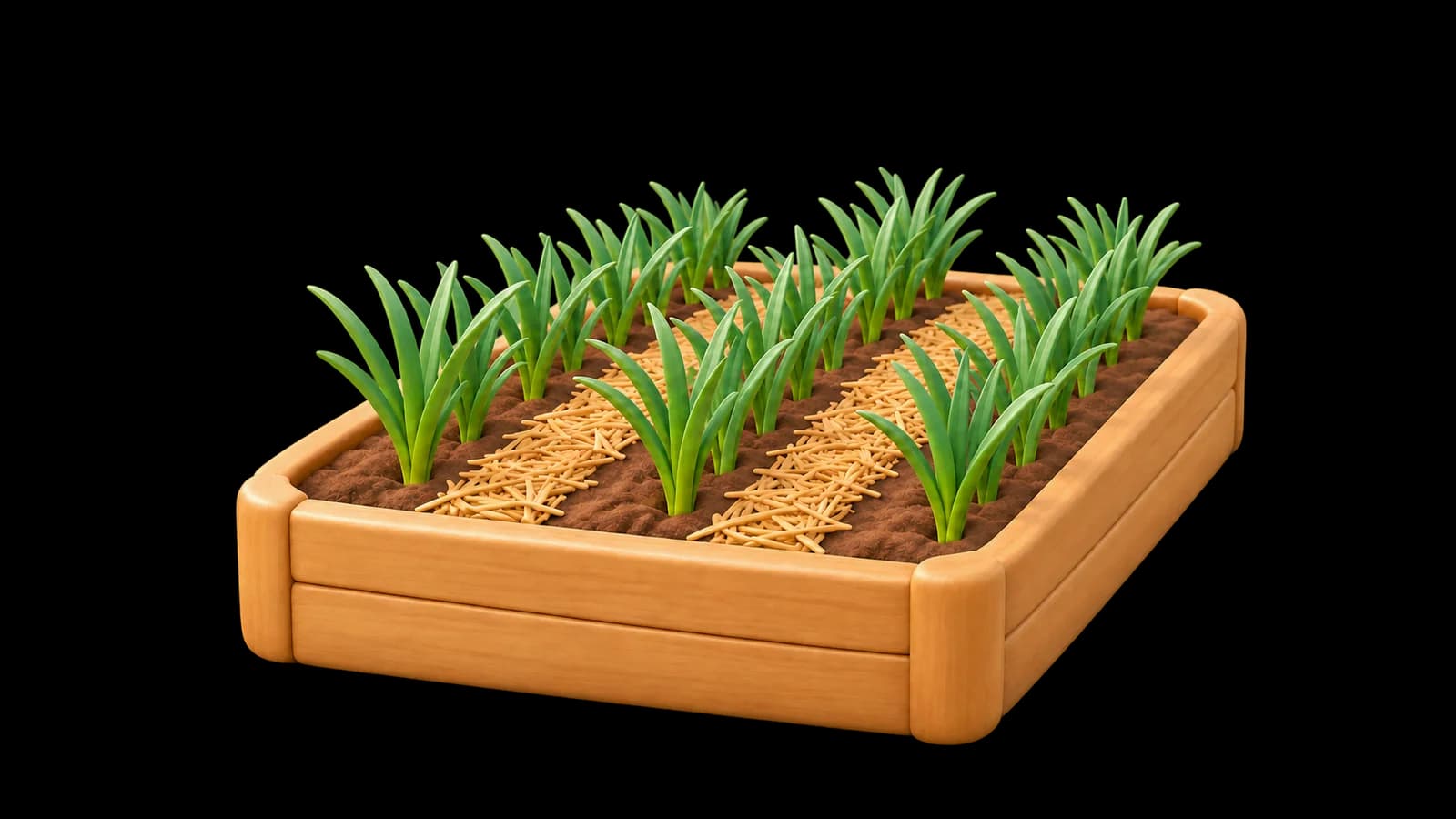
Garlic is one of the easiest crops for a raised bed. It needs little attention once it is in, and a bed usually drains more freely over winter than heavy garden soil. The catch is time: garlic holds its space for most of a year, so it pays to plan around it.
Garlic quick facts
| Fact | Detail |
|---|---|
| Plant cloves | October to December (Sowstory's England window); some varieties in late winter or early spring |
| Planting depth | Tip about 2.5 cm below the surface (RHS); about 3 cm of soil on top (Gardeners' World) |
| Spacing | 15 cm between cloves; Sowstory allows 25 cm between rows (RHS and Gardeners' World: 30 cm) |
| Sun | Full sun, at least six hours of direct sun a day |
| Time in the bed | Sowstory reserves about 36 weeks, from autumn into summer |
| Harvest | Late spring to early summer for autumn planting (RHS); from July (Gardeners' World) |
| Bed depth | No minimum depth rule in Sowstory |
| In a 1.2 × 2.4 m bed | About 48 cloves in three rows |
When to plant garlic
Sowstory plans garlic as an autumn crop, planted in October, November or December. The RHS gives the main planting season as mid-autumn to early winter, because cloves need a spell of one to two months at 0–10°C to form a good bulb. Garlic that gets too little winter cold often grows a single round bulb that has not split into cloves.
Some varieties can be planted in late winter or early spring instead. For the detail on autumn versus spring planting, and what to do if you have missed the autumn window, see our guide on when to plant garlic. Garlic also features in our month guides for October, November and December.
Choosing seed garlic: hardneck or softneck
Buy "seed garlic" (bulbs sold for planting) rather than using garlic from the kitchen. The RHS recommends named varieties from garden centres or mail-order suppliers, because supermarket bulbs may not suit the UK climate and can bring in disease. Gardeners' World gives the same advice and specifically mentions the risk of virus.
There are two main types:
- Hardneck garlic has fewer, larger cloves (Gardeners' World says usually 10 or fewer), a stronger flavour and grows well across the UK. It sends up a flower stalk, called a scape, and stores for about four to six months.
- Softneck garlic has smaller, tightly packed cloves (up to 18, according to Gardeners' World), rarely bolts and can store for up to a year. It copes less well with long cold spells, so Gardeners' World suggests it for milder southern counties unless you can protect it.
How to grow garlic from a clove
Prepare the bed
Garlic wants full sun and soil that does not sit wet through winter. The RHS suggests digging in well-rotted manure or compost before planting, at about two bucketfuls per square metre. In an established raised bed, clear the weeds and loosen the top few centimetres.
Plant each clove pointed end up
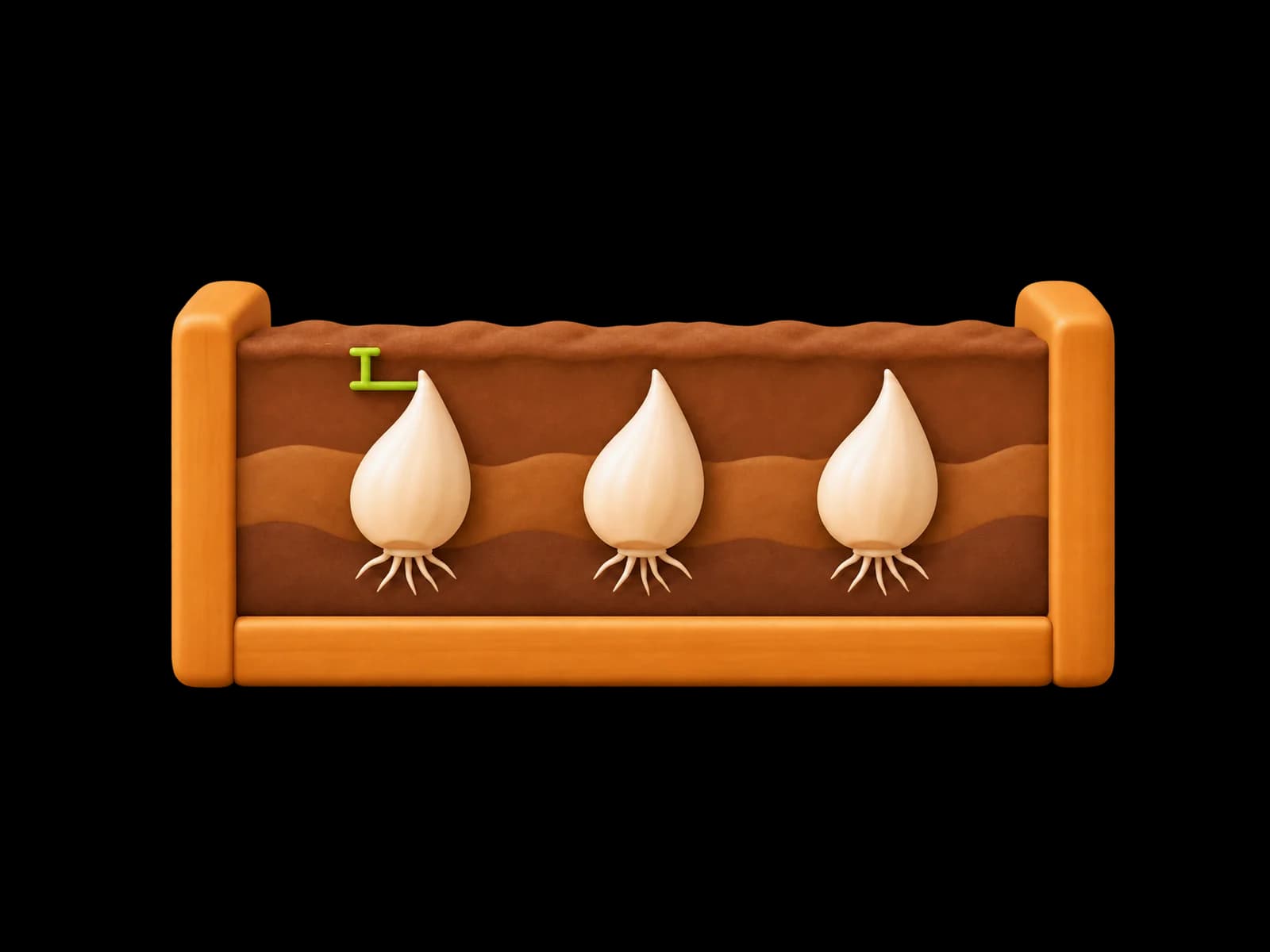
Break the bulb into cloves just before planting. Push each clove in flat end down, pointed end up. Sources differ slightly on depth: the RHS says the tip should sit about 2.5 cm below the surface, and deeper on light soil, while Gardeners' World says to cover cloves with about 3 cm of soil. Both figures are shallow; planting too near the surface can leave cloves green.
Space the cloves
Both the RHS and Gardeners' World give 15 cm between cloves and 30 cm between rows. Sowstory uses the same 15 cm in the row but plans rows 25 cm apart in a raised bed, where you reach in from the sides rather than walking between rows. If rust is common where you live, use the wider 30 cm rows: crowding encourages it.
Protect from birds
The RHS notes that birds sometimes pull up freshly planted cloves. Lay fleece or netting over the row until the cloves have rooted firmly.
Heavy or wet soil
If your soil is heavy and wet in winter, the RHS and Gardeners' World both suggest starting cloves in modules in autumn, keeping them under cold cover, and planting them out in spring.
Growing garlic in raised beds: how many cloves fit
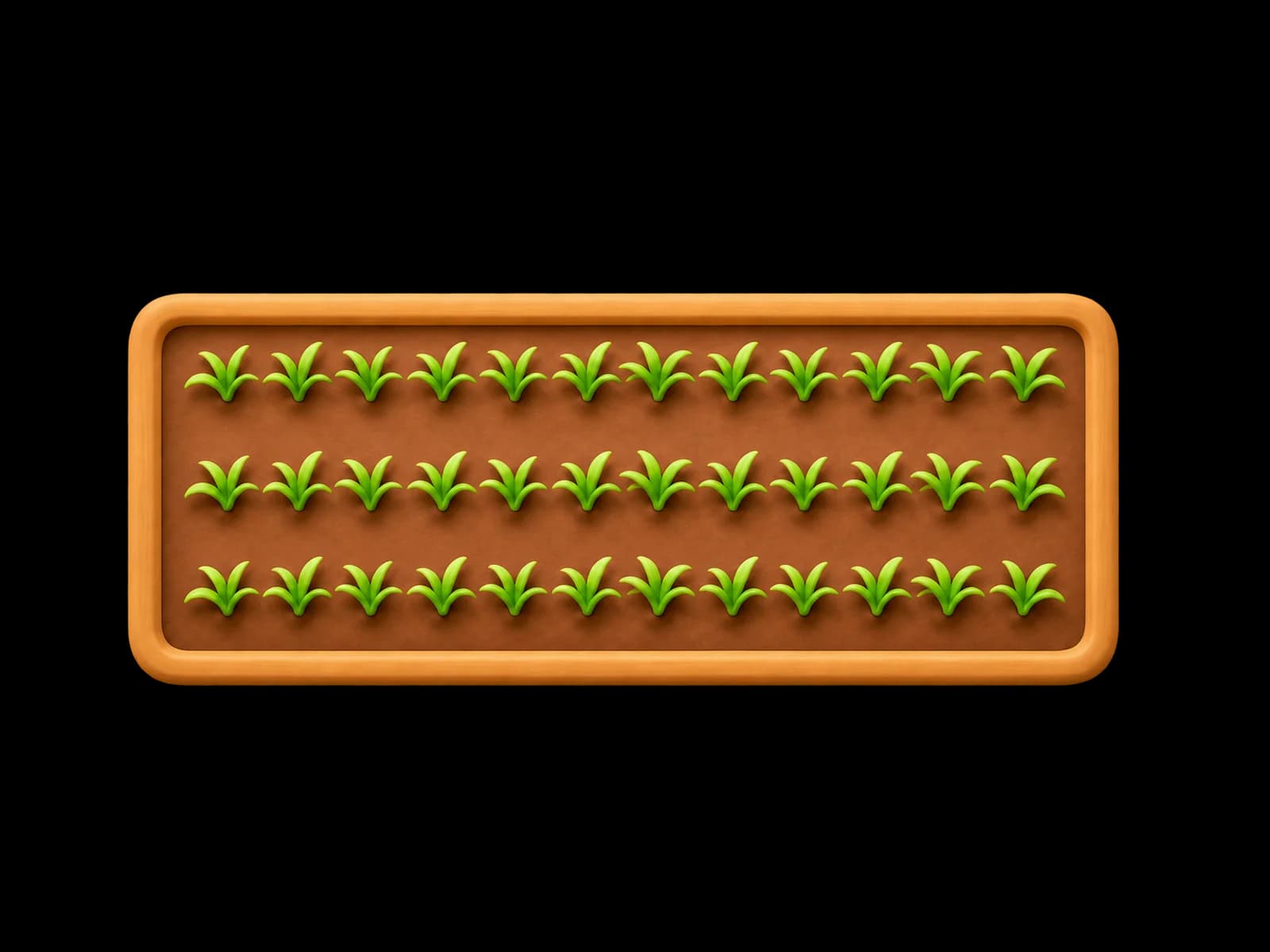
In a 1.2 × 2.4 m bed (about 4 × 8 ft) with rows running along the length, Sowstory's spacing gives three rows of about 16 cloves each: about 48 cloves if you gave the whole bed to garlic. That is six cloves per metre of row. Sowstory plans no more than three rows of garlic in one bed. The vegetable spacing chart lists the same figures alongside other crops.
Garlic is short, so it does not shade its neighbours and can go anywhere in the bed; tall crops still belong on the north edge, as our guide to raised bed layout explains. Sowstory sets no minimum soil depth for garlic, though the RHS suggests pots for garlic should be at least 25 cm deep, a rough guide if your bed is shallow. See how deep a raised bed should be for other crops.
The bigger planning question is time. Sowstory reserves garlic's space for about 36 weeks, from autumn until it is lifted in summer. Once it is out, there is still time for a quick crop: in Sowstory's knowledge base, baby turnips, radishes, salad rocket, loose-leaf lettuce and annual spinach can all still start in the bed in July or August.
If you would like to see garlic's long stay alongside everything else you want to grow, Sowstory lays out your bed to scale, tells you how many cloves fit and gives a month-by-month timing plan for England. It is coming soon to the App Store, and your first bed plan is free.
Caring for garlic through winter and spring
- Weeding. Garlic needs full sun, so do not let weeds shade it. The RHS recommends weeding by hand, because a hoe can damage the developing bulbs, or laying a mulch at least 5 cm thick between rows.
- Watering. Water during dry spells in spring and early summer to help the bulbs swell. The RHS advises stopping once the bulbs are large and well formed, as late watering can cause rot, and keeping water off the leaves.
- Flower stalks. If a hardneck variety sends up a scape, snap it off as it forms so the plant puts its energy into the bulb. Young scapes are edible.
- Feeding. Go easy on nitrogen-rich feeds: the RHS links leek rust, which affects garlic, to soil rich in nitrogen but low in potassium.
When and how to harvest garlic
Lift garlic when its leaves begin to turn yellow. For autumn-planted garlic the RHS puts this between late spring and early summer, and Gardeners' World from July; spring-planted garlic follows from midsummer to early autumn. Do not wait for the leaves to die right back: late-lifted bulbs tend to split and store poorly.
Ease the bulbs out with a fork rather than pulling them by the leaves. The RHS suggests drying them in a single layer for two to four weeks, out of temperatures above 30°C, then storing them at 5–10°C. Use hardnecks first, as they keep for less time than softnecks.
Common garlic problems
- Rust. Bright orange spots on the leaves from midsummer to late autumn. The RHS says it is encouraged by crowding and by soil high in nitrogen and low in potassium, and that no fungicides are approved for home gardeners. Gardeners' World adds that it is worse in wet weather and the bulbs are still safe to eat; do not compost the infected leaves.
- White rot. A soil fungus that also attacks onions and leeks. Leaves yellow and wilt, and a white fluffy growth with tiny black specks appears at the base of the bulb. The RHS says those specks can survive in soil for at least 15 years and spread on soil, tools and boots, and gardeners have no chemical control. If you find it, keep the onion family out of that bed.
- Bulbs that do not split. Usually too little winter cold. Plant in autumn where you can.
- Green cloves. Often a sign of planting too shallowly.
Garlic, crop rotation and companion planting
The RHS puts garlic in the onion group, with onions, shallots and leeks. Moving the group to a different bed each year helps reduce soil-borne problems, but it does not guarantee prevention, and once white rot is present the RHS considers rotation impractical as a cure. Sowstory plans one season at a time; it does not plan rotation across years.
Garlic is often suggested as a companion for carrots, on the idea that its smell masks the scent carrot fly follows. Gardeners' World says alliums may have this effect but cites no trials, and the RHS does not recommend it as a carrot fly control. Gardeners' World also lists garlic beside beans or peas as a pairing to avoid, again as anecdotal advice. Our guide to companion planting sets out what the evidence does and does not support.