
What to plant in October in England is mostly a planting job rather than a sowing one: garlic cloves, spring cabbage plants and the last of the overwintering onion sets all go in this month. In mild areas the RHS also suggests sowing overwintering broad beans and hardy peas outdoors, with cloches or fleece where it is colder.
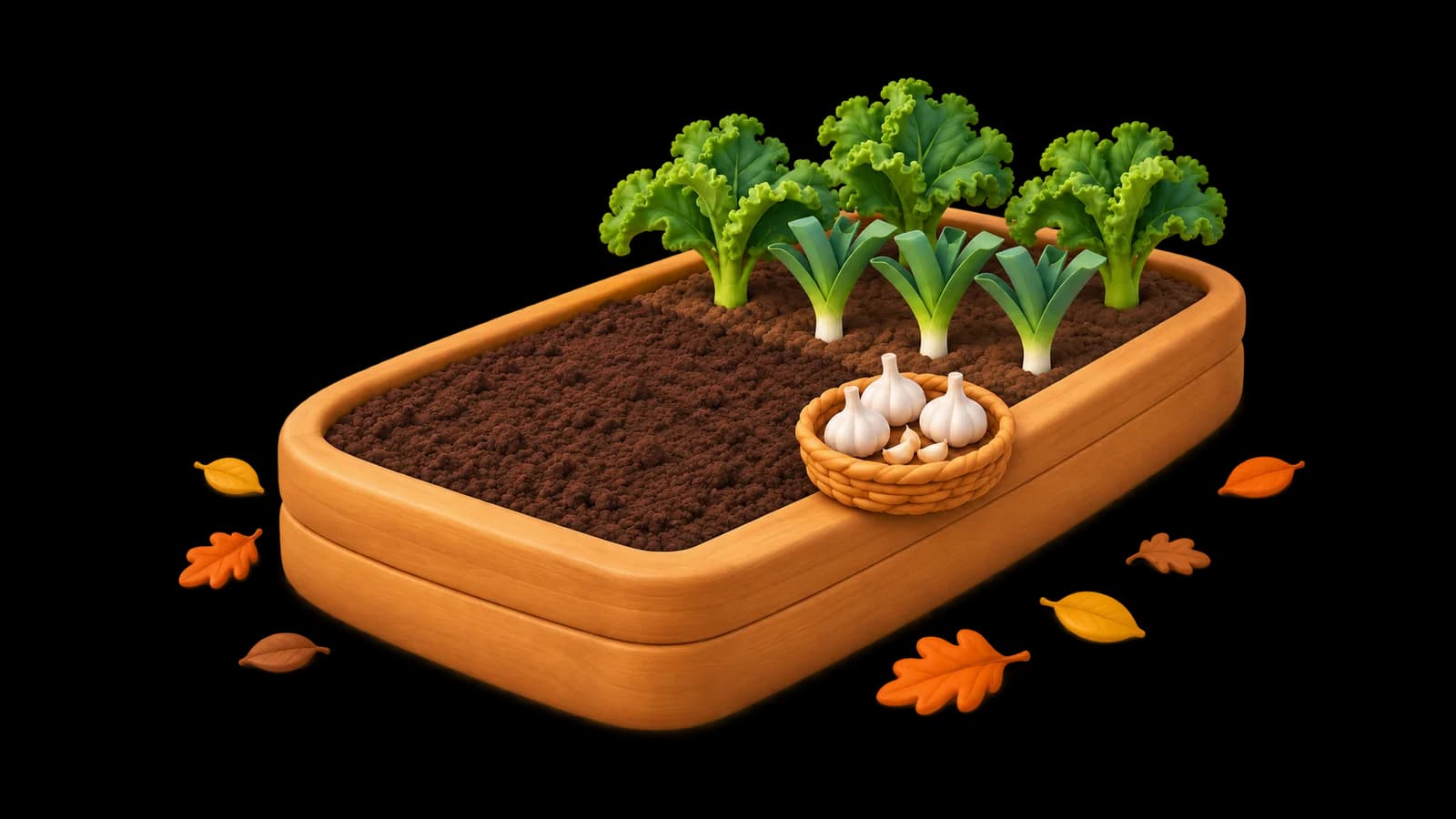
It is also the month when tender summer crops finish and frost starts to become a possibility, so clearing, mulching and planning matter as much as planting. Below, RHS and Gardeners' World advice is kept separate from what Sowstory plans, because in a Sowstory plan garlic is the only crop that starts in the bed in October.
At a glance: what to plant in October
| Task | Crops | Source |
|---|---|---|
| Sow under cover | Early-summer cauliflower in trays; garlic in modules on heavy soil | Gardeners' World |
| Sow outdoors | Overwintering broad beans and peas (mild areas); green manures; winter salads | RHS, Gardeners' World |
| Plant outdoors | Garlic, spring cabbages, overwintering onion sets | RHS |
| Harvest | Tomatoes, runner and climbing French beans, cucumbers, courgettes, maincrop potatoes, the first parsnips | Sowstory harvest windows |
For every month in one place, see the vegetable sowing calendar for England.
Sow indoors
October sowings under cover are about next year's early crops, not heat-loving ones.
- Early-summer cauliflower. Gardeners' World suggests a variety such as 'Snowball' sown in trays under cover now.
- Garlic in modules. On heavy soil, Gardeners' World and the RHS both suggest starting cloves in modules under cold cover and planting them out in spring, rather than leaving them in wet ground all winter.
- Peas for spring. The RHS says peas can be sown in autumn and overwintered in a greenhouse or cold frame for planting out in spring, and that smooth-seeded varieties are the hardier choice.
Sow or plant outdoors
Garlic
Garlic is the main October crop and the one Sowstory plans. The RHS says cloves need one to two months at 0–10°C to form a bulb that splits into cloves, which autumn planting provides. Set each clove pointed end up with the tip about 2.5 cm below the surface; the RHS spaces them 15 cm apart in rows 30 cm apart. Buy named seed garlic rather than supermarket bulbs, which the RHS says may suit the UK climate poorly and carry a biosecurity risk.
For timing choices between October, November and December, see when to plant garlic; for the full method, see how to grow garlic.
Overwintering onion sets and spring cabbages (RHS advice)
The RHS treats October as the month to finish planting overwintering onion sets, for an early to mid-summer harvest next year. Gardeners' World names 'Radar' as an example. The RHS warns against autumn sets on heavy soil that stays waterlogged in winter, as they may rot, and notes that autumn onions store only until early winter. Plant spring cabbages raised from summer sowings now as well.
Sowstory's onion profile is spring-planted sets, started in March or April, so the app will not place autumn sets in your bed. Our guide on how to grow onions covers both routes.
Broad beans and hardy peas (RHS advice)
The RHS suggests overwintering broad beans outdoors in mild areas, using cloches or fleece in colder ones. For peas, it names 'Douce Provence' and 'Meteor' for October sowing in mild areas only; Gardeners' World suggests hardy peas such as 'Avola' and 'Meteor' in 5 cm drills.
Neither is part of a Sowstory plan. Its dwarf broad bean ('The Sutton') is sown in March or April, and its dwarf pea ('Kelvedon Wonder') from March to June. See how to grow peas for the spring method.
Green manures
On ground that will stay empty, the RHS suggests green manures such as winter field beans or grazing rye, sown now.
In a Sowstory plan this month
October is the first month of Sowstory's garlic window, and garlic (autumn-planted cloves) is the only crop profile that starts in the bed this month. When garlic is on your list, the plan:
- allows 25 cm between rows and 15 cm between cloves, with up to three rows;
- fits about 48 cloves in three rows along a 1.2 × 2.4 m bed, as a simple estimate;
- needs at least six hours of direct sun;
- reserves the space for about 36 weeks, which keeps the rows busy into next summer.
Other crops in a Sowstory plan are finishing. Its harvest windows for tomatoes, runner and climbing French beans, outdoor cucumbers, courgettes, mangetout and maincrop potatoes all end in October, while parsnips start (October to February) and leeks follow from November.
If you would like to see where garlic fits around the crops you plan for next spring, Sowstory lays out your bed to scale and shows when each space is busy. It is coming soon to the App Store, and your first bed plan is free.
Sowstory's months are the same across England; they are not adjusted to your postcode, and the app does not give a frost date for your address.
Jobs this month
The RHS October jobs focus on tidying and feeding the soil:
- Clear spent crops and mulch the bare soil with compost. The RHS mulch guidance is to lay it on moist, weeded soil that is not frozen, and in no-dig beds it suggests about 5 cm each year, usually in autumn.
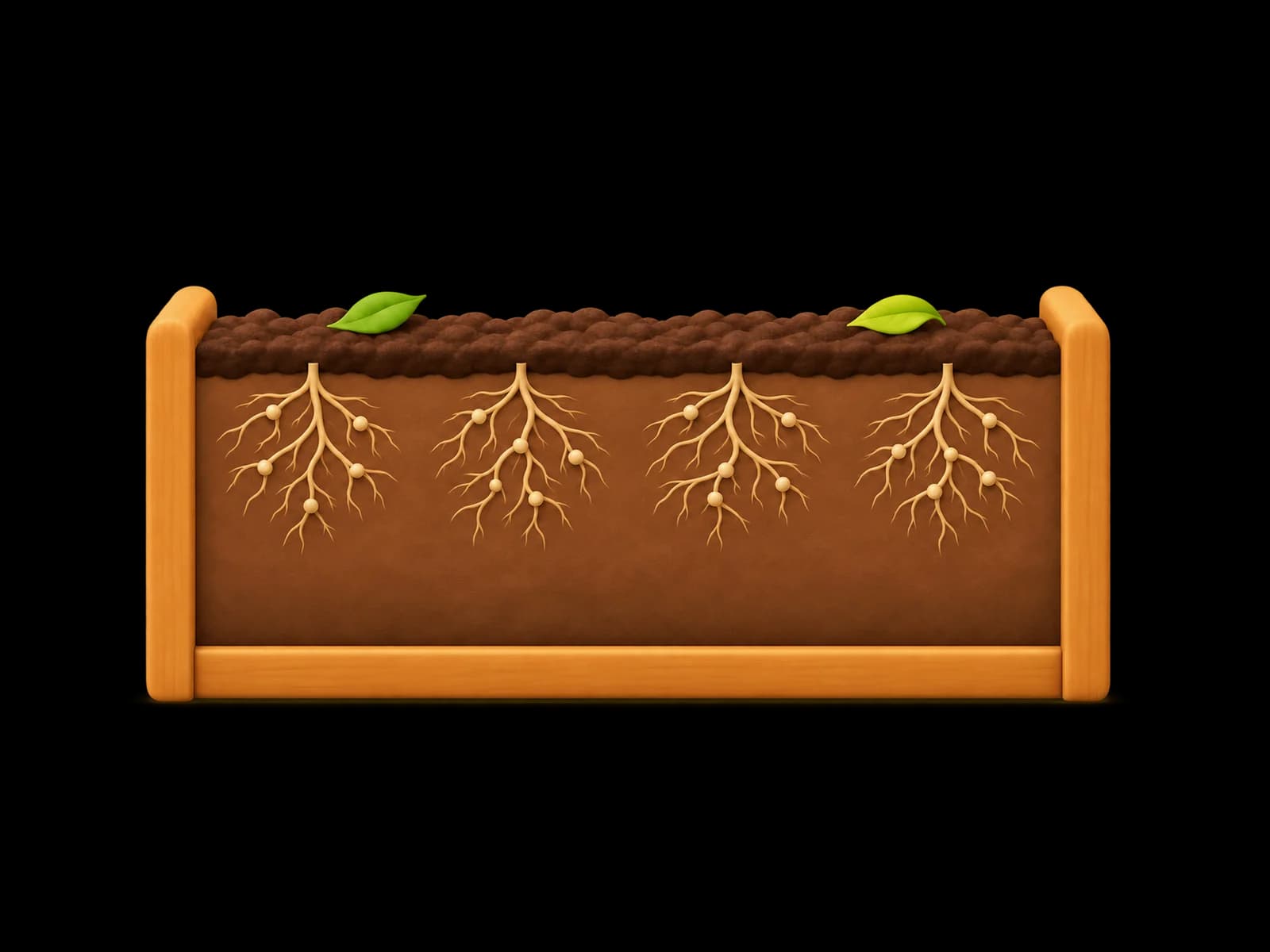
- Leave pea and bean roots in the soil when you clear those crops.
- Prepare asparagus beds for spring planting.
- Cut Jerusalem artichoke stems down to about 8 cm.
First frosts
The first frosts arrive at very different times across England. Met Office averages for 1991–2020 show no October air frost at Teignmouth on the Devon coast, about 0.7 days at Oxford and about 3.9 at Shap in upland Cumbria. There is no official average first-frost date, so watch the forecast: on a clear, calm night with air forecast at 0–4°C, frost is possible. Pick the last tomatoes, beans, basil and celery before it, and see our frost dates guide for more on reading the risk.
What not to sow yet
- Tender crops such as tomatoes, chillies and cucumbers; the RHS starts them in a greenhouse from mid-February.
- Autumn onion sets on heavy, waterlogged soil, where the RHS says they may rot.
- Spring vegetables such as carrots, beetroot and lettuce, which the RHS sows outdoors from March or April as the soil warms.
Last month's list is in what to plant in September; next month, see what to plant in November.
Sources
- RHS: Grow your own, October jobs
- RHS: February jobs
- RHS: How to grow garlic
- RHS: How to grow onions
- RHS: How to grow peas
- RHS: Mulches
- RHS: No-dig gardening
- BBC Gardeners' World: What to plant in October
- BBC Gardeners' World: How to grow garlic
- BBC Gardeners' World: How to grow onions
- Met Office: What is frost and ice?
- Met Office: Teignmouth climate averages
- Met Office: Oxford climate averages
- Met Office: Shap climate averages
- Sowstory knowledge base, release v1.4