
What to plant in November in England comes down to a short list: garlic cloves, plus overwintering broad beans outdoors or under cloches if you garden in a mild area with well-drained soil. Gardeners' World adds onion sets and shallots, while the RHS treats the rest of the month as time for harvesting, covering empty beds and ordering seed.
This page separates two things clearly: what the RHS and Gardeners' World suggest for November, and what Sowstory itself plans. In a Sowstory plan, garlic is the only crop that starts in the bed this month.
At a glance: what to plant in November
| Task | Crops | Source |
|---|---|---|
| Sow under cover | Broad beans in pots (cold areas), garlic in modules, early peas in covered containers, pak choi and salad leaves | RHS, Gardeners' World |
| Sow outdoors | Overwintering broad beans in mild areas on well-drained soil | RHS |
| Plant outdoors | Garlic; onion sets and shallots | RHS, Gardeners' World |
| Harvest | Leeks, parsnips, kale, Brussels sprouts, the last calabrese and kohlrabi | Sowstory harvest windows |
November is the second month of Sowstory's garlic window, which runs from October to December across England. For the full year, see the vegetable sowing calendar for England.
Sow indoors
None of the November lists call for sowing in a warm room. The sowings that work happen under cold cover: an unheated greenhouse, a cold frame, or containers with a lid.
- Broad beans in pots. In cold areas, the RHS suggests sowing overwintering broad beans in pots in an unheated greenhouse rather than straight into the soil.
- Garlic in modules. Where the soil is heavy or the area is wet, the RHS suggests starting garlic in modules in a cold frame. The cloves root over winter and go out in spring.
- Early peas. Gardeners' World suggests first early peas such as 'Meteor' and 'Kelvedon Wonder' in covered containers. The RHS notes that smooth-seeded peas are the hardier choice for early sowings, and that autumn-sown peas can overwinter in a greenhouse or cold frame for planting out in spring.
- Pak choi and salad leaves. Gardeners' World lists both for sowing under cover in November.
Mice are a real risk to large seeds at this time of year. The RHS November jobs include protecting sowings from mice, and its pea guide notes that mice take newly sown seed.
Sow or plant outdoors
Garlic
Garlic is the classic November crop. The RHS lists it for planting outdoors in mild, free-draining areas with low rainfall, and otherwise in modules under cover. Garlic needs cold: the RHS says cloves need one to two months at 0–10°C to form a good bulb that splits into cloves, which is why autumn planting is the standard method.
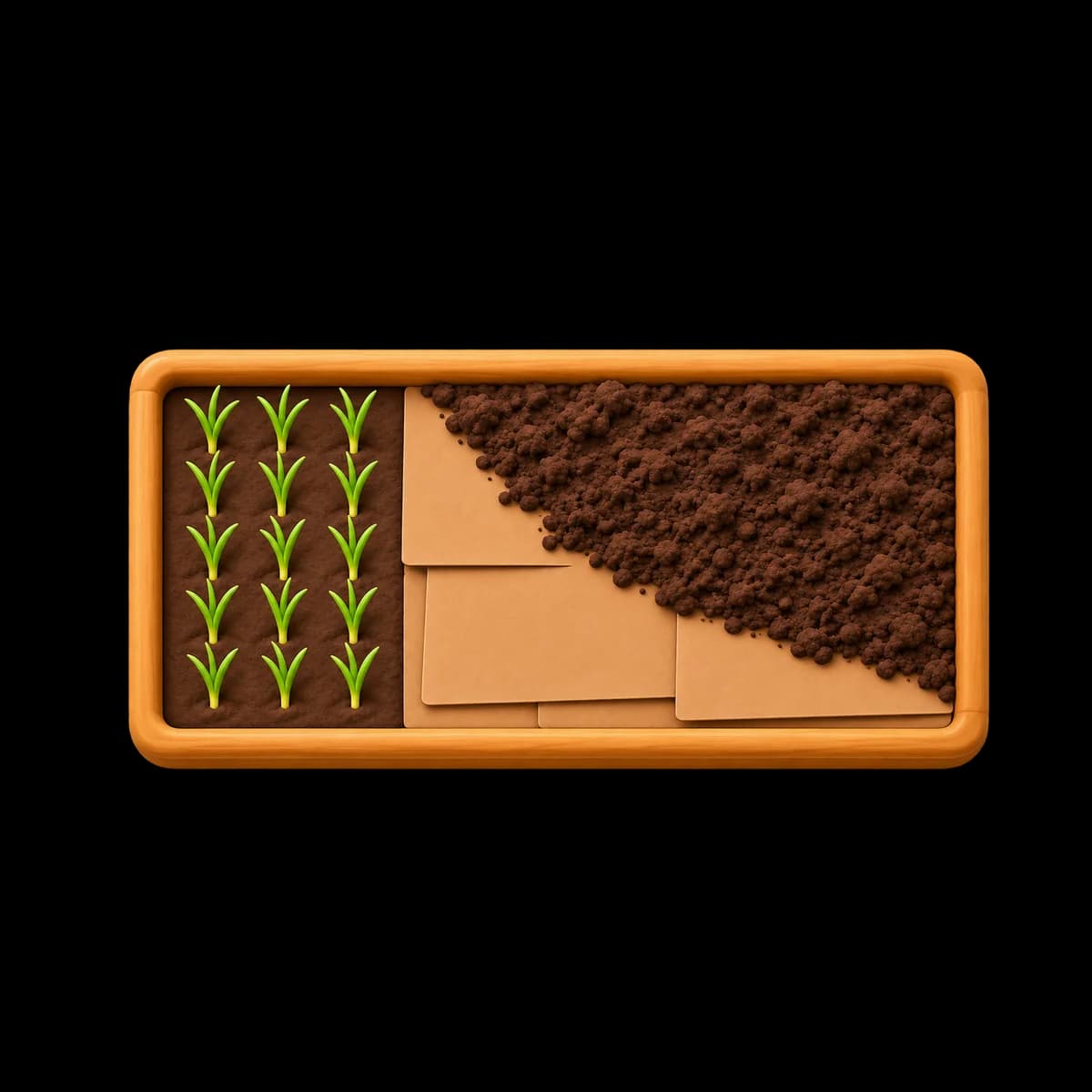
Plant each clove flat end down and pointed end up, with the tip about 2.5 cm below the surface. The RHS spaces cloves 15 cm apart in rows 30 cm apart. A raised bed suits garlic well, because the RHS notes that raised beds improve conditions on heavy, waterlogged soil. Our guides on when to plant garlic and how to grow garlic cover timing, depth and harvest in full.
Overwintering broad beans (RHS advice)
The RHS suggests sowing overwintering broad beans outdoors or under cloches in November, but only in mild areas on well-drained soil. In colder areas, sow them in pots under cover instead (see above).
Sowstory does not plan this. Its broad bean profile is a dwarf variety, 'The Sutton', sown direct in March or April, with no autumn route. If you sow broad beans now, treat that part of the bed as your own addition.
Onion sets and shallots (Gardeners' World advice)
Gardeners' World gives September to November for autumn onion sets, 10–15 cm apart in rows 30 cm apart, and says shallots can go in until December at 15–20 cm apart. The RHS adds two cautions for autumn sets: avoid heavy soil that stays waterlogged in winter, because the sets may rot, and expect the bulbs to store only until early winter after a June–July harvest.
Sowstory's onion profile is spring-planted sets, started in the bed in March or April. Autumn onion sets are outside what the app plans today.
In a Sowstory plan this month
In November, Sowstory starts exactly one crop profile in the bed: garlic (autumn-planted cloves). If garlic is on your list and your bed is planned now, this is what the plan works with:
- Spacing: Sowstory allows 25 cm between rows and 15 cm between cloves, with up to three rows per bed. The RHS gives slightly wider rows at 30 cm.
- How many fit: in a 1.2 × 2.4 m bed, three rows along the length come to about 48 cloves as a simple estimate. See the plant spacing chart for other crops.
- Sun: at least six hours of direct sun.
- Time in the bed: Sowstory reserves the space for about 36 weeks, so garlic planted now holds its rows into the following summer. That matters when you plan what goes in around it next spring.
Several crops in a Sowstory plan are still cropping. Its harvest windows give leeks from November to February, parsnips from October to February, standard kale from September to March, and Brussels sprouts from September to February. Calabrese and kohlrabi windows close in November.
If you want to see how garlic and next year's crops share one bed, Sowstory will lay out the rows to scale, tell you how many cloves fit and show when each space is busy. It is coming soon to the App Store, and your first bed plan is free.
Sowstory's planting months are England-wide. They are not adjusted to your postcode, and the app gives no frost date for your address, so check the weather and your soil before you plant.
Jobs this month
The RHS November list is mostly about protecting what is in the ground and getting ready for spring:
- Leave parsnips in the ground. The RHS says frost improves their flavour.
- Stake Brussels sprouts and mulch celeriac.
- Force chicory. The RHS gives three to six weeks for chicons to form.
- Cover empty beds with a double layer of plain cardboard, tape and staples removed, then add homemade compost.
- Order seed for next year.
First frosts
Frost is now part of the picture. The Met Office long-term averages (1991–2020) show how much it varies across England: about 0.6 days of air frost in November at Teignmouth on the Devon coast, about 3.2 at Oxford, and about 8.1 at Shap in upland Cumbria. The Met Office does not publish an average first-frost date, so use the forecast: frost is possible on a clear, calm night when the air is forecast to fall to 0–4°C. Our frost dates guide explains ground and air frost in more detail.
What not to sow yet
- Tender crops. Tomatoes, chillies and cucumbers are a late-winter job at the earliest; the RHS starts them in a greenhouse from mid-February.
- Most direct sowings. Carrots, beetroot, lettuce and spinach wait for soil that is warming in spring. Even in February the RHS limits outdoor sowing to light soil in mild areas.
- Spring-sown Sowstory crops. Sowstory's dwarf broad beans, peas and onion sets all start in March.
Next month, see what to plant in December; if you missed last month's jobs, October's list still mostly applies.
Sources
- RHS: Grow your own, November jobs
- RHS: February jobs
- RHS: How to grow garlic
- RHS: How to grow onions
- RHS: How to grow peas
- RHS: How to make a raised bed
- BBC Gardeners' World: What to plant in November
- Met Office: What is frost and ice?
- Met Office: Teignmouth climate averages
- Met Office: Oxford climate averages
- Met Office: Shap climate averages
- Sowstory knowledge base, release v1.4