
To grow tomatoes outdoors in England, sow seed indoors in late March or early April, harden the young plants off and plant them into a sunny, sheltered raised bed in June, once nights stay reliably warm. Choose cordon tomatoes (one tall staked stem) or bush tomatoes (compact, no pruning), and expect to pick from July to October.
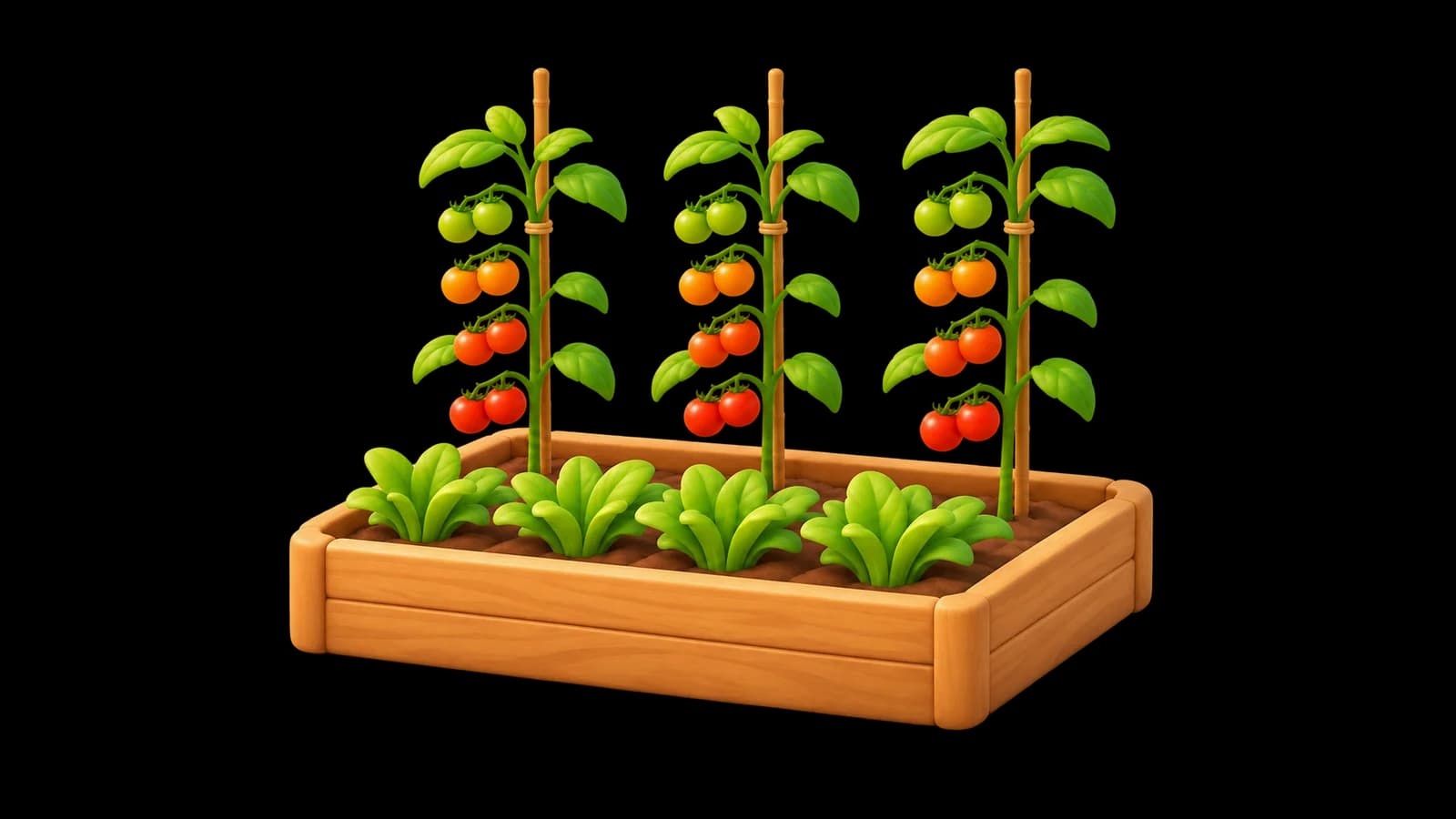
This guide covers how to grow tomatoes outdoors in a raised bed: when to sow and plant, cordon versus bush, side-shooting, feeding and watering, and the problems most likely to catch you out in an English summer.
Tomatoes at a glance
| Outdoor cordon | Outdoor bush | |
|---|---|---|
| Sow (indoors) | Late March–early April (RHS); Sowstory March–April | April |
| Plant into the bed | June, once nights stay above about 16°C | June, after frost risk has passed |
| Spacing | 45–60 cm (RHS); Sowstory 60 × 60 cm | Sowstory up to 1 × 1 m |
| Plants per 1.2 × 2.4 m bed | Up to 3 (Sowstory cap) | Up to 2 |
| Support | One tall cane per plant | None needed |
| Pruning | Remove side-shoots; stop after about 4 trusses | None |
| Harvest | July–October | Summer–October |
| Sun | At least 6 hours of direct sun | At least 6 hours |
| Bed space reserved | About 20 weeks | About 20 weeks |
Cordon tomatoes or bush tomatoes?
The RHS splits tomatoes into two main growth types, and the choice shapes everything else.
Cordon tomatoes (also called indeterminate) grow on a single tall stem. You tie the stem to a sturdy cane and pinch out side-shoots so the plant stays narrow. They take less ground per plant, which suits a raised bed, but they need regular attention through the summer.
Bush tomatoes (determinate) are compact, stop growing on their own and are left to branch. You do not remove side-shoots. They are less work, but they spread. The RHS plant record for the outdoor cherry tomato 'Red Alert', for example, gives a height and spread of 50 cm to 1 m, which is why Sowstory plans a full 1 × 1 m square for a bush tomato.
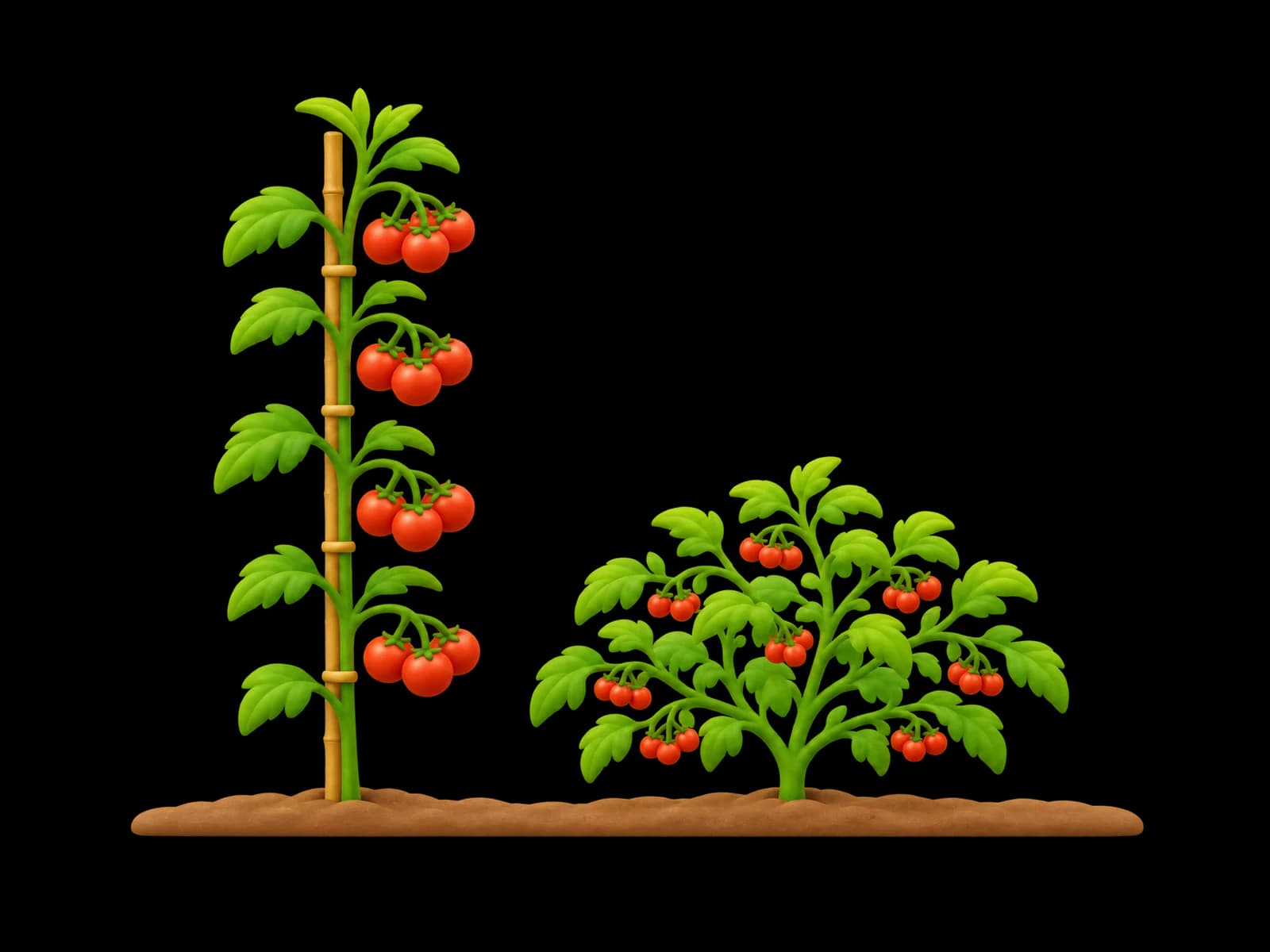
If you are short of space or want to fit other crops into the same bed, choose cordons. If you want an easy plant and have room for it to sprawl, choose a bush variety.
When to sow tomatoes
For tomatoes that will grow outdoors, the RHS suggests sowing from late March to early April. Seed needs about 18°C to germinate, so sow indoors on a warm windowsill or in a heated propagator. Earlier sowings, from late February, are for plants that will stay in a greenhouse.
Sowstory's outdoor plan uses March to April sowing for cordons and April for bush types, so the plants are the right size to go out in June. See what to sow in March and what to sow in April for what else goes in at the same time.
When to plant tomatoes outside in the UK
Tomatoes are tender, so they go outside only once the risk of frost has passed. The RHS advises planting out in early summer, once temperatures are reliably above 16°C, after hardening the plants off. In much of England that means June, and Sowstory plans outdoor tomatoes into the bed in June.
Timing varies across the country. The south and coasts warm up earlier; the north, inland areas and high ground later; frost pockets are colder still. Sowstory's months are England-wide and are not adjusted to your postcode, so watch your local forecast too. Our guide to last frost dates explains how to judge it, and what to sow in June lists what else goes into the bed that month.
Growing tomatoes in raised beds
Where to put them
The RHS recommends a warm, sunny, sheltered position for outdoor tomatoes, and Sowstory requires at least six hours of direct sun. In a raised bed, put tomatoes along the north edge. Staked cordons grow tall and bush types can reach about a metre, so on the north side their shadow falls off the bed rather than across shorter crops.
Spacing and how many fit
The RHS gives 45–60 cm between plants. Sowstory allows a 60 × 60 cm square per cordon and plans up to three in a 1.2 × 2.4 m bed, leaving room for other crops; for bush types it allows 1 × 1 m and plans up to two. Our tomato spacing guide works through the numbers for different bed sizes, and the vegetable spacing chart covers the crops you might grow alongside.
Depth and soil
Sowstory does not set a minimum bed depth for tomatoes. The RHS suggests a single plant can grow in a pot of 30–45 cm across, or two in a growbag, so a raised bed gives them more than enough root room. For filling a new bed, see our guide to raised bed soil.
If you would rather not work out the layout by hand, Sowstory puts tomatoes on the north edge of your bed, tells you how many fit alongside the other crops you want, and gives a month-by-month plan. It is coming soon to the App Store, and your first bed plan is free.
How to care for tomatoes
Support and side-shoots (cordon tomatoes)
Push a tall, sturdy cane in beside each cordon at planting time and tie the stem in loosely as it grows. Side-shoots appear in the joint between each leaf and the main stem. The RHS suggests pinching them out each time you water; Gardeners' World says at least weekly.
Outdoors, the season is too short for a cordon to ripen fruit all the way up a tall stem. The RHS advises stopping outdoor cordons after four trusses (flower clusters) by cutting off the growing tip two leaves above the top truss. Gardeners' World gives four to five trusses. Either way, the aim is to put the plant's energy into fruit that will ripen before autumn.
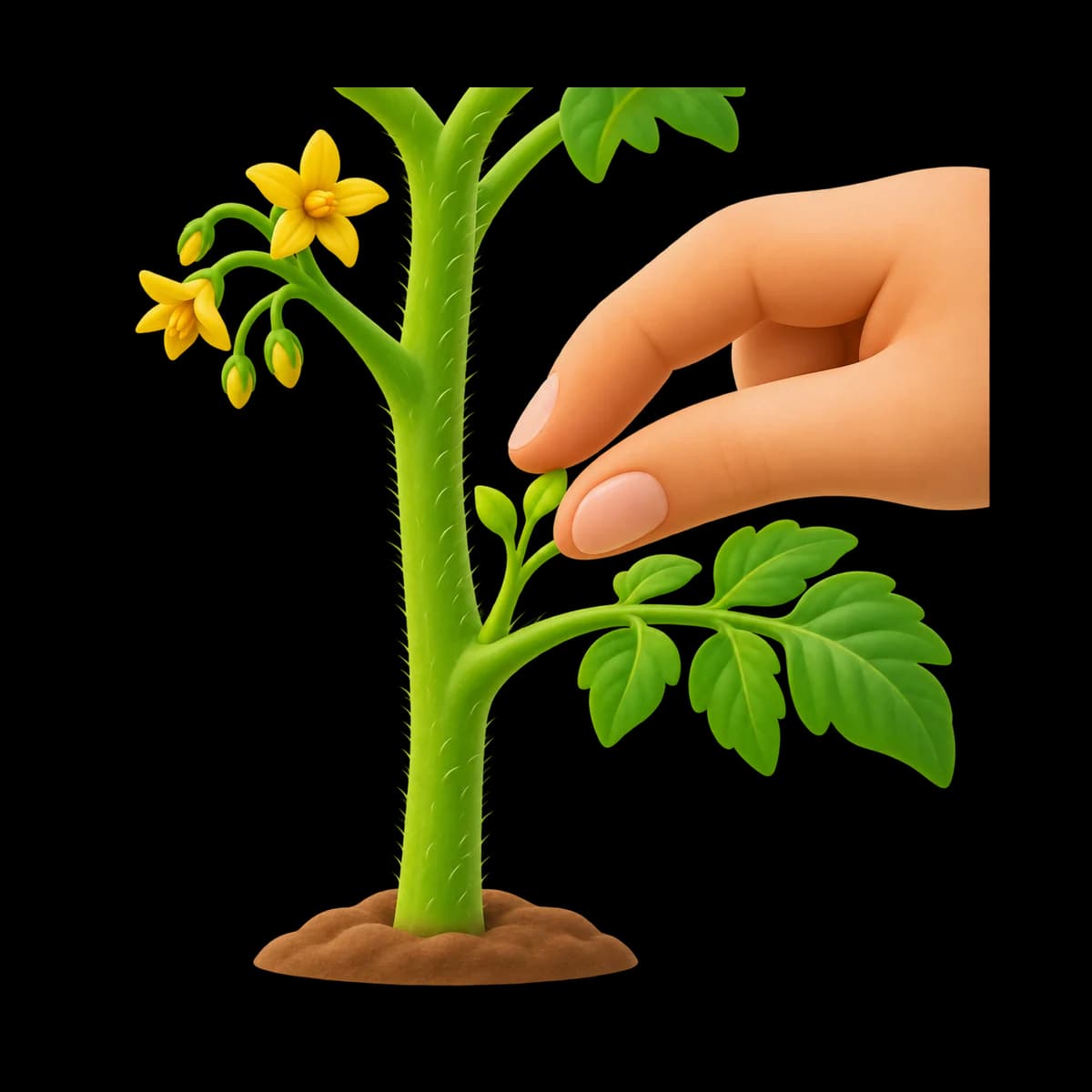
Bush tomatoes need none of this: let them branch freely, and leave enough room around them to reach the fruit.
Watering
Keep the soil evenly moist. The RHS explains that irregular watering causes fruit to split and leads to blossom end rot, a sunken dark patch at the flower end of the fruit. It is not a disease: the fruit lacks calcium because an uneven water supply fails to carry it there. Affected fruit cannot be saved, and calcium sprays do not help; steady watering does. It is most common in pots and growbags, which dry out faster than a raised bed.
Feeding
Sources differ on when to start. The RHS suggests a high-potassium liquid feed every 10–14 days once the first fruits start to swell for plants in containers, and says plants in rich ground may not need feeding at all. Gardeners' World suggests weekly tomato feed once flowers appear. Plants in a raised bed with rich soil may need less feed than those in pots.
Companions
Basil is a popular low plant in front of tomatoes, and French marigolds have trial evidence for repelling whitefly. Keep potatoes in a different bed. Our guide to companion planting tomatoes explains the evidence, and how to grow basil covers its partner.
Harvesting tomatoes
Outdoor tomatoes usually ripen from July to October, depending on the summer and the variety. Pick each fruit when it has fully coloured. Sowstory reserves the bed space for about 20 weeks from June planting, so the space is free again in autumn.
The RHS notes that greenhouse tomatoes crop earlier and for longer than outdoor plants, which is worth knowing if you have one. Sowstory plans only outdoor raised beds.
Common problems when growing tomatoes in the UK
Blight
Late blight is the biggest risk outdoors. It is caused by Phytophthora infestans, a fungus-like organism that also attacks potatoes. The RHS says it spreads in warm, wet weather, UK outbreaks can start from June (earliest in the South West), and in some years it can wipe out susceptible outdoor varieties. It is rare in greenhouses.
There are no blight fungicides for home gardeners, so prevention is what counts:
- Keep tomatoes away from potatoes, which carry the same disease.
- Rotate. The RHS advises against growing tomatoes in the same bed in consecutive years, and after blight, not in soil used for potatoes during a four-year rotation.
- Choose resistant varieties if you garden in a damp area; Gardeners' World suggests 'Crimson Crush'.
Split fruit and blossom end rot
Both come from uneven watering (see above). In hot weather the RHS suggests watering two or more times a day, which works better than one watering with double the volume.
Flowers but slow ripening
Outdoor tomatoes depend on summer warmth. Stopping cordons after four trusses and choosing a sunny, sheltered spot give the fruit the best chance of ripening before the weather turns.
Sources
- RHS: How to grow tomatoes
- RHS plant record: Solanum lycopersicum 'Red Alert'
- RHS: Blossom end rot
- RHS: Potato and tomato blight
- BBC Gardeners' World: How to grow tomatoes
- Sowstory knowledge base, release v1.4