
VegPlotter is an online vegetable garden and allotment planner from VegPlotter Ltd: you draw your whole plot to scale, drag crops into beds and get a sowing, transplanting and harvest calendar based on your nearest town. If you want to plan a whole UK allotment with rotation warnings in a browser, it is a strong choice. If you grow in raised beds and would rather have the layout and plant numbers worked out for you, Sowstory, an iPhone app coming soon with the first bed free, is the alternative built for that.
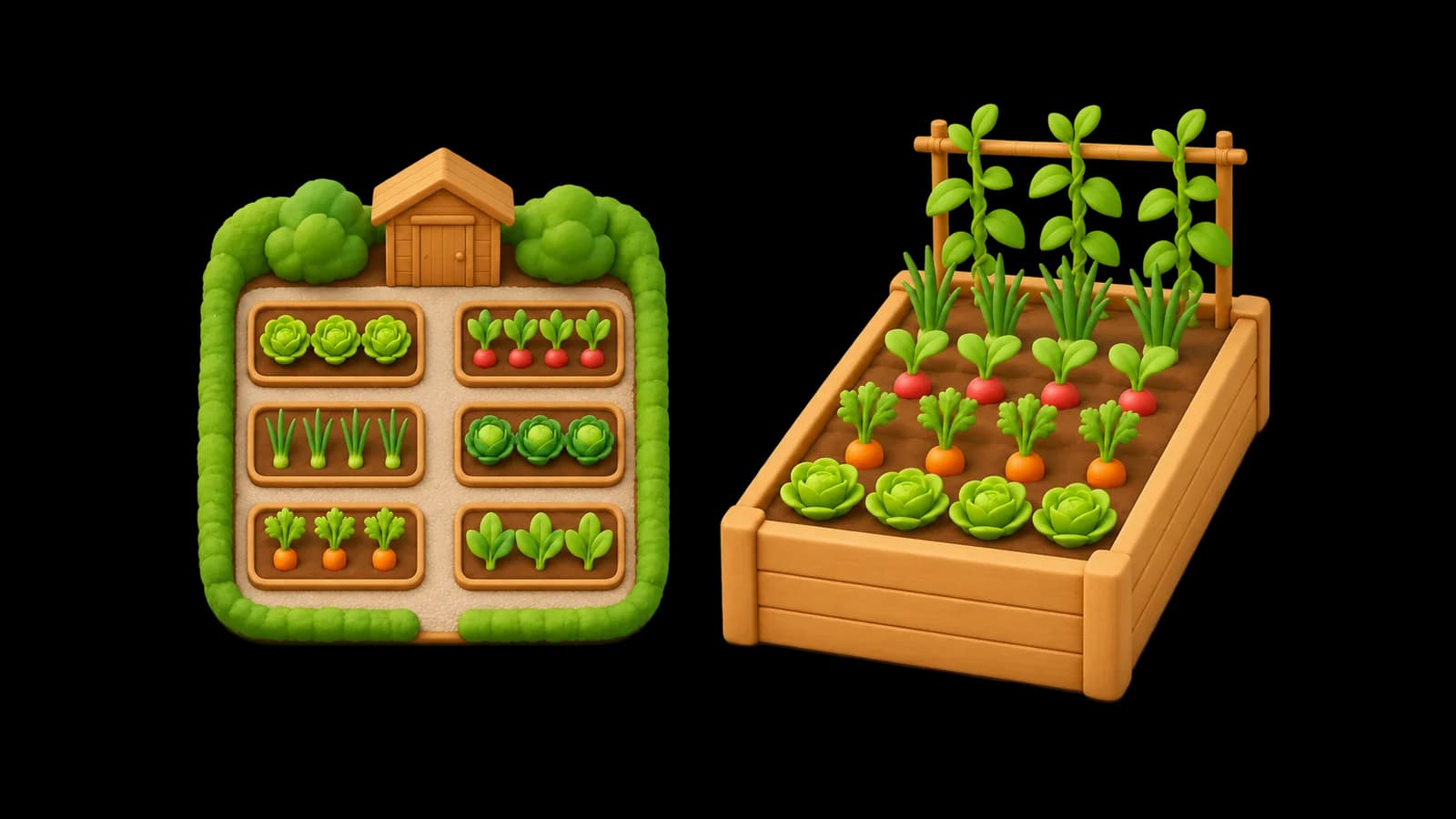
We make Sowstory, so we have kept this comparison to facts each product states on its own pages, checked on 4 November 2026, and we say plainly where VegPlotter does more. We do not quote other companies' prices or reviews; check their sites for current pricing.
VegPlotter and Sowstory at a glance
| VegPlotter | Sowstory | |
|---|---|---|
| What you plan | A whole plot or allotment: beds, paths, sheds and structures | One raised bed at a time (each bed is its own plan) |
| How the layout is made | You drag beds onto a scaled map and drag plants in; plants become a single plant, a row or a block | You enter bed size, sun and preferred crops; Sowstory places rows and plants to scale |
| Platforms | Web browser (desktop, tablet, phone), plus iOS and Android apps | iPhone app, coming soon to the App Store |
| Sowing calendar | Month by month (sow indoors, transplant, harvest), based on the location you choose, with frost data from FrostDates.com | Month by month for England; not yet adjusted to your local climate |
| Spacing | Automatic row or block placement; method not described on its help pages | Built-in spacing for 45 growing profiles, with the reason for each figure |
| Crop rotation | Warns when similar plants go in the same spot | Not planned across years yet |
| Companion planting | Shows good companions for a selected plant | Not scored; tall crops placed on the north edge |
| Journal | Notes and photos on plan items (unlimited on a paid tier) | Optional private journal per bed, up to 5 pictures per entry |
| Free option | Permanent free plan with a yearly planting cap; paid Essentials and Advanced tiers | First bed plan free and complete; then £4.99 per bed or £14.99 season pass |
| Units | Metric, imperial, and poles, rods and perches | Metric |
Where VegPlotter is the better fit
- Whole allotments and big plots. You can draw paths, sheds and many beds on one map, and duplicate layouts to compare designs.
- Crop rotation. VegPlotter warns when a similar crop goes back into the same spot. Sowstory does not plan rotation across years yet; our vegetable garden layout guide explains how to rotate by hand.
- Location-based dates. VegPlotter uses the town you pick to decide what can grow in which months. Sowstory's months are England-wide for now.
- Android and the web. VegPlotter runs in any browser and has an Android app. Sowstory is iPhone only for now.
- Square-foot beds. VegPlotter can plant square-foot gardening beds in 1 × 1 ft or 2 × 2 ft blocks.
Where Sowstory is the better fit
- You want the layout done for you. Rather than dragging plants around and checking gaps, you tell Sowstory the bed's inside size, how much sun it gets and the crops you like; it places them to scale and works out how many plants or rows fit.
- You want to know why. Each plan explains why a crop was included or left out (for example, a bush courgette needs about 90 × 90 cm, which a narrow bed cannot give).
- Raised-bed rules built in. Tall crops such as climbing beans, cordon tomatoes and trained cucumbers go on the north edge so they do not shade the rest; potatoes get a wide corridor for earthing up; a few crops check the bed's depth.
- One bed, one clear plan. If you have one or two raised beds rather than an allotment, a single-bed plan is simpler to follow. The first one is free with nothing held back.
Before you start, it helps to know your bed's size and depth: see raised bed sizes and the vegetable spacing chart.
How the two approaches feel in use
VegPlotter works like a drawing board. You set up the plot's shape and units, add beds and paths, then drag plants from a list into each bed. A "Timely" filter hides plants that are out of season for the month you are viewing, and a monthly jobs list sums up the tasks.
Sowstory works more like a questionnaire followed by a drawing. You answer a few questions about one bed (size, sun, postcode to place it in England, crops you want or want to avoid, your experience and your goal) and get a finished, to-scale plan, quantities and a month-by-month timeline. You can then edit the plan as often as you like.
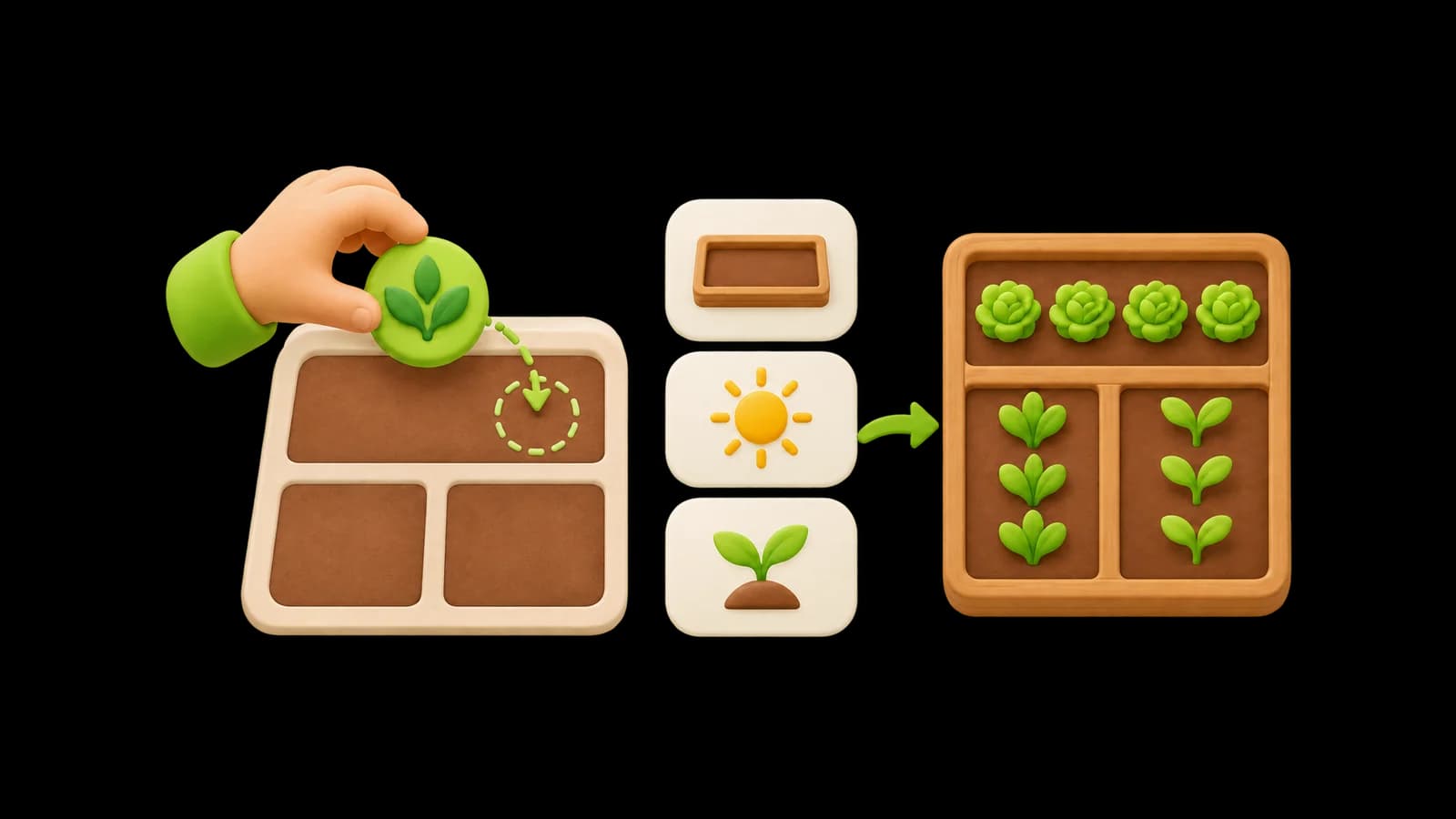
Neither approach is better for everyone. If you enjoy designing and own a big plot, drawing it yourself is part of the fun. If you want a reliable plan for a raised bed with the arithmetic done, an automatic layout saves the evening. Our raised bed planner guide shows what a good plan should include either way.
If a raised bed is what you are planning, Sowstory will lay it out to scale and tell you how many plants fit, with your first bed free when it arrives on the App Store.
Honest limits of Sowstory
- iPhone only for now, and not released yet: it is coming soon to the App Store.
- Outdoor raised beds in England, one bed per plan. It does not draw whole gardens, sheds or paths.
- 35 crops as 45 growing profiles. No sweetcorn, squash or pumpkins, strawberries or trailing cucumbers yet.
- No crop rotation across years and no companion-planting scores yet.
- England-wide sowing months; no frost date for your address. Our guide to last frost dates helps you judge it.
For a wider comparison, including GrowVeg, Fryd, Seedtime and Planter, see the best garden planning apps for UK growers or Sowstory vs GrowVeg.
Sources
- VegPlotter home
- VegPlotter pricing (plan names and features only)
- VegPlotter help: Add plants
- VegPlotter help: How to change plan settings
- VegPlotter frost date and growing zone calculator
- App Store: Vegetable Garden/Farm Planner by VegPlotter Ltd
- Sowstory knowledge base, release v1.4, and Sowstory pricing as set on 4 November 2026