
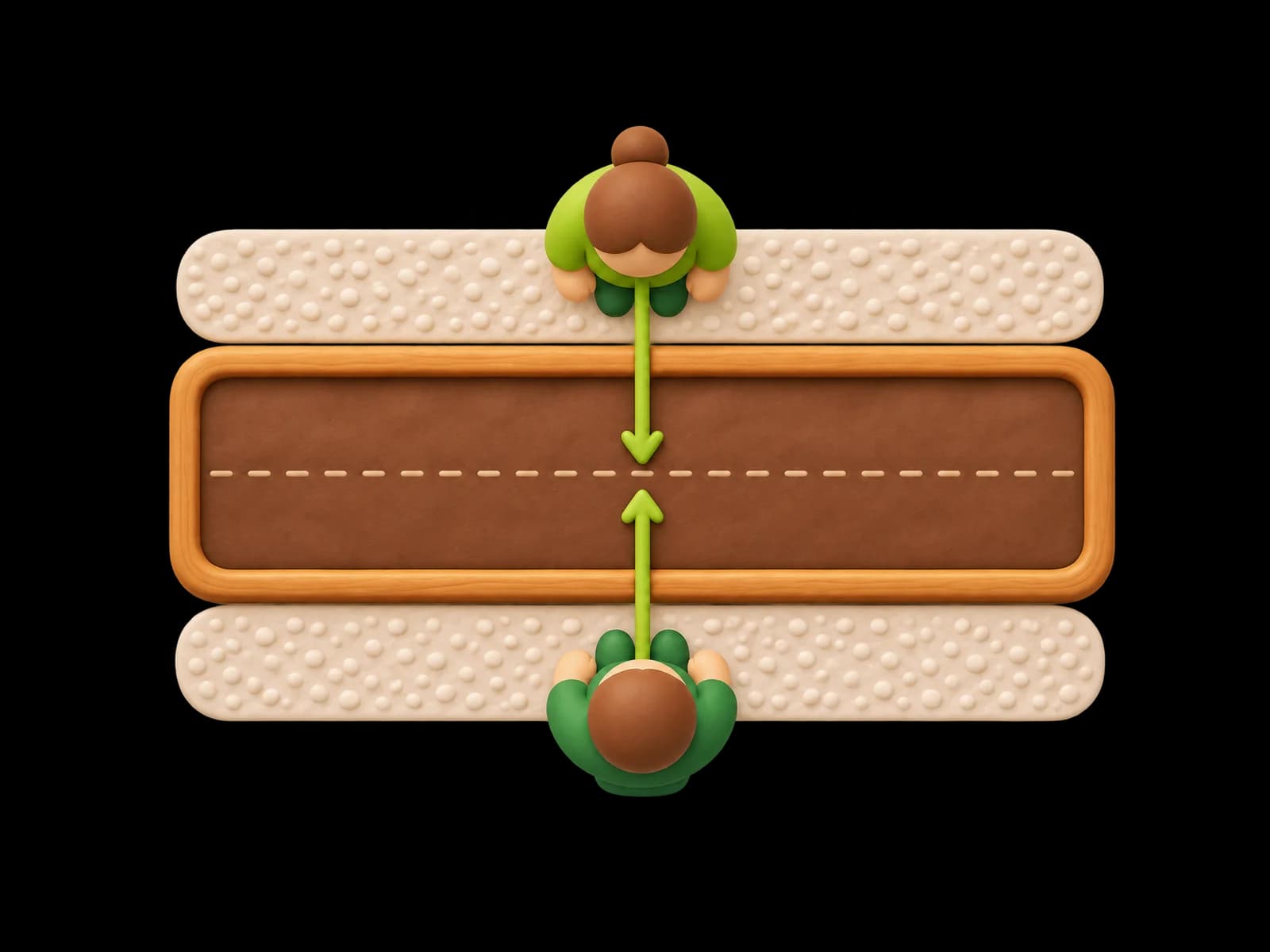
The best raised bed size for vegetables is less than 1.5 m wide, so you can reach the middle from either side without standing on the soil, with at least 30 cm of soil depth and paths at least 45 cm wide. Length is up to you; a 1.2 × 2.4 m bed (about 4 × 8 ft) is a manageable size for a first bed in a garden or on an allotment.
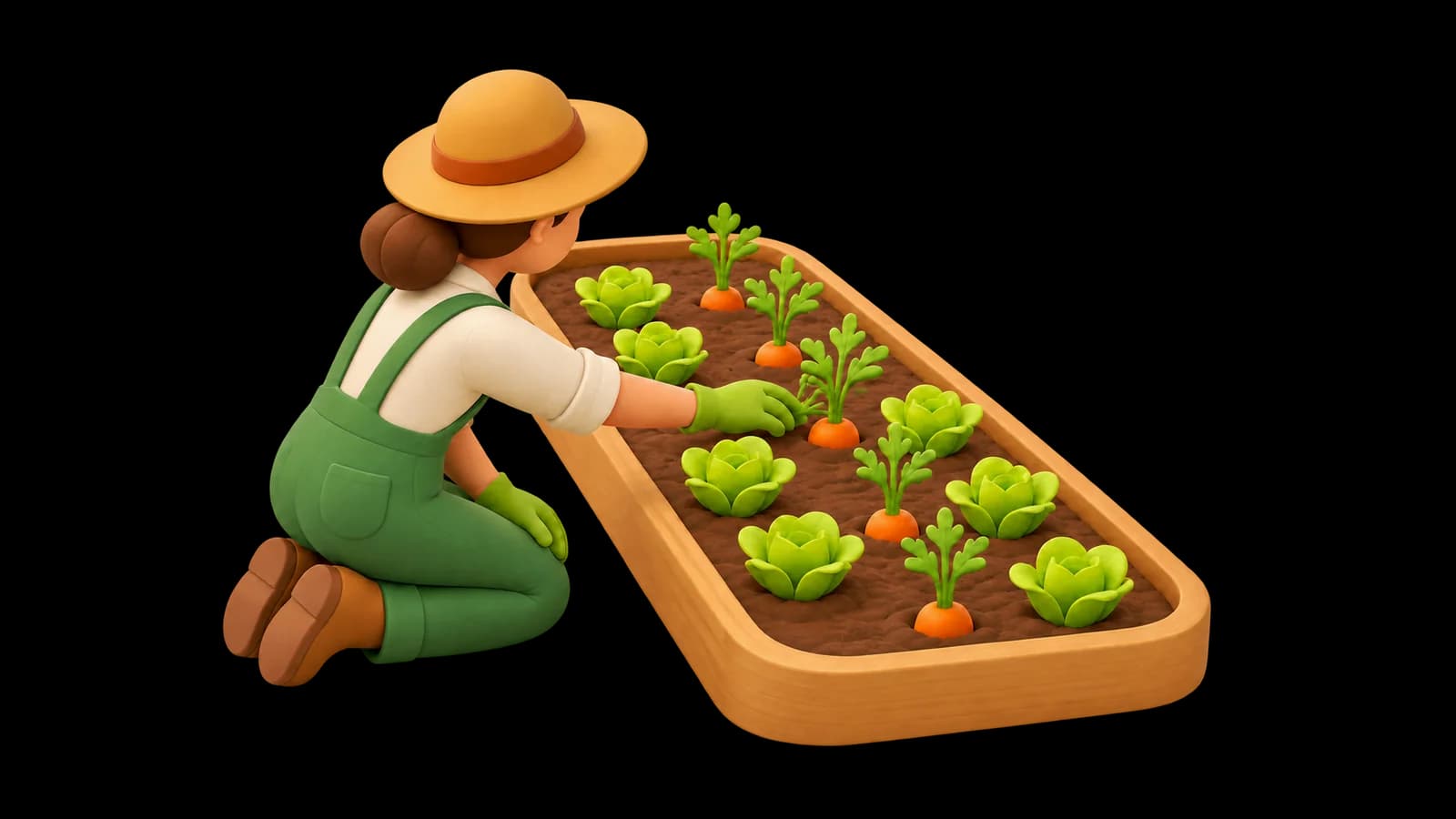
This guide covers width, length, height and paths, gives the soil volume for common sizes, and explains how to size beds on an allotment.
Raised bed sizes at a glance
| Measurement | Guidance | Source |
|---|---|---|
| Width | Under 1.5 m (5 ft); about 1.5 m at most | RHS; BBC Gardeners' World |
| Length | No set length; several small beds rather than long runs | RHS |
| Soil depth | About 30 cm for salads; 45 cm or more for most plants | RHS |
| Height to sit on | About 40–50 cm, with an edge at least 10 cm wide | BBC Gardeners' World |
| Path width | At least 45 cm for a wheelbarrow; at least 1 m for a wheelchair | RHS |
How wide should a garden bed be?
Width is the measurement that matters most, because the whole point of a raised bed is that you never walk on it. The RHS says beds under 1.5 m wide let you reach the centre without stepping on the soil, and BBC Gardeners' World gives about 1.5 m as the maximum.
A 1.2 m (about 4 ft) bed leaves only 60 cm to reach from each side, and it is the width most of our planting examples use. If you are shorter, have limited reach or find kneeling difficult, go narrower. A bed against a wall or fence that you can only reach from one side needs to be much narrower, and Gardeners' World notes that such beds can sit in a rain shadow and need more watering.
Width also decides how many rows you get. In a 1.2 m bed, Sowstory plans up to four rows of carrots or beetroot, three rows of garlic or onion sets, or one row of first early potatoes, which need a 90 cm corridor for earthing up. Our vegetable spacing chart lists the row gap for every crop.
How long should a raised bed be?
There is no recommended maximum. The RHS gives no figure and suggests building several smaller beds rather than long runs, which also saves walking round the end of a long bed to reach the other side. If a long bed is unavoidable, the RHS suggests running it north to south so both sides get even light.
The examples on this site use lengths of 1.2 m, 1.8 m, 2.4 m and 3 m. Choose a length that fits your space and leaves room for paths all round.
Raised bed height: how tall should a raised garden bed be?
Separate two ideas: the soil depth your crops need and the frame height that suits you.
Soil depth. The RHS says about 30 cm is enough for salad leaves and most plants need 45 cm or more. BBC Gardeners' World says a single scaffold board's depth is enough for vegetables. Sowstory checks for at least 30 cm of soil before planning early carrots or first early potatoes, and 20 cm for radishes. Our guide on how deep a raised bed should be goes into crop-by-crop detail.
Frame height. If you would like to sit on the edge while you garden, Gardeners' World suggests a bed about 40–50 cm high. An edge 10 cm wide gives a perch, and 20 cm or more is more comfortable. For beds deeper than 50 cm, the RHS suggests rubble or subsoil in the base, which helps drainage and saves on soil. Brick or block walls more than 20 cm high need mortar and concrete footings, according to the RHS.
Taller beds mean less bending, and the RHS says raised beds suit people with limited mobility.
Paths between raised beds
Paths are part of the size decision, because a bed you cannot get round is a bed you will stand on. The RHS recommends at least 45 cm between beds so a wheelbarrow fits, and at least 1 m if anyone needs wheelchair access. On allotments, the RHS describes permanent paths between beds with defined edges, covered with membrane or chipped wood.
Allotment bed size
The same reach rule applies on an allotment: beds narrow enough to work from the paths, with permanent paths wide enough for a wheelbarrow between them. Two extra points help on a larger plot:
- Group beds for rotation. Gardeners' World suggests setting beds out in groups of four so crops can rotate round the plot. The RHS describes a three- or four-year rotation in equal sections, plus a separate area for perennial crops such as rhubarb and asparagus.
- Plan on paper first. The RHS recommends drawing the plot to scale to avoid overcrowding.
Our guide to vegetable garden layout covers planning a whole plot of beds.
Common raised bed sizes and how much soil they need
| Bed size (inside) | Area | Soil at 30 cm deep | Square-foot squares |
|---|---|---|---|
| 0.6 × 1.2 m (small or balcony) | 0.72 m² | 216 litres | |
| 1.2 × 1.2 m (about 4 × 4 ft) | 1.44 m² | 432 litres | 16 |
| 0.9 × 1.8 m (about 3 × 6 ft) | 1.62 m² | 486 litres | |
| 1.2 × 1.8 m (about 4 × 6 ft) | 2.16 m² | 648 litres | |
| 1.2 × 2.4 m (about 4 × 8 ft) | 2.88 m² | 864 litres | 32 |
| 1.2 × 3.0 m | 3.60 m² | 1,080 litres |
The 4 × 4 ft bed is the standard size in square foot gardening. For other depths and bag counts, use the raised bed soil calculator; to fill it, see how to fill a raised bed.
Size the bed for the crops you want
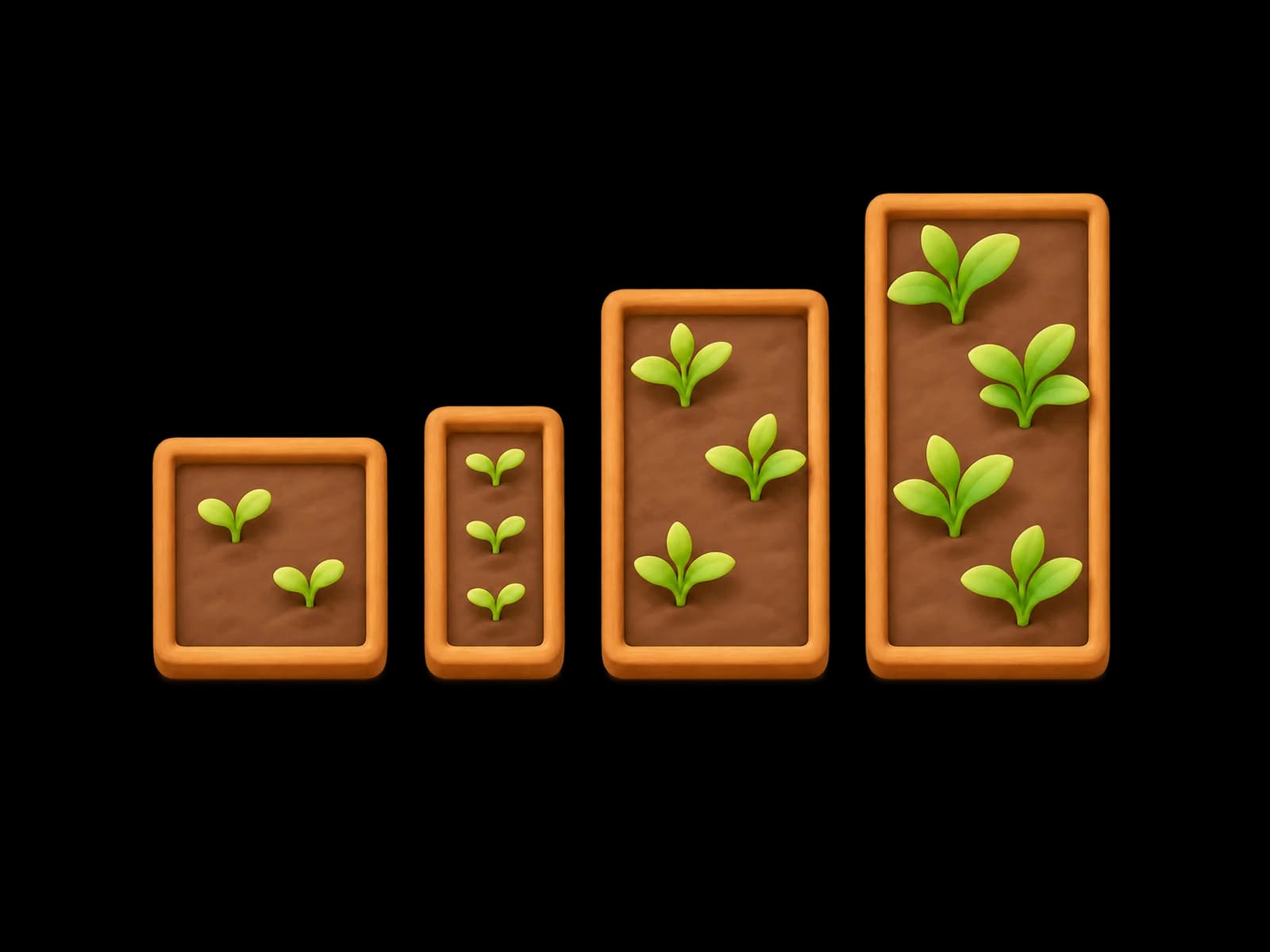
Some crops need far more room than a small bed can give. These are the spaces Sowstory reserves for the larger crops it plans:
| Crop | Space Sowstory allows | What it means for bed size |
|---|---|---|
| Bush courgette | 90 × 90 cm per plant | One plant takes more than half of a 1.2 × 1.2 m bed; at most two per bed |
| Bush tomato (outdoor) | 100 × 100 cm per plant | Needs a bed at least 1 m wide |
| First or second early potatoes | Rows 90 cm apart | One row fits a 1.2 m wide bed |
| Runner or climbing French beans | One cane row in a 45 cm strip on the north edge | Fits along the north edge of most beds |
| Kale, sprouting broccoli, Brussels sprouts | 60 × 60 cm per plant | Two plants across a 1.2 m bed |
If you mainly want salads, radishes and carrots, a small 0.6 × 1.2 m bed can work. If courgettes, potatoes and tomatoes are on your list, aim for 1.2 m wide and at least 2.4 m long, or plan two beds. The plant spacing calculator shows how many of each crop fit common sizes.
Choosing the best size for your raised bed
- Measure your reach. Kneel or stand at the edge and reach in comfortably; double it for a bed you can get to from both sides, keeping under 1.5 m.
- Check your sun. A smaller bed in full sun beats a big one in shade.
- Allow for paths of at least 45 cm all round.
- Pick a depth that suits your crops and what the bed sits on.
- Start small. One 1.2 × 2.4 m bed is plenty to learn on; add more once you know how much time you have.
Once you know the size, the question becomes what fits. Sowstory takes your bed's exact inside size, lays out rows and plants to scale with tall crops on the north edge, and tells you how many of each crop fit. It is coming soon to the App Store, and your first bed is free.
For worked examples in the meantime, see our raised bed layout ideas for 4 × 4, 3 × 6 and 4 × 8 ft beds, or the beginner's guide to raised bed vegetable gardening.
Sources
- RHS: How to make a raised bed
- RHS: Allotments, making the most of your plot
- RHS: Crop rotation
- RHS: Planning a vegetable garden
- BBC Gardeners' World: Gardening tips for raised beds
- BBC Gardeners' World: How to make a vegetable patch
- Square Foot Gardening Foundation: The method
- Sowstory knowledge base, release v1.4